
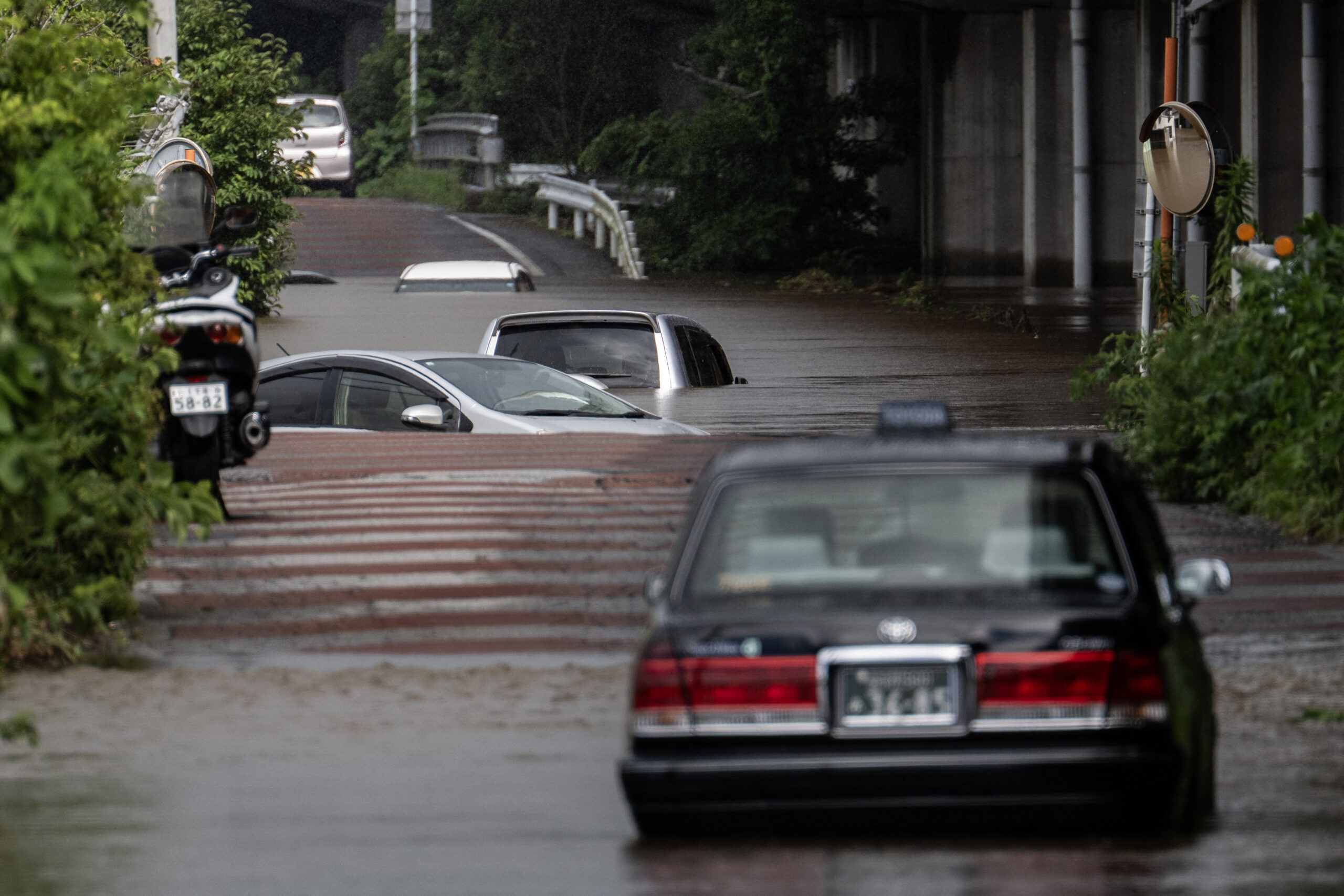
Japan’s Chiba Prefecture recently experienced record-breaking heavy rainfall, with at least 8 people confirmed dead as of Friday, August 14th. The meteorological department has issued warnings that more heavy rainfall could occur in the future and has urged the public to remain vigilant.
On Friday morning, footage captured by a helicopter from Japan’s NHK television station over Oamishirasato City in Chiba Prefecture showed vast parking lots, roads, and residential areas submerged by floodwaters.
The Japan Meteorological Agency had previously issued the highest level of “Level 5 Emergency Warning” for some areas in Chiba Prefecture, warning of risks of heavy rain and landslides. Level 5 is the highest level in Japan’s warning system ranging from 1 to 5. However, the agency has since downgraded the related warnings to Level 4 or below.
The meteorological department continues to remind the public to guard against landslides, floods in low-lying areas, and risks of rapidly rising river water levels. The alert covers not only Chiba Prefecture but the entire Kanto region, including Tokyo.
Local authorities have confirmed 8 deaths so far. Some of the deceased were found near roads submerged by floodwaters, while others were trapped inside vehicles. In the early hours of Friday, a man in his 40s in Chuo Ward, Chiba City, reported being trapped in a car unable to escape. Firefighters found the man trapped inside a submerged car in an underground passage. He was pronounced dead after being taken to the hospital.
Around 11 PM on Thursday, a woman in Kotate-cho, Sakura City, Chiba Prefecture called the fire department for help, saying she couldn’t leave as water had risen to chest level. Later, a woman was found in a submerged taxi, and her death was confirmed.
The Chiba Prefectural Government held a disaster response headquarters meeting on Friday morning. Governor Toshihito Kumagai expressed condolences for the victims and stated that authorities would prioritize saving lives and reducing disaster losses while researching measures to expedite post-disaster recovery.
Due to the incomplete grasp of the extent of the disaster and losses, local governments are jointly conducting investigations and assessments.
The heavy rainfall also severely affected the vital transportation hub of Narita Airport in the Tokyo area. Airport operators reported about 7,000 passengers were stranded overnight due to transportation disruptions. Due to the heavy rainfall, some train and bus services were temporarily suspended.
In terms of electricity, Tokyo Electric Power Company stated that approximately 20,000 households in Chiba, Ibaraki, and Tochigi Prefectures were without power as of 2 PM on Friday.
Chiba Prefecture experienced rare heavy rainfall on the evening of August 13th, with many areas experiencing intense rainfall exceeding 100 millimeters per hour. The Meteorological Agency repeatedly issued “record-breaking short-term heavy rainfall warnings,” estimating hourly rainfall totals of around 120 millimeters near Yotsukaido City, over 120 millimeters near Sakura City, and about 110 millimeters per hour near Chiba City and Funabashi City.
Authorities urge the public to closely monitor the latest weather and disaster prevention information, especially residents in mountainous areas, low-lying areas, and near rivers, to remain vigilant and avoid going to areas at risk of flooding or landslides.