
A study released in September has highlighted the accelerating rate of glacial melt in the Himalayas, nearing a critical point for water resources. Experts are concerned that if the warming trend continues, the region is projected to reach its peak water resources around the mid-century, after which river flow will permanently decrease, posing a severe threat to the water security and livelihoods of hundreds of millions of people downstream.
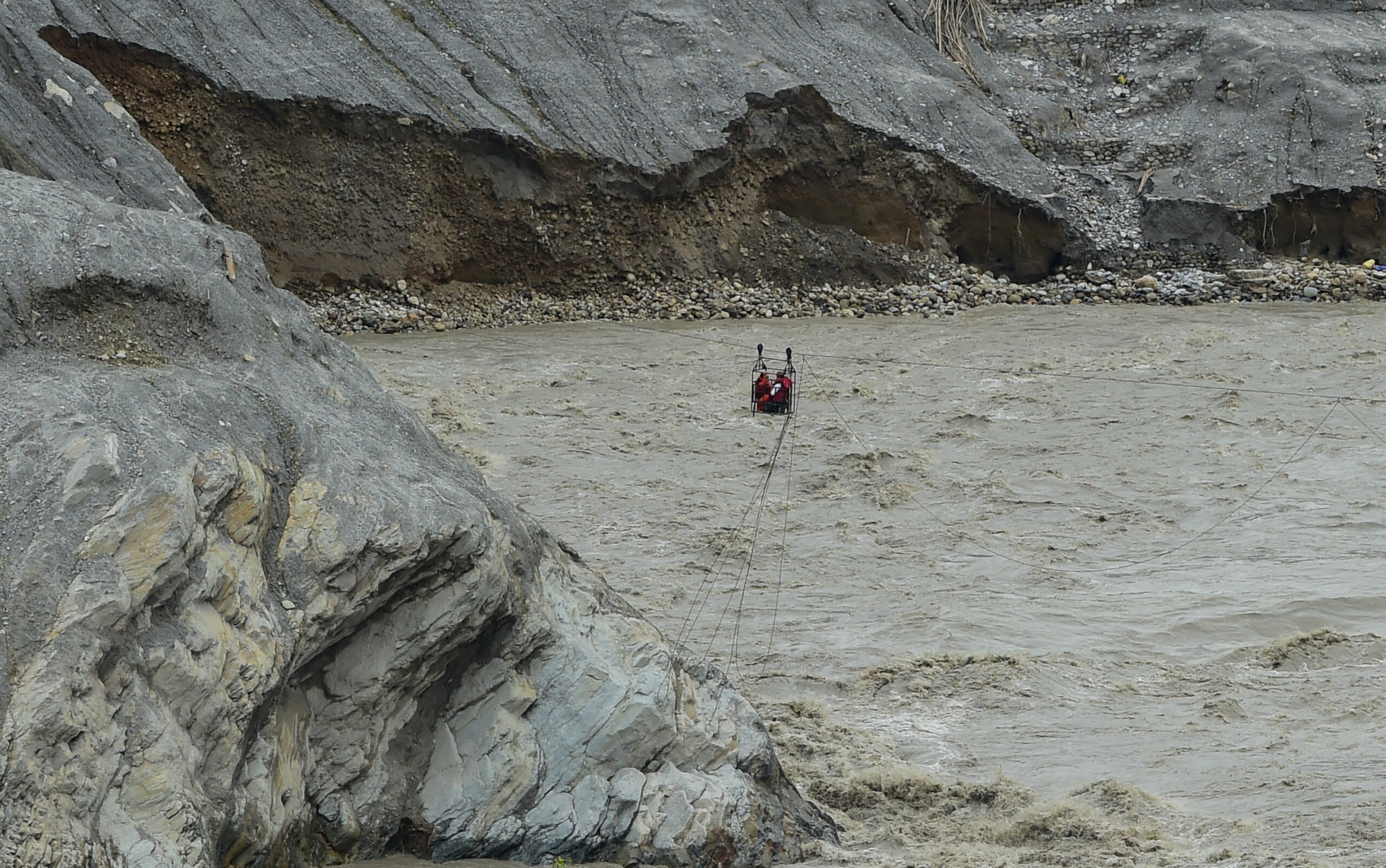
Prior to the publication of this report, a serious mudslide disaster occurred along the China-Nepal border. On August 26th, a massive ice-rock collapse in the Himalayan region triggered landslides and flash floods, devastating downstream valleys. As of September 9th, this disaster has resulted in at least 1300 fatalities in Nepal and the Tibet region of China, with over 5000 people still missing.
The abbreviated version of the report released this month (with the full version expected in October) was led by the global sustainable development consultancy firm Systemiq and the Mountain Futures Initiative, with technical support provided by the International Centre for Integrated Mountain Development (ICIMOD) and the G.B. Pant National Institute of Himalayan Environment and Sustainable Development in India (GBPNIHE).
The report reveals that the rate of ice loss in the Himalayan glaciers has accelerated by 65% compared to a decade ago. The vast mountain range system spanning from Afghanistan to Myanmar, known as the Hindu Kush Himalaya (HKH), is estimated to have 40,000 glaciers, of which only 21 are under long-term monitoring.
Meanwhile, nearly 200 glacial lakes in India alone are classified as high-risk, with 56 deemed at “extremely high risk”; the bursting of these lakes poses a fatal threat to millions of downstream residents.
As the Himalayan region approaches the “peak water” – the point where river flow ceases to rise and begins to decline – the water security of the region faces a critical test. Multiple studies, including the report, indicate that most Himalayan river basins are expected to reach this critical point around the mid-century, after which the meltwater runoff will start to diminish.
Research data shows that despite the Himalayan region in India covering only 18% of the country’s land area, it accounts for about 35% of the nation’s natural disasters, highlighting its vulnerability.
The environmental changes in the Himalayan region not only concern the safety of downstream residents but also directly impact the economic development of both the upstream mountainous areas and the downstream river basins.
Given that the Himalayan region in India supports over 20% of the country’s Gross Domestic Product (GDP), the water resources in the area are considered a crucial foundation of India’s national economic system, upon which the livelihoods of hundreds of millions of people rely.