
Tropical storm “Rachel” made landfall near the southern California and Mexico border on Sunday morning, October 11th, causing widespread cooling in the southwestern United States and triggering severe flooding and high wave risks, leading to evacuations of residents.
Media reports indicate that “Rachel” is the 19th named storm of the 2026 Pacific hurricane season. Last Saturday evening, the system weakened and transitioned into a post-tropical cyclone due to factors such as lower sea surface temperatures. It then landed in northern Baja California, Mexico, and continued to move towards the southwestern United States. Before moving into cooler waters, “Rachel” briefly intensified into a powerful Category 3 hurricane.
Despite the system’s structure becoming quite loose before landfall, the strong storm surge and large amount of moisture it carried still caused rare and significant damage to areas along the U.S.-Mexico border.
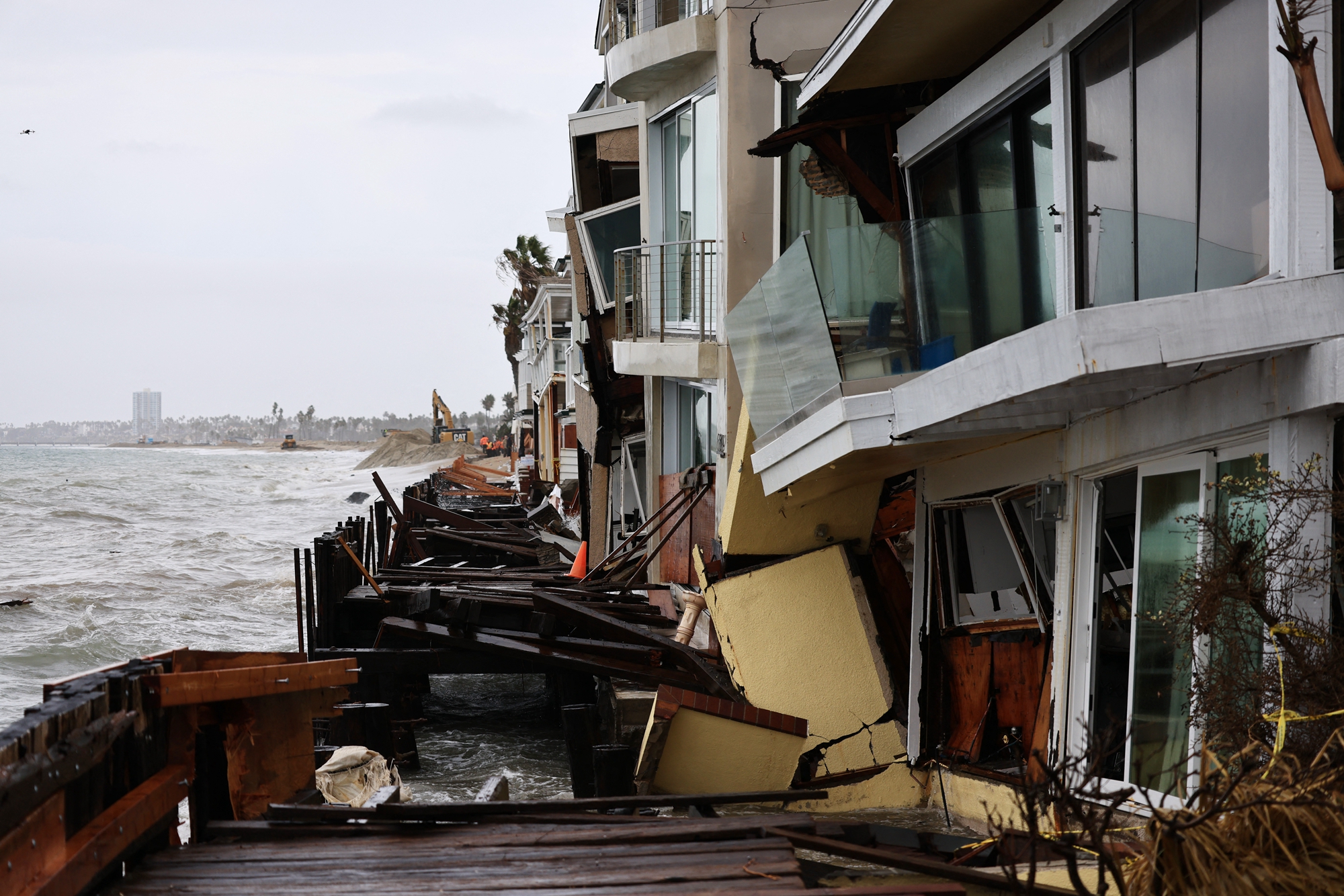
Due to the impact of huge waves and high tides, some coastal areas in southern California saw waves reaching up to 8 to 10 feet (about 2.4 to 3 meters). In Long Beach, a century-old iconic seaside boardwalk was completely destroyed by the massive waves, with eight buildings deemed unsafe. The Long Beach city government issued mandatory evacuation orders for residents along the boardwalk.
Newport Beach in Orange County experienced widespread flooding starting from last Friday, where multiple homes and businesses were submerged. The local government declared a state of emergency on the same day.
As a result of the storm system, the record-breaking extreme temperatures in southern California have plummeted significantly, with maximum temperatures dropping to the low 60s to mid-70s Fahrenheit (around 16 to 21 degrees Celsius), which is 10 to 20 degrees Fahrenheit lower than the seasonal averages.
The National Hurricane Center reported on Sunday morning that as the remnants of “Rachel” continued to move northeast inland (crossing the Colorado River valley towards southern Utah and southern Nevada), the residual moisture is bringing rainfall of up to 1 to 5 inches to inland areas such as the Mojave Desert, Las Vegas, and other parts of the southwestern United States, posing a high risk of flash floods and urban inundation.