
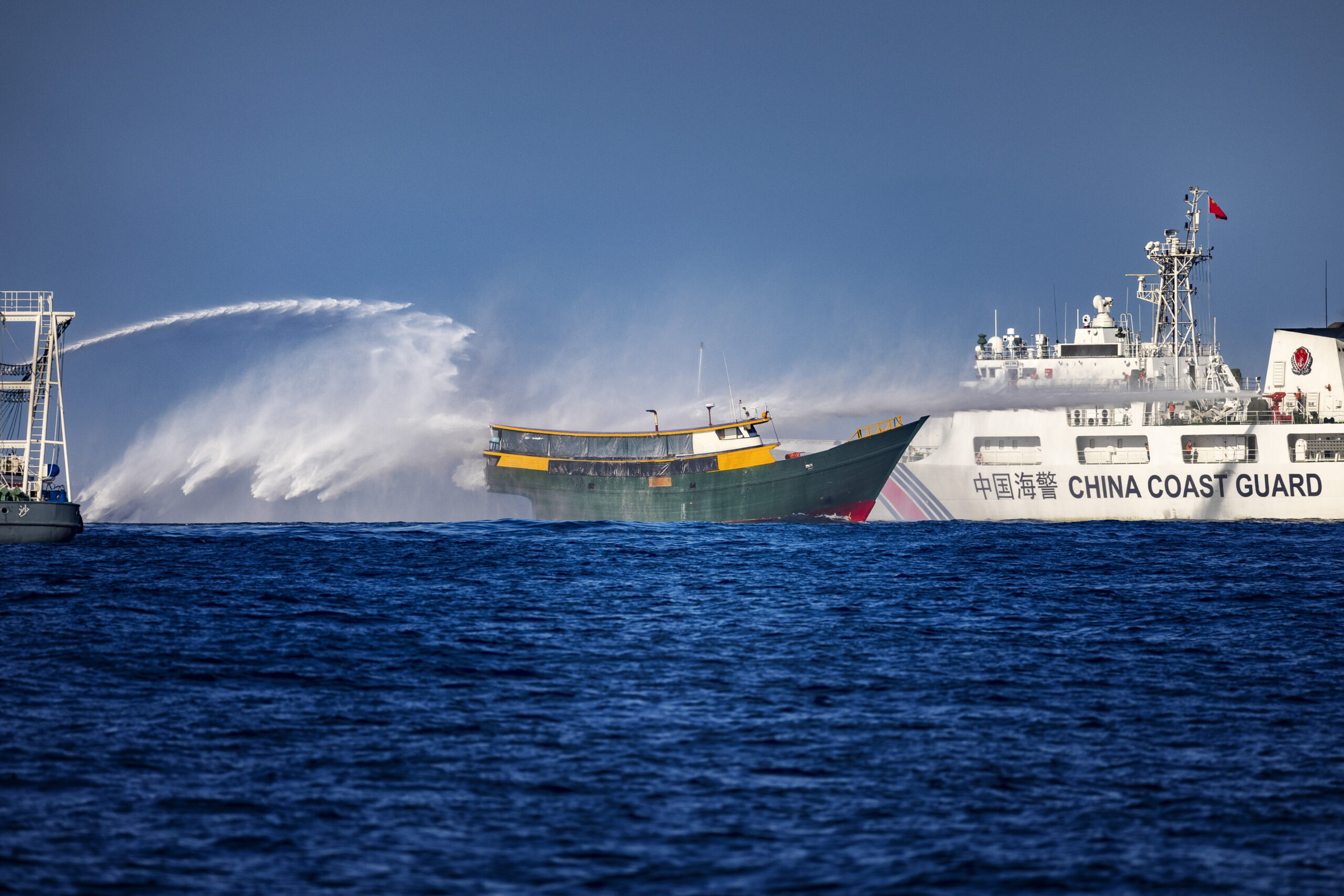
As tensions escalate between the Philippines and Beijing over maritime disputes in the South China Sea, Filipino authorities are actively considering the possibility of a second significant legal action. This move aims to hold Beijing accountable through international litigation mechanisms and seek compensation.
During a South China Sea seminar held in Sanya, China on November 7, the President of the Philippine Society for International Security Studies, Rommel Banlaoi, confirmed that the Philippine government is indeed contemplating filing another lawsuit against China. Relevant departments have already begun preparing the necessary legal documents needed to initiate this action.
This year marks the 10th anniversary of the Hague tribunal’s ruling that deemed Beijing’s claims in the South China Sea invalid. Banlaoi mentioned that any legal action would ultimately require the approval of Philippine President Ferdinand Marcos Jr.
He added that, given the Philippines’ role as the rotating chair of the Association of Southeast Asian Nations (ASEAN) this year and ongoing negotiations with Beijing regarding the “Code of Conduct in the South China Sea,” Manila may temporally exercise restraint. However, should the lawsuit move forward, it would likely focus on seeking compensation and legal accountability for environmental degradation, economic losses, alleged sovereignty violations, and breaches of the United Nations Convention on the Law of the Sea (UNCLOS).
Reports from Reuters previously indicated that Philippine Justice Secretary Crispin Remulla has made it clear that the government is actively discussing options for international legal platforms to pursue this lawsuit, with possibilities including the Permanent Court of Arbitration and the International Court of Justice currently under evaluation.
The core focus of the Philippines’ new legal framework revolves around environmental degradation. The Philippines accuses China of over-exploitation of giant clams, large-scale dredging activities, and constructing artificial islands within its Exclusive Economic Zone (EEZ), all of which have caused significant and irreversible damage to coral reefs and marine biodiversity.
According to the Center for Strategic and International Studies (CSIS), China’s island-building activities have reportedly buried over 1,860 hectares of reefs. Remulla emphasized that the Philippine Coast Guard and other frontline agencies have compiled substantial evidence, asserting that the case is fundamentally civil in nature, aimed at seeking compensation from China.
In response to the Philippines’ allegations regarding the damage to marine ecosystems, Beijing has consistently denied any wrongdoing. Instead, it accused the Philippines of deliberately grounding a warship on the Second Thomas Shoal in 1999, which allegedly caused damage to the reef.
For a long time, maritime friction between both nations has been recurrent in disputed areas such as Scarborough Shoal, Second Thomas Shoal, and Sabina Shoal. In addition to refusing to acknowledge the 2016 arbitral ruling on the South China Sea, Beijing continues to deploy its Coast Guard and maritime militia to bolster its maritime patrols in the region.
As the situation develops, the prospect of renewed legal action could further complicate diplomatic relations between the Philippines and China, providing a crucial avenue for Manila to assert its rights and seek justice in the face of persistent maritime challenges.