
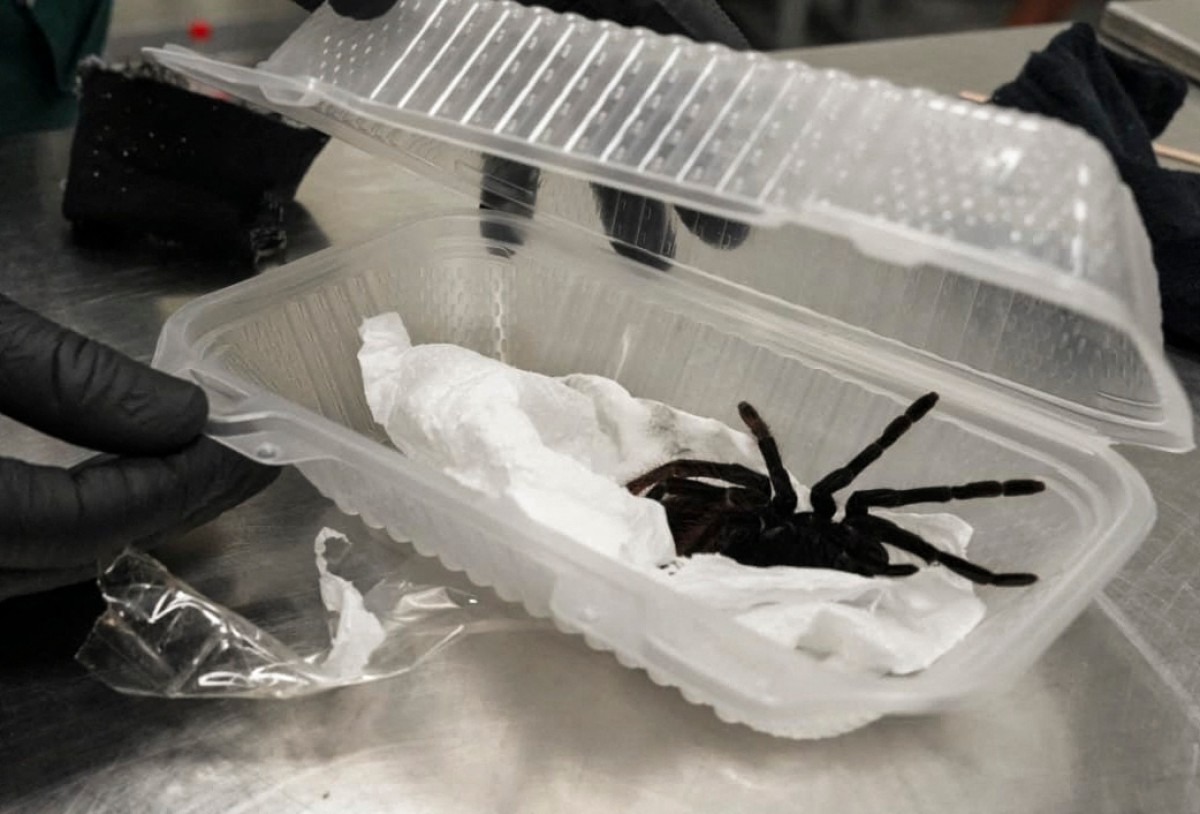
On Wednesday, the National Forestry and Wildlife Management Authority of Peru (Serfor) reported a significant seizure of more than 3,000 tarantulas at an airport. These exotic spiders were discovered hidden within socks in the luggage of two German citizens and one Polish citizen, who were preparing to board a flight to Germany.
The incident occurred at an airport located in Callao, near Lima, the capital of Peru. The three travelers were intercepted while checking in for their flight, and they have since been detained by the environmental crime police in Peru.
According to officials from Serfor and customs, the investigation was initiated following an anonymous tip-off, which led to the discovery of the tarantulas. The seized spiders were in various developmental stages, including eggs, juvenile forms, and adults. They were concealed in three separate suitcases packed with dozens of socks, each labeled for identification.
Cora Suarez, a technician specializing in wildlife and forestry regulation, noted that each suitcase contained between 15 to 22 socks, with each sock harboring a varying number of tarantulas of different species.
Suarez pointed out that the seized tarantulas belong to several genera, including Brachypelma, Pamphobeteus, and Avicularia.
“The appeal of these species lies in their vibrant colors and substantial size, but most importantly, they are likely intended for sale to collectors,” said Suarez.
Currently, the three travelers face criminal charges led by an office of prosecutors specializing in environmental crime.
Keith Jeffries, Vice President of K2 Security Screening Group in Orlando and a former federal security director at Los Angeles International Airport, commented on the incident, stating that, driven by profit, various unexpected methods of wildlife smuggling can emerge.
“As long as there is a market, there will be someone trying to smuggle,” Jeffries remarked.
“This is a situation we have seen many times,” he added, emphasizing that the frequency of such incidents is higher than anyone might wish.
This latest discovery of tarantulas is not the first instance where authorities found living creatures concealed in travelers’ luggage. Just this past August, a Mexican man arrived at Tokyo Haneda Airport with approximately 200 lizards, including nine individuals classified as endangered species under international trade regulations — specifically, the arboreal alligator lizard. Customs officials discovered that these lizards were stuffed into 22 pairs of socks and wrapped in T-shirts. This individual was arrested for suspected smuggling of protected animals without proper permits.
The ongoing issue of wildlife trafficking continues to raise alarm, prompting calls for more stringent security measures and awareness around the illegal animal trade. As authorities work to tighten regulations, incidents such as these highlight the pressing need for vigilance in airport security protocols and international wildlife conservation efforts.