
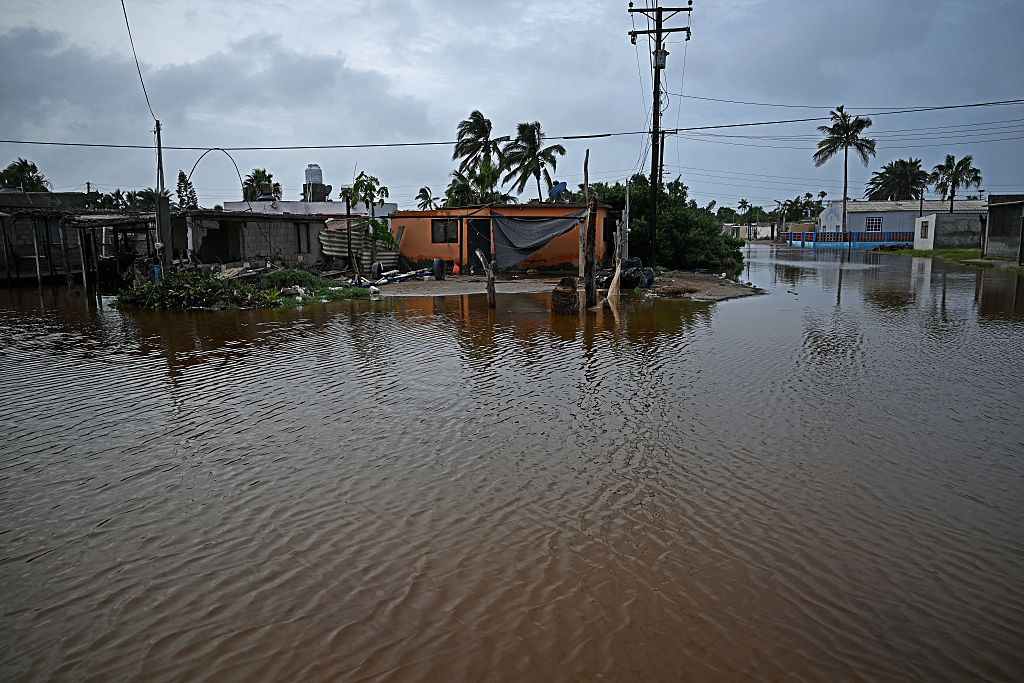
The National Hurricane Center (NHC) of the United States announced on Tuesday, September 29th, that Hurricane “Polo” is expected to begin impacting the southwestern region of the United States after crossing Mexico.
According to the NHC, “Polo” made its initial landfall as a category 2 hurricane in northwestern Mexico earlier on Tuesday. It hit the southern Baja California Sur region of Mexico, then moved northeast, crossing the Gulf of California at noon on Tuesday and making a second landfall in the state of Sonora, Mexico. After the second landfall, Polo weakened to a tropical storm and continued moving inland.
It is forecasted that this storm will continue to move northeast, bringing more heavy rainfall to parts of the southwestern United States, with the already heavy rains causing flooding.
Meteorologists have warned that the central-northern region of New Mexico in the United States may be affected by this storm system. Rainfall amounts of 3 to 4 inches (about 8 to 10 centimeters) are expected by Wednesday, with some areas possibly receiving even more rainfall.
As the rainfall swept through the southwestern United States on Tuesday, over 30 million people from Arizona to Iowa could be facing flash floods. Some roads in southern New Mexico are already submerged due to heavy rain, leaving drivers stranded in their vehicles.
The rainfall in the region is expected to continue during the storm’s passage.
On Tuesday, the weather system quickly passed through Phoenix, Arizona, bringing up to 2 inches (5 centimeters) of rainfall before gradually weakening.
Floods wreaked havoc near Zion National Park in Utah, with reports of a shipping container being washed away.
Reports of flooding also emerged in southern New Mexico.
Meteorologists say that the flood risk will shift to parts of the central United States starting late on Tuesday and continue into Wednesday. Beginning later on Wednesday, widespread heavy rainfall is expected in areas like Dallas-Fort Worth, Austin, and San Antonio, potentially leading to life-threatening flash floods, especially in low-lying areas.
Parts of western Texas, Oklahoma, Kansas, Nebraska, and Iowa are under flood alerts and are expected to last until Thursday, with some areas potentially receiving up to 5 inches (13 centimeters) of rainfall.