
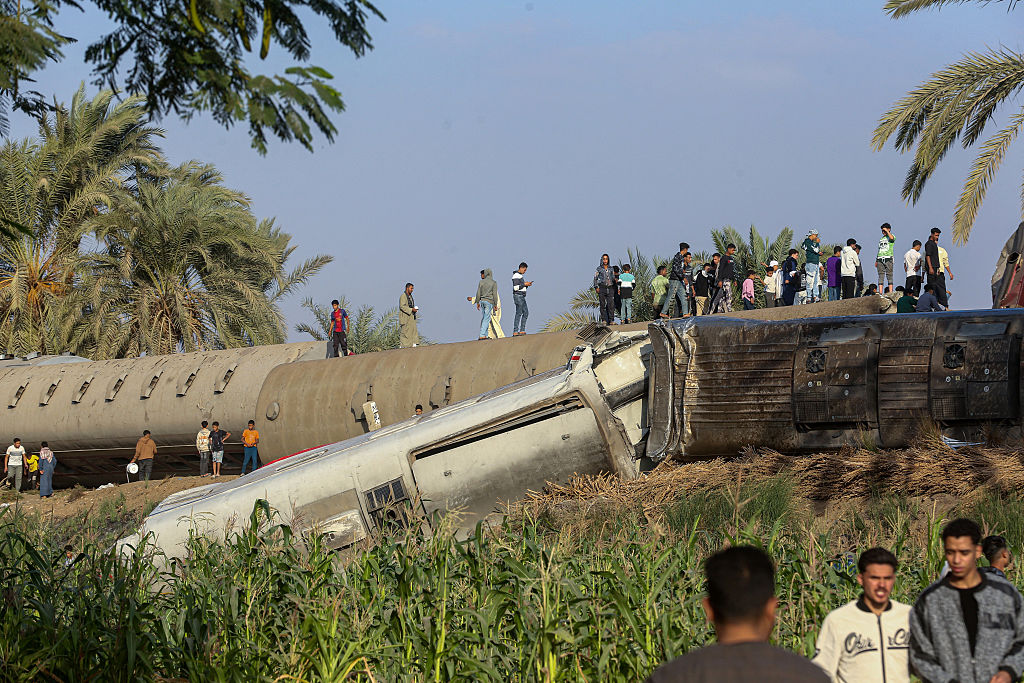
On November 8, two trains collided just south of Cairo, Egypt, resulting in a tragic incident that has left at least four individuals dead and 88 others injured.
According to the Egyptian Ministry of Transportation, the accident occurred in the Al-Ayyat district of Giza Province, approximately 52 kilometers (32 miles) south of the capital. The collision took place when a train traveling towards the southwestern Fayoum Governorate rear-ended another train that was heading towards Aswan in the south. Authorities reported that several carriages of one train derailed during the impact, although they have not specified which train was affected. The derailed carriages ended up overturned in a nearby field.
The Ministry of Health has confirmed the casualties, stating that four people lost their lives and 88 were injured in the crash. Those injured have been transported to local hospitals for urgent medical care.
In response to the tragedy, Egyptian President Abdel Fattah el-Sisi expressed his deep concern over the incident through social media. He is reportedly closely monitoring the situation and has ordered an expedited investigation to bring those responsible to justice.
President el-Sisi extended his condolences and sympathies to the families of the victims, promising various forms of support for them, and wishing a speedy recovery to the injured parties.
The Egyptian Railway Authority announced that rescue teams and cranes have been dispatched to the scene of the collision to facilitate the clearing of debris and restore normal train services as soon as possible.
The Ministry of Health indicated that a total of 72 ambulances were deployed to the crash site, ensuring that the injured received timely assistance by transferring them to three different hospitals for treatment.
This incident brings to mind a similar event from September of the previous year, when two freight trains collided in the same region, resulting in injuries to both a train driver and his assistant. Such recurring incidents raise ongoing concerns about railway safety within the country and highlight the urgent need for improvements in infrastructure and operational protocols.