
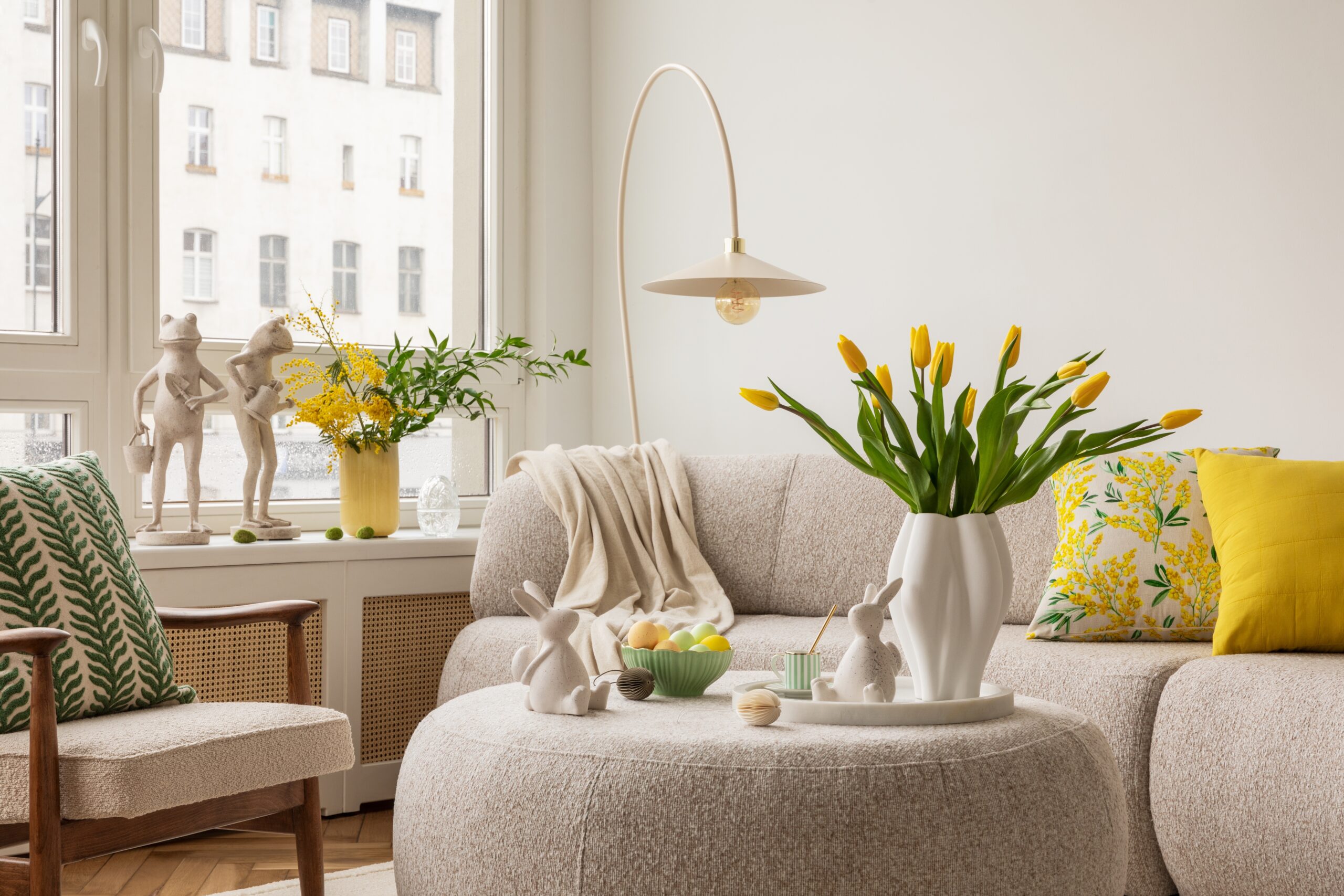
Have you ever stepped into a home that didn’t resonate with your personal style, yet found yourself thinking, “This place feels really comfortable”? The sense of comfort you experience may not merely stem from good design taste; rather, it can be attributed to the underlying principles of psychology at play. A recent exploration on the YouTube channel Five By Nine highlights various psychological principles that can enhance the feel of your home, along with practical advice on how to implement these principles without embarking on extensive renovations or purchasing an abundance of new furniture.
To begin with, let’s address a fundamental human need: our brains’ craving for a sense of security. If you find it hard to concentrate at your desk, struggle to get restful sleep in your bed, or feel disinclined to sit on a beautifully designed sofa, it may not be a reflection of your taste but rather an issue with the layout of your space.
One psychological principle known as the Prospect-Refuge Theory posits that humans feel safest and most comfortable in spaces where they can see their surroundings while still feeling protected. This concept makes intuitive sense when we consider the lives of our early ancestors. For them, the safest places were not the vast open fields, but rather the edges of forests or caves—locations where they could observe the environment ahead while having solid cover behind them. Despite the significant differences in our living environments today, our nervous systems respond in much the same way. We tend to relax when our view is unobstructed and when we feel a sense of protection behind us.
Accordingly, one common mistake in home layouts is positioning oneself in a spot where it’s hard to see what’s behind. For example, many people place their home office desks directly facing a wall, with their back to the entrance; or they set their sofa in the center of a room, resulting in the main walkway being directly behind them. When this happens, your brain perceives that blind spot as a potential threat, keeping the amygdala—the part of the brain responsible for detecting threats—on high alert, and expending energy to monitor the unseen area behind you. This heightened state of vigilance can lead to feelings of anxiety, physical tension, difficulty concentrating, or the inexplicable urge to get up and leave the room.
So, how can you address this? You need to establish what’s known as command positions in key areas of your home. Start by walking through your house and identifying the places where you spend the most time, such as at your desk, on the sofa, and in your bed. For each of these areas, keep two important points in mind. First, ensure you have a solid backing, meaning you should be positioned with a wall or some other sturdy object directly behind you. Second, your view should be open enough to clearly see the room’s major points of entry when you sit or lie down.
But what if this setup isn’t feasible for your space? What if you prefer not to place your sofa against the wall? In such cases, you’ll need to create an artificial refuge to comfort your brain. For example, you could position a sturdy narrow table behind the sofa and complement it with floor lamps, stacked books, and lush potted plants to add a sense of visual weight. These elements can create a psychological barrier, signaling to your nervous system, “My back is protected; I can relax.”
Thus, simply rearranging your furniture to achieve a proper command position can significantly enhance your sense of relaxation in a room, as your brain finally receives the security it has been craving.
Have you ever purchased a stunning piece of furniture only to find that, once home, it made the entire room look worse? Suddenly, your previously beloved items appear cheap, worn, or outdated in comparison to the new addition. As a result, you may feel an almost irresistible urge to replace everything else just to match the new piece.
This phenomenon isn’t an overreaction; you are experiencing what psychologists refer to as the Diderot Effect. Named after the 18th-century French philosopher Denis Diderot, this concept originated when Diderot received a luxurious scarlet robe, which led him to realize that his other possessions seemed inadequate compared to this new item. Agitated by this dissonance, he began replacing one item after another, ultimately spiraling into significant debt—a classic demonstration of the Diderot Effect.
When a shiny new luxury item alters your reference point, it can feel like everything around you must also be upgraded in order to maintain a sense of harmony. When you introduce a piece of furniture with a distinctly different style, your brain interprets this as friction and seeks to resolve it by purchasing more items.
However, the goal is not to stop acquiring beautiful pieces but to prevent one item from forcing others into an unwanted makeover. To navigate this situation gracefully, leverage bridging pieces—items that can unify disparate styles. If all your room’s items share a consistent aesthetic or color palette, then any new addition will appear out of place, leading to a lack of flexibility. Conversely, intentionally mixing styles can create a foundation that accommodates change.
Common bridging elements include natural wood or weathered finishes, antique brass, aged leather, richly textured linens, and stone or ceramics with natural patterns. These materials act as visual buffers, communicating to your brain that “this space has depth and is not just an assemblage of products from a catalog.” For instance, a sleek polished chrome lamp may look out of place on a cheap laminate table, but place that same lamp on a weathered wooden table, and it suddenly becomes a stylish centerpiece. Understanding how to effectively utilize bridging pieces can help avoid the pitfalls of the Diderot Effect.
Have you ever entered a room that looked beautiful yet simultaneously felt inexplicably tense? It’s as if every sound is amplified—the scrape of a chair against the floor is jarring, and even the soft clink of glass seems sharp.
Even if a room is visually appealing, discordant sounds can elevate your stress levels. This reaction stems from a neurological phenomenon known as Sensory Gating, through which your brain filters out repetitive, safe background noises, allowing you to focus and relax. This is why you may hardly notice the low hum of your refrigerator. In a quiet, acoustically soft room, your brain can seamlessly filter out subtle sounds, calming your nervous system in the process.
Yet, contemporary design tends to favor smooth, reflective surfaces. Many have removed carpeting in favor of hardwood or vinyl floors, opting for smooth drywall, bare windows, glass, metal, and minimalist decor. While aesthetically pleasing, these choices can inadvertently transform your home into an echo chamber. In spaces filled with hard surfaces, sound cannot be absorbed but is instead constantly reflected. This creates sharp high-frequency echoes, making it much harder for your brain to filter out noise. Consequently, every sound—from footsteps to chair movements to the slightest tap on a stone surface—is relayed to your brain as noise, which it interprets as chaotic. This explains why spending an hour in a trendy minimalist café might leave you feeling inexplicably fatigued and irritable, even if nothing unpleasant happened. The space may look stunning, but it places an overload of strain on your nervous system.
Thus, the solution rests in employing acoustic anchoring design. You need to introduce elements that absorb sound and impede sound wave reflections. Start from the ground up. If your room is still echoing despite carpeting, consider placing a thick carpet pad under your rug; the padding’s sound-absorbing capabilities often surpass that of the rug itself. Next, soften vertical surfaces. Opt for thick drapery instead of relying solely on blinds or shades. When selecting artwork, prioritize items that won’t contribute to hard reflections, such as tapestries or canvas prints without glass. The sound reflections caused by glass are nearly as harsh as exposed drywall. By layering these soft acoustic materials throughout the space, the room’s atmosphere will fundamentally shift toward a quieter and more relaxing environment.
Have you spent a long time curating a specific aesthetic in your home, only to feel a disconnect just a few months later? While this may not be due to poor design, you might find your emotions detached from the space. This sentiment may arise from a psychological phenomenon known as the Mere Exposure Effect.
The Mere Exposure Effect implies that repeated exposure to something—be it a person, a song, a particular face, or a series of symbols—can lead to an increased liking or preference for that entity. Psychologist Robert Zajonc discovered this phenomenon in the 1960s during experiments showing that people tended to give more positive evaluations to random shapes or even nonsensical words after repeated exposure. This occurs because the brain equates familiarity with safety, which is inherently positive.
In today’s social media landscape, this neural mechanism is leveraged to instill preferences that you may not have consciously chosen. As you scroll through Pinterest or Instagram seeking inspiration, you’re not confronted with endless diversity; instead, similar home decor trends appear repeatedly in slightly altered forms until you begin to perceive them as your preferred style. Once you’ve encountered something 300 times, your brain starts mistaking that exposure for genuine taste. As a result, you might design your living room around items you think you like. However, this preference is fragile; as soon as the algorithm shifts to a different trend, the spell is broken. Suddenly, it seems like your room no longer belongs to you, giving rise to what’s known as “trend fatigue.”
So, how can you escape this cycle? Engage in an “analogue test.” The key is to temporarily detach from algorithmic control, allowing yourself time to discern what you genuinely appreciate when no one is pushing information upon you. Start by putting your phone down and examining your actual life. Begin with your wardrobe. What colors do you find yourself repeatedly wearing? Focus on those items you genuinely reach for, not those picked to match the “ideal you.” Pay attention to the textures you enjoy—do you favor structured materials or lean towards softer fabrics?
Next, think about places in the physical world that resonate with you. This might be a particular hotel, a restaurant, or even a city that made you feel at home. What emotions did these places evoke? Were they warm and dim, bright and minimalist, or rustic and layered? Concentrate on those elements that brought you joy.
Additionally, observe tangible references. Head to a bookstore or library and browse through books on architecture, interior design, and art. Notice which images attract your attention. This contrasts sharply with the social media experience, where recommendations are tailored to you, uniquely driven by algorithms. Thus, you’ll discover your genuine reactions to certain items before the algorithm has a chance to influence you.
By anchoring your design choices in real-life experiences, you can sidestep the Mere Exposure Effect and begin crafting a home that genuinely reflects your identity. A space based on your preferences will continue to resonate with you, providing a sense of belonging even a decade later, regardless of current online trends.
Even if your home perfectly aligns with your aesthetic, you may still find yourself feeling drained. Design goes beyond mere taste; it profoundly impacts energy levels. If you work in a modern office, traverse a “concrete jungle,” or reside in a newly constructed apartment marked by artificial decor, you are likely to feel extremely fatigued by day’s end. Many individuals attribute this exhaustion to work or inadequate sleep; however, the effects of your environment on your brain are deeply significant, impacting both the restoration of attention and its depletion. This is where Attention Restoration Theory comes into play.
Proposed by two environmental psychologists, the Attention Restoration Theory posits that attention is not infinite and operates under two distinct modes. The first is Directed Attention, which is needed when working, studying, or processing complex information in urban settings. Extended reliance on Directed Attention leads to cognitive fatigue, as it strains the prefrontal cortex of the brain. In contrast, the second mode, Soft Fascination, encompasses effortless, involuntary attention prompted by natural settings. Exposure to nature—like forests, green spaces, and oceans—allows the tense Directed Attention to rest, explaining the healing effects of being surrounded by nature.
However, we now create homes that, while sleek and stylish, lack the gentleness found in the natural world. Impeccably smooth walls, pristine cabinetry, plastic face coverings, and faux wood finishes all embody manufactured symmetry and flawlessness. Yet, when sitting in a room that resembles an office, your gaze finds no point of comfort due to the absence of natural complexity, visual softness, or organic variation. As a result, even in restful environments, your brain stays in a mode of operation that leads you to experience low-grade, sustained mental fatigue.
The remedy isn’t as simple as placing a plant in your space; rather, it’s about introducing the types of organic lines your brain naturally adapts to. In nature, patterns are always complex and irregular, whether in the grain of wood or the veins of natural stone. Your visual system evolved outdoors, effortlessly processing these types of patterns, essentially serving as your brain’s native language. Thus, by incorporating such organic elements into your home, you create spaces that allow your attention to take a breather, transforming previously tiring environments into opportunities for restoration.
To energize your home effectively, begin with the largest surface areas. Opt for natural wood that reveals knots and grain rather than flawless lacquered finishes. If budget allows, include elements of natural stone in small applications like side tables, trays, or lamp bases, focusing on their organic textures rather than uniform patterns. Also, think about introducing tactile natural textiles such as linen, wool, or coarse cotton, with surfaces that reflect light in varied ways. If you want an economical approach, concentrate on items you touch and view most frequently—such as a wooden coffee table, linen curtains, or ceramic lamps. These items engage your soft fascination, helping your brain cease its overactive function.
Next, let’s address a common mistake often made in small spaces. When a living room feels cramped, many individuals push all furniture against the walls, believing that doing so will create the illusion of more space in the center. In reality, this approach tends to make a room feel cheaper and more cluttered, rather than more spacious. When furniture is pushed against the walls, it lacks depth, which is essential for a feeling of expansiveness. This explains why hospital waiting rooms often evoke such discomfort—chairs are arranged along walls, with everyone staring into an empty center, yet the space still feels constricted.
Fortunately, the solution is straightforward: you need to let the room “float.” Start by bringing your sofa out from the wall by one to two inches—about 2.5 to 5 centimeters. This small gap creates a shadow behind the sofa, sending a signal to your brain that the room has depth, and depth is the key to feeling spacious. Simply doing this can yield surprising results.
For further enhancement, ensure that every room has a clear pathway. Designate a route from one side of the room to the other and keep it open. If you have to choose between a bulky coffee table and an unobstructed path, prioritize the path every time. If space is truly limited, consider replacing heavy furniture with lighter options, such as a slender-legged sofa or a coffee table with an open base for airflow. By selecting these types of furniture, you’re not only saving space but also allowing light to permeate, maintaining a sense of openness and freshness in the room.
In conclusion, there are a multitude of psychological principles that can help transform your living space into a sanctuary that feels safe and authentic to you. By understanding and applying these principles, you can create an environment that nurtures your well-being while reflecting your personal taste. With careful consideration given to layout, sensory experiences, and the integration of natural elements, your home can become a place not just of refuge, but of rejuvenation and true comfort.