
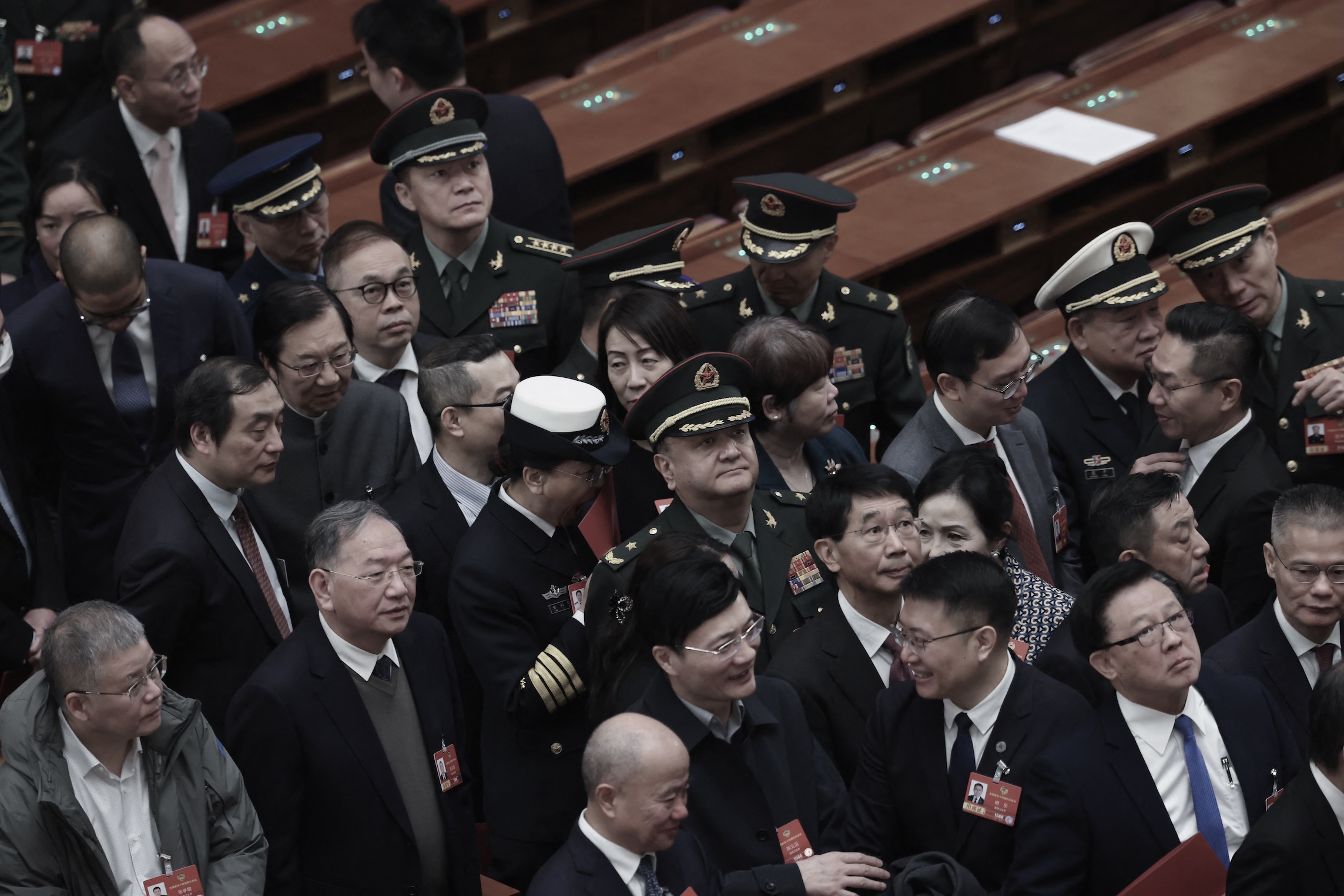
Recent decisions arising from the Chinese Communist Party’s (CCP) Fifth Plenary Session of the 20th Central Committee have sparked considerable discussion, particularly regarding the targeting of individuals dubbed “two-faced people” and so-called “good people.” Analysts interpret this as a signal from the party leadership about the impending initiation of purges. Experts assert that this move is a strategic effort by CCP leader Xi Jinping to preemptively manage the political landscape ahead of the 21st National Congress, offering justification for the discipline of officials who do not conform.
The decisions, publicized by state media as part of a document on “The Comprehensive Strict Governance of the Party,” explicitly call for opposition to the behavior of so-called “good people.” This terminology refers to officials who prioritize consensus over principle during their service in the government. A notable point made in a February article in the CCP’s publication, “Qiushi,” indicated that such “good people” prominently exhibit their tendencies during annual evaluations of cadres. They often aim to balance between conflicting interests, attempting to appease everyone while overlooking fundamental rules and ethical standards.
Reports from the Hong Kong-based newspaper “South China Morning Post” highlight that the CCP has long criticized those officials who adopt a “pleasing persona.” The new directions taken during the Fifth Plenary Session distinctly classify this type of conduct as a target for reformation, a rare elevation of disciplinary measures within the party.
One illustrative case mentioned is that of Tong Mingqian, the former secretary of the Hengyang Municipal Committee of Hunan Province, whose soft demeanor ultimately led to his downfall. During the 2013 election of representatives for the Hengyang Municipal People’s Congress, it was uncovered that among the 527 representatives, 518 were implicated in bribery. Tong was investigated after failing to order an inquiry into these activities, resulting in his condemnation and a five-year prison sentence in August 2014. The total amount of bribes involved in this case was a staggering 110 million yuan.
Sydney Technology University’s associate professor Feng Chongyi shared with media interpretations that the CCP’s effort to root out “good people” is fundamentally a manipulation tactic. He suggests that Xi Jinping wishes for competing factions to fight amongst themselves and report on one another – ultimately coming to him for judgment, thereby bolstering his authority.
Feng asserted that Xi is sending a clear message: officials must not merely play the conciliatory role; rather, they must engage in political struggles. This creates an environment where individuals might attempt to win favor with Xi by denouncing others for the potential of career advancement. As Feng pointed out, prohibiting the “good person” behavior effectively encourages the emergence of deceitful individuals, which are abundant within the party. Having spent considerable time in the political arena, Xi understands the party’s inherent flaws.
Feng also implied that the issues faced by the CCP under Xi’s leadership stem from his own inability to inspire confidence, which has led to a stifled political atmosphere. The pervasive sense of vulnerability among officials has turned governance into a cautious game of avoiding mistakes rather than seeking achievements.
According to Feng, Xi’s intensified efforts to rectify behavior among officials serves to pave the way for the proceedings of the 21st National Congress. His desire is to maintain a firm grip on all members of the party, ensuring the continuation of his leadership style.
Further commentary from Australian political scientist Dr. Lin Song addresses the systemic issues that allow so many officials within the CCP to refrain from speaking candidly or to shoulder responsibilities. He elaborates that the Party’s environment inherently fosters rivalry among members, breeding a culture of fear that stifles honesty and accountability.
Dr. Lin posits that the CCP’s current initiative against “good people” is merely a pretext to target officials who are deemed disobedient. With the upcoming National Congress approaching, it appears Xi intends to leverage this superficially palatable rationale in a bid to regain control over the party’s fractious political landscape.