
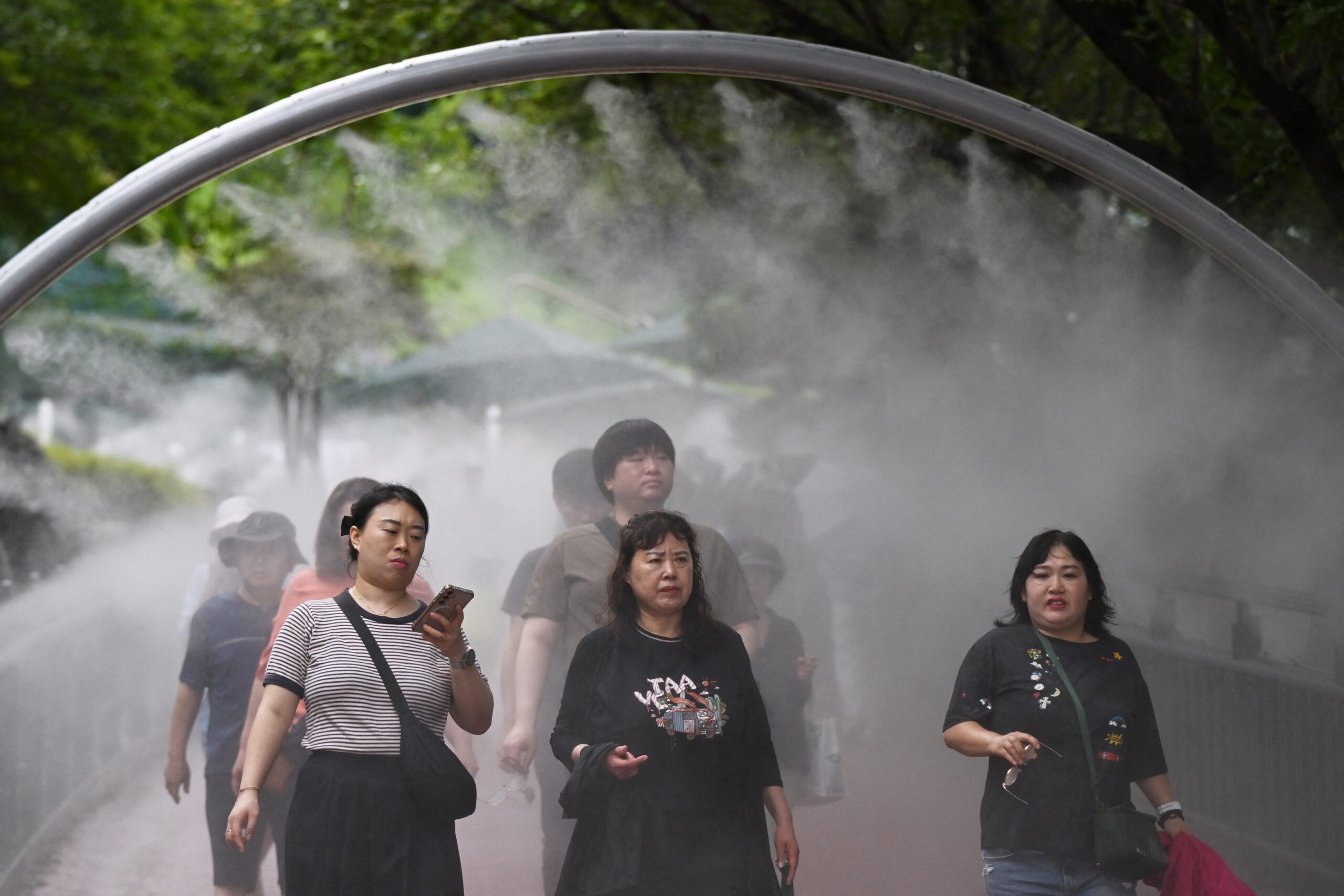
South Korea is currently facing a historic heatwave, with temperatures nearing 40 degrees Celsius in many areas. Recently, the city of Yangsan in the southeastern Gyeongsangnam-do province recorded a temperature of 42.5 degrees Celsius, setting a new record in South Korea’s 122-year meteorological history. As of Wednesday, the scorching heat has led to the death of 21 people, with thousands seeking medical treatment for heat-related illnesses.
President of South Korea, Lee Jae-myung, issued an order on Thursday to mobilize all administrative forces and resources of the government departments and local authorities to minimize the losses caused by the high temperatures and drought to the public.
Lee Jae-myung chaired a meeting on heatwaves and drought responses at the central government office in Seoul on the same day. He stated that South Korea is facing extreme high temperatures day by day.
“We have never experienced such a scale of extreme heat, and this situation continues day after day. The heatwave that we used to hear about only in foreign news reports has now become our reality,” said Lee Jae-myung.
He emphasized that the heatwave is likely to persist for a while, therefore the government must “activate a comprehensive response system with extraordinary determination until the heatwave subsides.”
In terms of specific response measures, Lee Jae-myung instructed the departments to enhance care for vulnerable groups such as elderly people living alone and residents of shantytowns, and to inspect the safety conditions at construction sites.
He also called for outdoor workplaces to implement rest schedules during the hottest times of the day to prevent workers from prolonged exposure to high temperatures.
To address agricultural losses, the government will strengthen measures to prevent damage to livestock and crops caused by the high temperatures. Faced with the increasingly severe drought in the southern regions, Lee Jae-myung requested preventive measures to ensure sufficient water supply and formulate response plans addressing both short-term and long-term needs.
This heatwave has broken the record for the highest temperature nationwide in South Korea. Yangsan, located in the southeast, recorded a temperature of 42.5 degrees Celsius on Sunday, becoming the highest temperature recorded in South Korea’s meteorological history.
Seoul is expected to reach a high temperature of 39 degrees Celsius on Thursday, approaching the historical record of 39.6 degrees Celsius set in August 2018, which could make it one of the hottest days in modern meteorological records in Seoul.
Meteorologists have stated that although Typhoon Dolphin is not directly threatening South Korea, it could further intensify the heatwave in Seoul and the western regions.
The South Korean Meteorological Administration stated that Typhoon Dolphin has strengthened the east wind. The airflow passing through the mountain ranges that run through the Korean Peninsula descends in the western regions and turns into hot and dry air, further raising temperatures in places like Seoul.
The heatwave has severely impacted the daily lives of the people. The South Korean Meteorological Administration reported that in some parts of Seoul, nighttime temperatures have barely dropped below 30 degrees Celsius. Media footage shows large numbers of people flocking to streams, department stores, and other air-conditioned places to escape the heat.
The high temperatures have also forced the cancellation of South Korean baseball games. According to reports, some spectators fainted due to the intense heat, including a fan who collapsed during a game in Incheon.
Subsequently, the Korea Baseball Organization (KBO) canceled all 10 games scheduled for Wednesday and Thursday.