
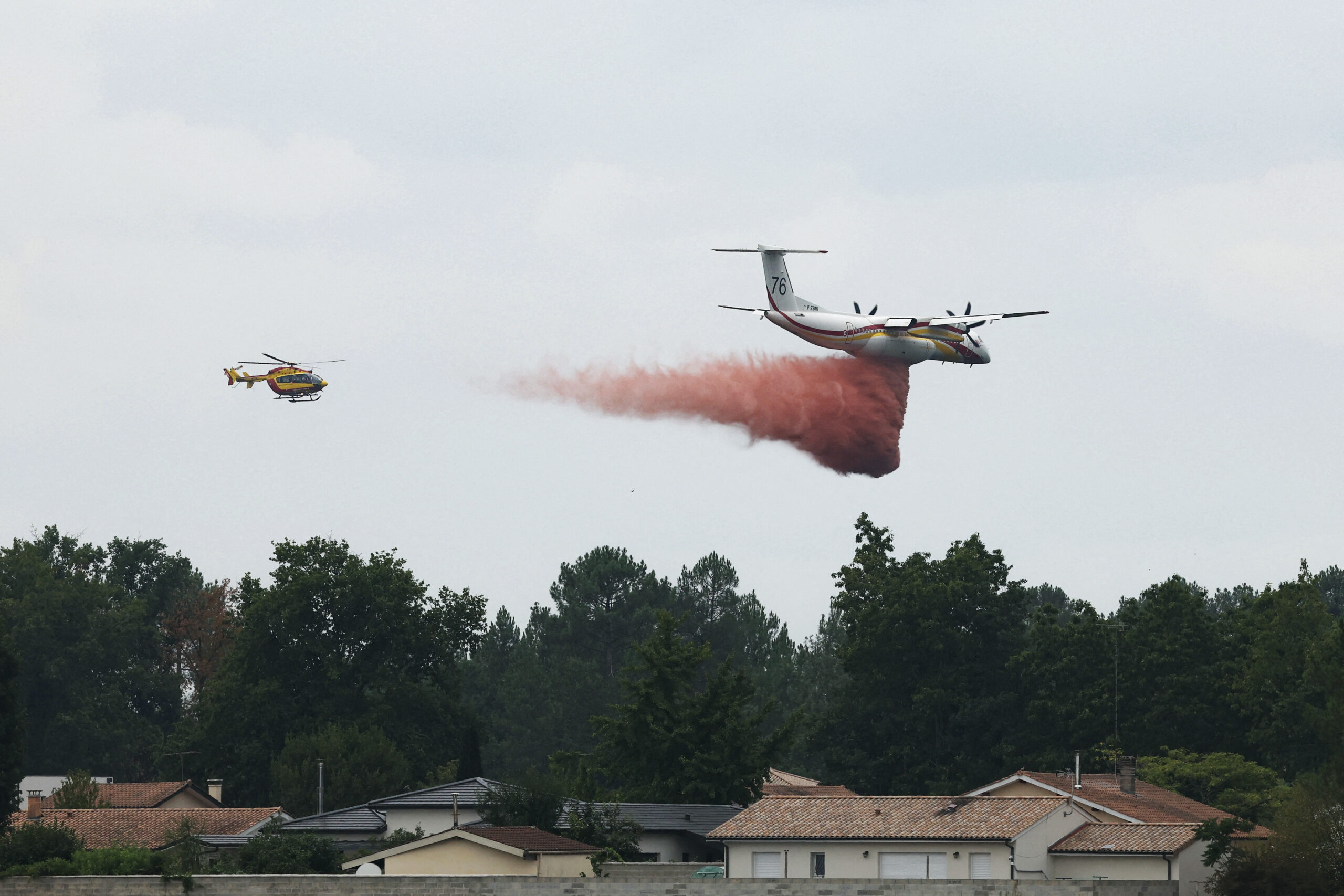
In recent years, wildfires have been frequent in Europe, and the existing fleet of aerial firefighting planes is severely aging. To replace the long-standing De Havilland Canada CL-415 series water scooping aircraft that dominates the market, several new start-up companies in Europe are actively engaged in research and development, hoping to address future wildfire crises with either new or modified aircraft models.
—
The French parliamentary group warned last year that Europe’s existing firefighting fleet is facing a “major crisis” and called for alternative solutions. In response, two companies have chosen to modify existing ATR-72 passenger planes.
—
Positive Aviation, a start-up company based in Toulouse, France, is currently using an ATR-72 fuselage as a test platform, assembling it in Hangar 16 at Toulouse-Blagnac Airport. The modified water scooping aircraft will be equipped with a new design of float and pipeline, capable of scooping water on the surface of lakes and seas, with a capacity of up to 8 tons.
—
The company aims to develop the market for retrofitting second-hand aircraft and plans to officially enter the market in 2028. They have already received a provisional order for 10 aircraft from Bridger Aerospace in the United States.
—
Another company, Kepplair, has also chosen the ATR-72 but is focusing on a “ground-fill” type of firefighting aircraft to replace the aging Dash-8 planes for preventative patrols and initial firefighting operations. The company’s founder, David Joubert, stated that they are currently undergoing a new round of funding with the goal of obtaining certification and delivering the aircraft next year.
—
In addition to modifications, at least three European companies have proposed more ambitious plans, including developing entirely new amphibious water scooping aircraft from scratch.
—
One of the most anticipated developments is from the French start-up company HYNAERO, which announced last week that Latecoere is its temporary partner. Latecoere, a pioneer in seaplanes, is now a supplier of aviation structures.
—
HYNAERO’s Frigate-F100 water scooping aircraft is expected to accommodate 10 tons of water, with firefighting efficiency double that of the existing CL-415 aircraft manufactured in Canada. The cost, including support services, is estimated at around 80 million dollars.
—
Additionally, Italy’s 19-01 Holding company plans to assemble its WF-X amphibious aircraft starting in 2031 with 1.2 billion euros of private funding. The Seagle amphibious aircraft, led by Belgian architect Gaetan du Four, is targeting the mid-term of the next decade. Du Four acknowledged the significant financial challenges that must be overcome before these projects can materialize.
—
However, developing seaplanes is no easy task, as these companies must overcome challenges related to funding, technology, and the return of traditional competitors.
—
Elmar Welczek, a German scholar and former head of the AAA program for advanced amphibious aircraft in Italy and France, pointed out that Europe has gradually lost the expertise in designing specialized seaplanes since World War II.
—
John Boag, Chief Executive of the Canadian aviation operator Avincis, warned that the time and money required from design to delivery are severely underestimated by outsiders.
—
Boag estimated that simple modifications alone would cost tens of millions of dollars, while developing a new aircraft would require 1 billion dollars or even more, as these aircraft must allocate substantial funds to research, certification testing, and factory construction.
—
Furthermore, start-up companies must also face the comeback of strong traditional competitors. After an 11-year hiatus, De Havilland Canada has resumed production of the upgraded DHC-515 firefighting aircraft. They are currently assembling the first batch of 22 aircraft for European customers. Greece and France have already ordered 7 and 2 DHC-515 aircraft respectively, with the first deliveries expected in the fourth quarter of 2028, with Greece being the first recipient.
—
The DHC-515 can carry 6 tons of water, and can be refilled from oceans, lakes, or rivers in about 12 seconds, equipped with updated avionics to enhance reliability and operational efficiency. Specifically designed for amphibious operations, the aircraft allows direct water tank refills from lakes and coastal waters.