
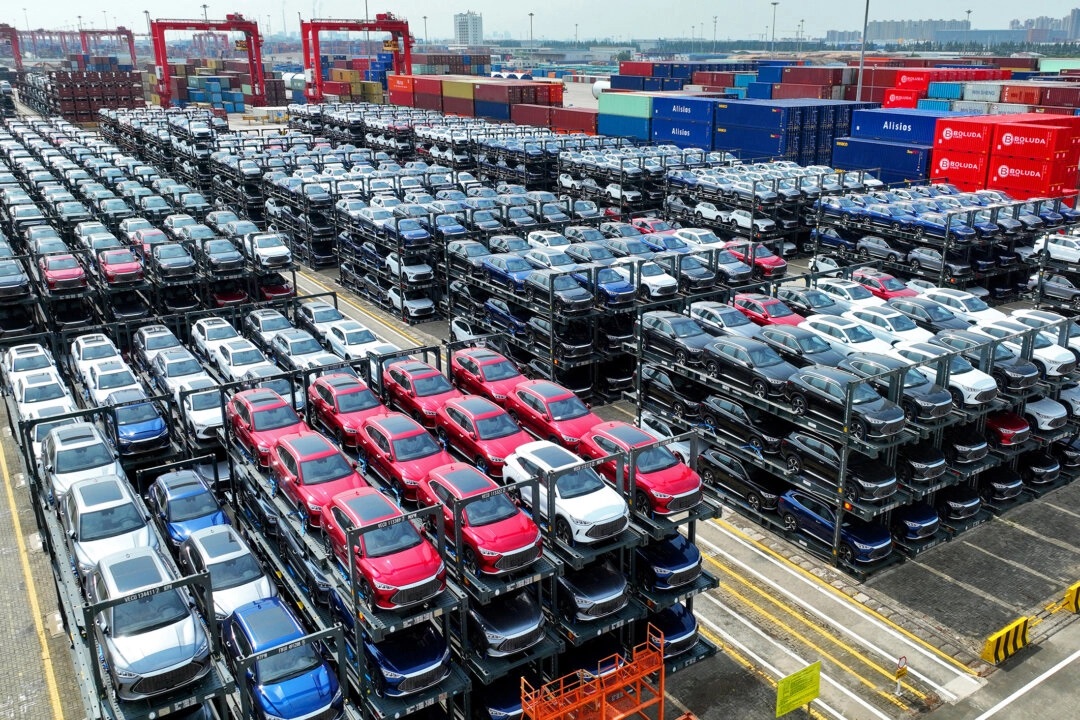
China’s electric vehicles produced in China have been increasingly gaining market share in the mainland and major countries. However, with the rise in market share comes increasing risks. Second-hand car dealers are now refusing to accept electric vehicles that are 5 years old due to concerns over battery aging, which has become a major issue.
According to a in-depth article titled “Think your EV holds its value? China has some bad news for you” published by the internationally renowned tech media Rest of World, experts such as Harsh Chaturvedi, a car consultant from the UAE, and Karl Brauer, an analyst from iSeeCars in the US, have shed light on the risks associated with Chinese electric vehicles.
China has been the world’s largest electric vehicle market for the past decade, with around 44 million electric vehicles currently on the roads, making it the first country to have a large number of aging electric vehicles. The lack of a reliable method to assess the health of the battery, the most expensive component of an electric vehicle, is a significant concern.
Data from the International Energy Agency’s “Global Electric Vehicle Outlook” report indicates that approximately 80% of second-hand car dealers in China refuse to accept electric vehicles older than five years due to worries about battery life and replacement costs. The China Automobile Dealers Association shows that currently, the resale value of a 3-year-old electric vehicle in China is around 45% of its original price, below the nearly 55% in 2023.
The report reveals that last year, Chinese car manufacturers exported over 2.5 million electric vehicles, double the amount from the previous year. Europe is the largest market, followed by Southeast Asia. Currently, Chinese cars make up 55% of electric vehicle sales in countries outside of Europe and the United States.
Analyst Brauer notes that institutions and companies typically calculate the depreciation of vehicles after three and five years (typical lease and loan terms), with electric vehicles depreciating faster than traditional vehicles.
Inspecting battery health is usually straightforward as electric vehicles can report battery conditions through standard diagnostic ports. However, in China, the battery management system (BMS) protocols in electric vehicles are often highly encrypted and closed, making it extremely difficult for unofficial channels (such as regular second-hand car dealers) to obtain accurate and legally-binding reports on battery degradation and lifespan, which is a significant technical barrier preventing dealers from accepting these vehicles.
Car consultant Chaturvedi noted that after five years, customer interest significantly decreases as mileage increases and the battery warranty nears its end. Manufacturers typically provide an eight-year or 160,000 kilometers (99,419 miles) warranty for the battery, but battery replacement costs could be prohibitively expensive. As the vehicle ages, the warranty period shortens, shifting the cost of battery failure to the owner after the warranty expiration.
NIO’s Chairman and CEO, Li Bin, stated on Weibo, a social media platform, on August 28th that there are currently 371 million vehicles in China, with petrol vehicles accounting for 86.81% and an average vehicle age of 8.2 years. The first generation of new energy vehicles (electric vehicles) is approaching the end of their warranty period
Industry experts indicate that once new energy vehicles (electric vehicles) are out of warranty, if the battery experiences severe degradation or damage, owners would need to bear the cost of battery replacement. The price of replacing a power battery can often reach tens of thousands or even hundreds of thousands of Chinese yuan, potentially exceeding the residual value of the electric vehicle itself.
Moreover, as power battery capacity degrades and no longer meets the vehicle’s operational requirements, it would need to be properly retired. Official sources estimate that by 2030, China’s annual scrap volume of electric vehicle batteries is expected to exceed 1 million tons, with some industry studies and media predictions suggesting a total amount of around 3.5 million tons.
How to handle these retired power batteries? Currently, in China, there is no comprehensive or safe disposal channel. According to the “Global and China Power Battery Recycling Industry Report (2026 GEPT4U5)”, there are safety and environmental hazards from the “cottage industry” dismantling of these retired batteries.