
Facing the escalating military threat from the Chinese Communist Party (CCP), the Japanese Defense Minister recently stated that Japan can no longer evade the strategic nuclear issue. In recent years, possessing nuclear capabilities in some form to effectively strategically constrain CCP military expansion has become a strategic topic that Japan’s political and military circles cannot avoid. The United States think tanks also support this stance.
According to a report by Nikkei Shimbun, on July 20, Japanese Defense Minister Taro Kono gave a keynote speech at an aviation exhibition in southern England, revealing that on July 19, naval vessels from the CCP and Russia conducted real combat exercises in Japan’s Exclusive Economic Zone (EEZ).
It was reported that in the early hours of that day, the Japan Maritime Self-Defense Force confirmed that four Chinese and Russian warships were sailing in the southwest waters near Okinotorishima island of Japan. Among them, a Chinese missile destroyer carried on with shooting exercises.
The fact that Chinese navy vessels conducted military exercises in Japan’s Exclusive Economic Zone is extremely rare.
In his speech, Kono mentioned that the CCP military carried out submarine-launched ballistic missile (SLBM) tests, engaged in joint bomber flights with Russia near Japan, and pointed out that China and Russia are strengthening military cooperation.
He emphasized that security in the Indo-Pacific region is inseparable from that of Europe and the Atlantic region, and Japan will shoulder the role of connecting these regions.
Confronted with the increasing military threat posed by the CCP to the Asia-Pacific region and Japan, the topic of Japan considering nuclear deterrence as a strategic measure has become a recent strategic discussion and a future option in Japan’s political and military circles.
On July 17, when invited as a guest on the “Discussion TV” show hosted by renowned journalist Yoshiko Sakurai, Kono stated that Japan needs to play a connecting role in the world and cannot avoid discussing nuclear issues.
He mentioned that although nuclear weapons are a sensitive topic for Japan, it is one of the issues that Japan cannot ignore. He quoted former Japanese Prime Minister Shinzo Abe, stating that what we must do now is crucial for Japan, the Indo-Pacific region, and even the world.
NATO, Europe, and the United States must closely unite, and what Japan is doing is playing a connecting role.
He emphasized the need for crisis awareness and open discussion and advancement on any issue without restrictions. He further stated that further explanations will be provided on this matter.
The military capabilities of the CCP are rapidly growing and they are working to narrow the gap with the United States, including in AI. In discussing this, he emphasized that it is now the era of AI, where whoever possesses advanced AI can control the era. Facing the rapid changes in AI, Japan also needs to discuss how to protect data sovereignty and ensure quick unified command and decision-making for the military.
The host praised the significant changes that have taken place in the Japan Self-Defense Forces since Kono took office.
Kono mentioned that the current era values cognitive warfare. The Japanese Ministry of Defense and Self-Defense Forces have been subject to much criticism and have remained silent. If they do not counter, those falsehoods will be considered as facts, shaking trust in the Japan Self-Defense Forces.
Nikkei Shimbun noted in its coverage that as a current Japanese government minister, Kono Junichiro called for an in-depth discussion on nuclear policy.
In October 2025, Nikkei Shimbun reported that Toshi Yoshihara, a renowned American scholar specializing in studying Chinese military issues, stated in an interview with Nikkei Shimbun that he “understands Japan’s viewpoint of independently possessing nuclear weapons”.
Yoshihara pointed out that as China strengthens its medium-range nuclear missile deployment, the US “nuclear umbrella” over Japan may be shaken. Therefore, Japan also has the option of deterring China through nuclear armament.
Yoshihara stated that it must be noted that the CCP may try to use nuclear threats or even launch small-scale attacks to subjugate Japan under its dominance.
However, he also mentioned that currently, Japan faces many obstacles in possessing nuclear weapons alone, but as a pragmatic choice to enhance nuclear deterrence, Japan can engage in “nuclear sharing” with the United States.
The report mentioned that it is extremely rare for a current military expert close to the US government to openly accept Japan’s nuclear armament.
Yoshihara, formerly a professor at the US Naval War College, is now a senior researcher at the “Center for Strategic and Budgetary Assessments” (CSBA) in Washington.
The American diplomatic journal “Foreign Affairs” published an article on November 19, 2025, advocating for US allies to develop nuclear weapons and suggesting a re-evaluation of the non-proliferation policy to encourage allies like Japan to possess nuclear weapons.
The article argues that allowing countries like Canada, Germany, and Japan to possess nuclear weapons can enhance their security and counter threats from the CCP and Russia, solidifying the rules-based international order.
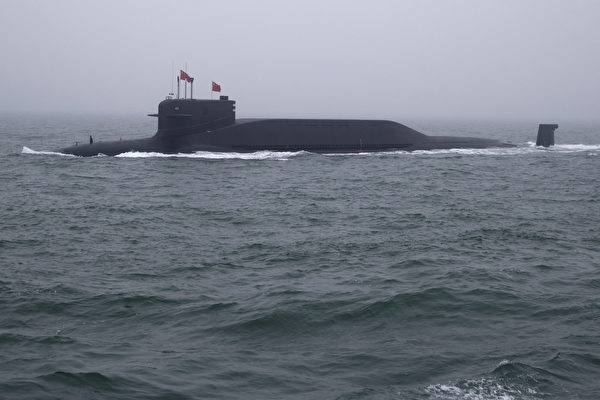
According to reports from various Japanese media including Yomiuri Shimbun, on July 6, a Chinese Navy nuclear-powered submarine launched an SLBM with a simulated warhead into the Pacific Ocean.
It is reported that some models of SLBMs carried by Chinese strategic nuclear submarines have claimed ranges that cover China’s coastline to the continental United States. The report suggests that the CCP may be using this to showcase its enhanced military capabilities against the US.
The report mentioned that in September 2024, the CCP conducted an intercontinental ballistic missile (ICBM) launch exercise. The CCP increasingly suppresses Japan’s defense policy promoted by the Koike administration, viewing it as “neo-militarism,” believed to also be aimed at restraining Japan.
In response, Yomiuri Shimbun published an editorial on July 8, pointing out that China’s launch of an SLBM into the Pacific Ocean poses a threat to the security of the Asia-Pacific region, including Japan, which cannot be tolerated.
The Japanese government expressed concern over this from a security perspective for Japan and the region; the US, Australia, and New Zealand also expressed concerns.
The editorial stated that under Xi Jinping’s leadership, without denying the use of force to unify Taiwan, the CCP’s actions are seen as enhancing its ability to launch SLBMs from submarines, using it as a deterrent to prevent US intervention in the event of a CCP invasion of Taiwan.
The editorial emphasized that besides rapidly expanding its nuclear capabilities to counter the US, the CCP’s military actions around Japan are becoming more frequent and require Japan to maintain a high level of vigilance.
The CCP “accuses the Koike administration of pursuing ‘neo-militarism’ in its defense policy,” but “its propaganda campaign has not been effective, instead intensifying other countries’ vigilance against the CCP entering the Pacific.”
Nikkei Shimbun on July 8, also published an editorial, strongly condemning the CCP’s SLBM launch and reinforced nuclear capabilities.
The editorial mentioned that compared to land-based ICBMs, SLBMs are harder to destroy during an attack. Even if subjected to a preemptive nuclear strike, they can survive and possess the ability to retaliate with a second strike.
The editorial warned that the CCP’s latest launch once again shows its uncompromising stance on participating in nuclear disarmament negotiations and solely focusing on enhancing its nuclear capabilities.
The US Department of State condemned the CCP in its statement, and NATO Secretary-General warned against holding any naive thoughts about the CCP. Governments of Taiwan, the Philippines, Australia, among others, have also expressed condemnation or caution.
The editorial analysis indicates that the CCP’s improvement in nuclear attack capabilities against the US will weaken the extended deterrence the US provides to Japan including the “nuclear umbrella,” posing a significant threat to Japan’s defense.
It called on the Japanese citizens to understand that perfecting nuclear deterrence to defend Japan has become increasingly important, and hopes that Japan’s so-called “anti-nuclear groups” can instead harshly criticize the Chinese (CCP) government.