
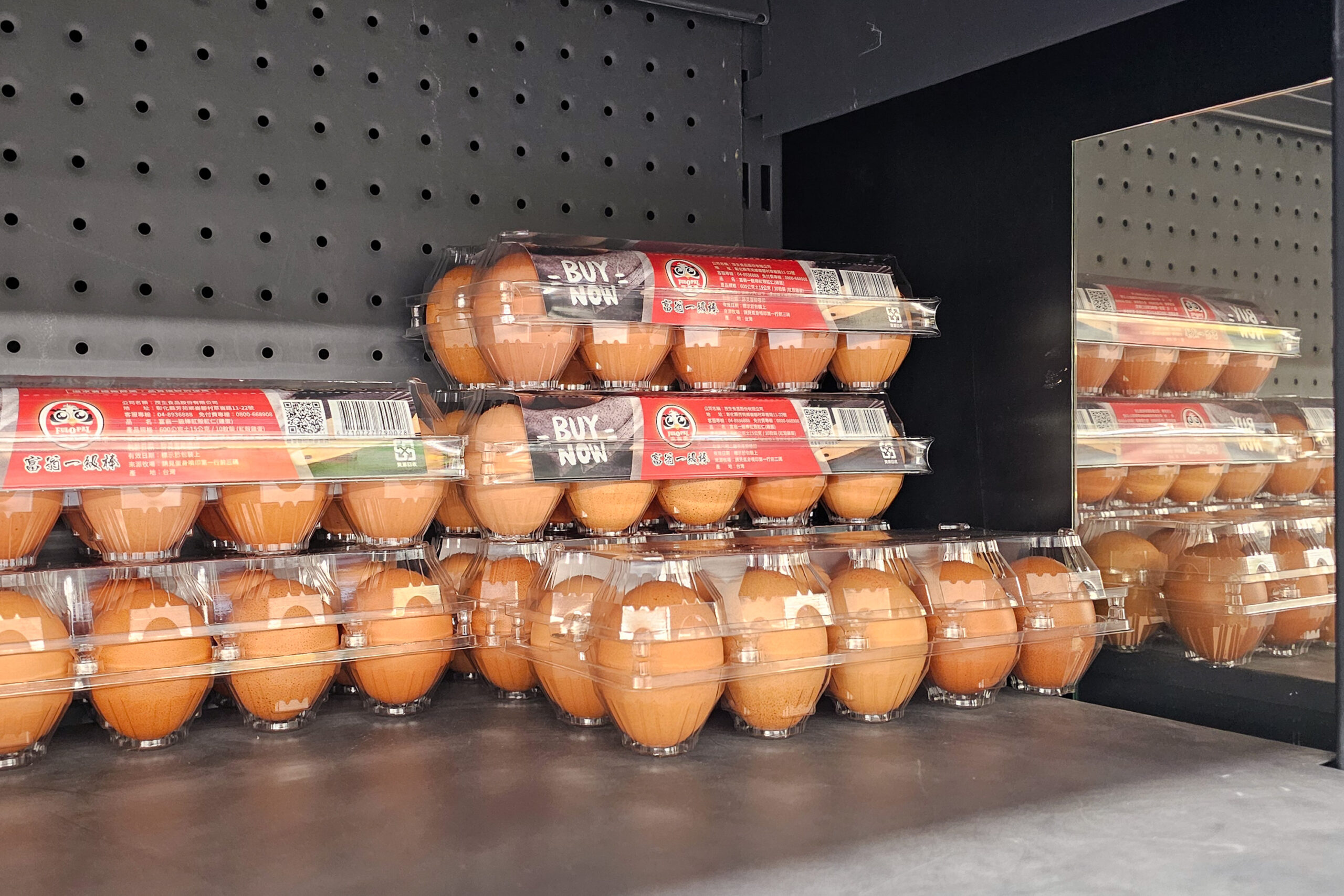
The price of chicken eggs in China reached 5.45 yuan per jin (500 grams) on August 25, up more than 40% year-on-year, hitting a near-decade high for the same period. Industry insiders have attributed the sharp increase in egg prices this year to a combination of forces on both supply and demand sides.
According to the National Key Agricultural Product Market Information Platform of the Chinese Ministry of Agriculture and Rural Affairs, the price of chicken eggs on August 25 rose by 10% compared to the previous half month.
Data from Zhuochuang Information shows that as of August 26, the average price of eggs in the main producing areas nationwide in August was 4.81 yuan per jin, with a month-on-month increase of 5.7% and a year-on-year increase of 57%.
On August 27, the First Financial reported that egg prices surged in August, continuing the overall significant upward trend seen throughout the year and reaching a near-decade high for the same period.
A resident of Shanghai, Xiao Li, told the media: “The price of eggs in the agricultural market has risen again recently, with ordinary eggs increasing by about 1 yuan per jin.”
A large membership store also announced a price adjustment in recent days, raising the price of their own-brand “MM Selected Fresh Eggs 1.59kg (30 pieces)” from 18.9 yuan per box to 21.8 yuan per box starting from August 19, an increase of 2.9 yuan per box.
Zhuochuang Information pointed out that from late April to early June this year, egg prices in the mainland’s main producing areas rose rapidly. Since May 27, the daily average price in China has continuously set new near-decade high records, reaching a peak of 5.24 yuan per jin on June 3, maintaining a high trend for nearly a month.
The industry believes that the sharp rise in egg prices in the second quarter was mainly due to the combined effects of supply and demand.
Jinlongyu, a leading grain and oil company, told the First Financial that the depressed egg prices in 2025 led to widespread losses among farmers, prompting a large number of them to eliminate old chickens, decrease the desire for replenishing farming stock, and as a result, the inventory of egg-laying hens declined significantly this year. In addition, the persistent high temperature and humidity in August led to a decrease in egg production rate, tightening the market supply temporarily.
Data from the National Bureau of Statistics of the People’s Republic of China also confirmed that in the first half of 2026, the national poultry egg production was 16.9 million tons, a decrease of 2.2% compared to the same period last year, ending the previous four-year trend of increasing production for the same period.
Analysts in the industry have pointed out that since the middle and late August, the purchasing volume of food factories has steadily increased, coupled with downstream traders becoming more proactive in stocking up after confirming the rising price trend, thereby accelerating market turnover. The combined forces of supply and demand have driven prices to remain relatively strong throughout the latter half of August.