
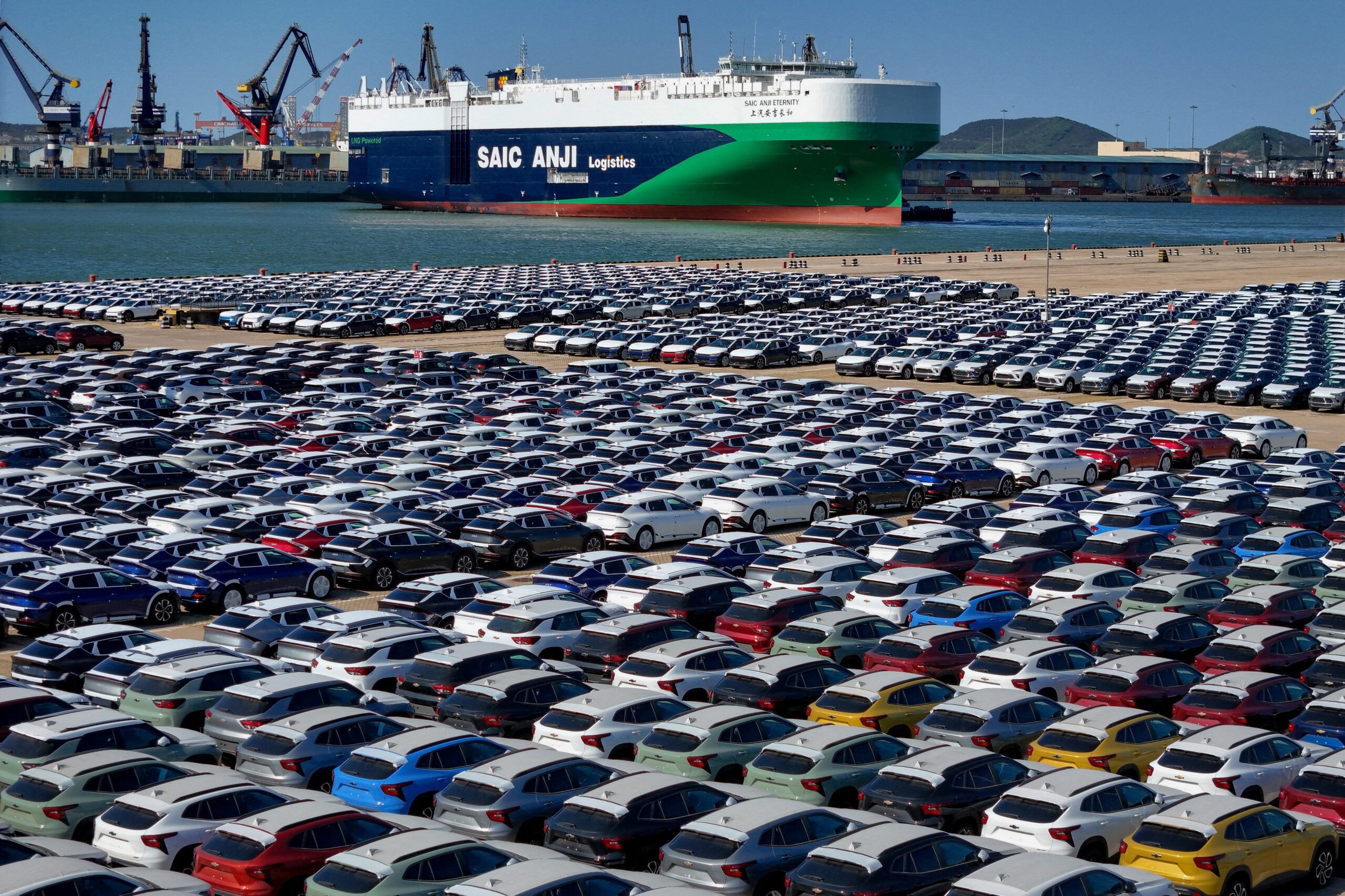
The United Auto Workers (UAW) has urgently called on Congress to maintain its focus on the Chinese automotive industry. The union has requested that once the Democratic Party takes control of the House of Representatives next year, it should continue to uphold the Special Committee on China to address the ongoing challenges posed by Chinese auto manufacturers.
In a letter directed to House Speaker Mike Johnson and Democratic leader Hakeem Jeffries, dated November 11, the UAW emphasized several pressing issues that require continued congressional oversight. These include the global oversupply of electric vehicle production, the stakes taken by Chinese companies in Western automotive firms, and the ongoing trend of the automotive industry shifting production to China. The union underscored the importance of Congress avoiding any periods of oversight vacuums on these crucial topics.
The contents of this letter were disclosed exclusively by Reuters. It was also reported that Jeffries is expected to discuss the future structure of the Special Committee on China with Democratic leadership later this week.
Previously, an article in Nikkei Asia on November 10 indicated that within the Democratic Party, there has been an ongoing debate concerning whether to retain, reorganize, or dissolve this committee. The decision will be primarily led by Jeffries, who affirmed that regardless of how the committee takes shape, the next congressional session will remain focused on issues related to the Chinese Communist Party.
At present, the chair of the Special Committee on China is Republican Congressman John Moolenaar, while the chief Democrat member is Ro Khanna. Moolenaar stated this week that the committee should continue its work into the coming year. He noted the increasing challenges that the U.S. faces, particularly as competition intensifies in the field of artificial intelligence and as pressure from the Chinese Communist Party on American allies and partners continues to mount.
In recent years, the Special Committee on China has conducted multiple investigations into various aspects of the Chinese automotive and battery industries. These investigations have looked into the collaborations between American car manufacturers and Chinese battery companies, supply chain security, and the entry of Chinese automobiles into the American market. The committee has worked to advocate for restrictions through hearings, investigative reports, and policy initiatives.
In 2023, the committee investigated Ford Motor Company’s partnership with the Chinese battery giant CATL (Contemporary Amperex Technology Co., Limited), demanding that Ford provide details on technology licensing agreements and related information. The focus was on the dependency of the American automotive industry on Chinese battery technology and supply chains, particularly in relation to potential links to the Xinjiang supply chain issues.
By 2024, the committee released a summary of its investigations into CATL and Gotion High-Tech, indicating that parts of their supply chains involved companies linked to Xinjiang. It urged the U.S. government to consider adding these companies to the Entity List under the Uyghur Forced Labor Prevention Act.
In December 2025, the committee held a hearing focusing on the entry of Chinese automobiles into the U.S. market and the possible economic competition, data security, and supply chain risks associated with it.
Additionally, the committee is advocating for restrictions on Chinese battery companies participating in U.S. government procurements while keeping an eye on plans by Chinese companies to invest in battery plants in the U.S., including a previously proposed but later canceled $2.4 billion battery materials facility project in Michigan by a subsidiary of Gotion High-Tech.
As of now, Congress has yet to pass legislation that would permanently ban Chinese vehicles from entering the U.S. market. Republican Senator Bernie Moreno, in a November 10 interview with Reuters, stated that negotiations on the related bill are nearing a consensus, expressing hope for a vote in the Senate as early as the following week.
Groups representing major automotive companies such as General Motors, Toyota, and Volkswagen are also lobbying Congress to ensure that legislation banning Chinese automobiles from entering the U.S. is finalized this year.
In early 2025, regulations introduced by the previous Biden administration will limit passenger vehicle transactions involving specific Chinese connected vehicle software, hardware, and related companies. Many of these restrictions are set to take effect starting in the 2027 model year, citing concerns that connected vehicles might transmit sensitive driving data to China. Furthermore, the U.S. has imposed tariffs exceeding 100% on Chinese electric vehicles.
In its letter, the UAW stressed the need for Congress to ensure that the Chinese Communist Party and its associated practices do not gain a foothold in the U.S. market.
The Special Committee on China is specifically tasked with examining the strategic competition between the U.S. and China. It investigates the challenges posed by the Chinese Communist Party to the U.S. economy, technology, national security, and international influence, while providing policy recommendations. Established in January 2023, this committee consists of both Republican and Democratic members.
While the committee itself does not have direct legislative powers, it can leverage congressional investigative authority to advance relevant issues and offer policy and legislative recommendations to Congress.