
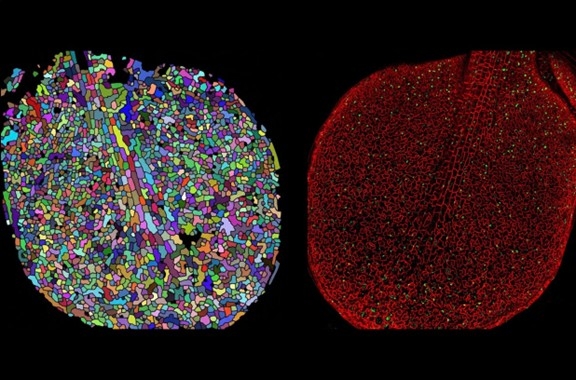
A research team led by Associate Researcher He Jin-min from the Institute of Plant and Microbial Biology, Academia Sinica in Taiwan, has made a significant breakthrough in understanding the secret behind leaf respiration. They have discovered a novel mechanism for the generation of stomata—the small openings on the surface of leaves— and their findings have been published in the esteemed journal Nature Communications.
The press release from Academia Sinica explains that stomata play a vital role in plants by facilitating the absorption of carbon dioxide, conducting photosynthesis, and regulating water vapor through transpiration. The number of stomata directly influences a plant’s ability to sequester carbon and its efficiency in utilizing water. However, the question of how the number of stomata is regulated has long perplexed scientists. Surprisingly, the answer lies within the cell nucleus.
The research team, under the guidance of Associate Researcher He Jin-min, has for the first time confirmed the existence of a crucial protein known as HDL, which regulates the structure of chromatin within the cell nucleus. This regulation, in turn, affects the balance between cell proliferation and differentiation as well as the number of stomata and trichomes—hair-like structures on leaves.
Additionally, the researchers have revealed how the internal organization of chromatin within the nucleus influences the development of leaf cells, paving the way for new avenues of exploration into the mechanisms by which plants adapt to their environments. Their groundbreaking conclusions have now been published in Nature Communications.
On the leaf surface, there exists a group of specialized precursor cells known for their remarkable developmental plasticity. These cells have the ability to either continue dividing to produce stomatal precursor cells or cease dividing to differentiate into standard epidermal cells or trichomes. However, the underlying mechanisms behind this decision-making process in plants have remained an unanswered puzzle in biology.
He Jin-min remarked, “Initially, our aim was to understand how the cells on the leaf surface decide their next step—whether to divide or differentiate. However, as we delved deeper, we discovered that the answer was intricately linked to the arrangement of chromatin deep within the cell nucleus.”
The research team found that in plants lacking HDL, the organization of chromatin within the nucleus is altered, resulting in decreased gene activity and a reduction in the number of cell divisions. This also leads to an increase in the proportion of polyploid cells. Notably, the absence of HDL results in fewer stomata and an increase in the number of trichomes on the leaves.
Further investigation into how HDL influences cell fate revealed that HDL is distributed at the boundaries between “activated” and “repressed” regions of chromatin within the cell nucleus. This suggests that HDL acts as a coordinator, aiding in the maintenance of the states of both types of chromatin.
To clarify how HDL impacts leaf cell development at the nuclear level, the research team combined expertise from various fields such as plant developmental biology, cell biology, epigenetics, and genomics. They conducted in-depth observations of the spatial organization of chromosomes within the nucleus and analyzed genome-wide chromatin changes.
Their findings indicate that HDL does not merely coordinate the expression of a single developmental gene; instead, it plays a role in balancing the states of chromatin organization and gene activity. This balance influences whether cells will continue to proliferate or begin to differentiate, consequently altering the formation of stomata and trichomes.
This discovery effectively connects the dots between “chromatin structure—cell fate—leaf development,” confirming HDL’s key role as an underlying factor influencing plant cell growth. It also addresses a long-standing question in the scientific community regarding how stem cells decide whether to continue dividing or enter differentiation, opening new horizons for exploring plant development through the microscopic structure of the cell nucleus.