
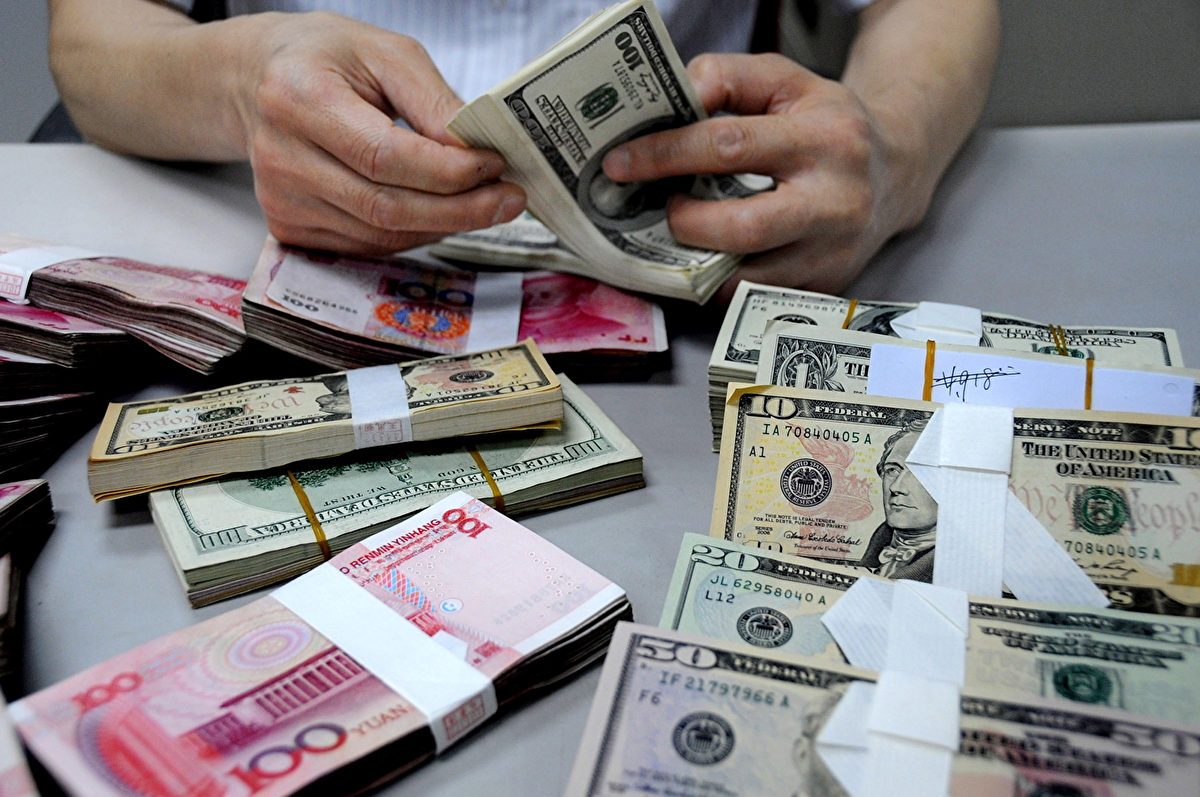
The International Monetary Fund (IMF) has stated that China is facing factors such as weak domestic demand, and the real exchange rate of the Renminbi is being underestimated. The IMF has urged the Chinese Communist Party to address these issues by increasing fiscal expenditures to tackle economic imbalances in China.
According to a report by Bloomberg, on October 15th, the International Monetary Fund (IMF) and the World Bank are holding their annual meeting in Bangkok to analyze global economic and financial risks. Krishna Srinivasan, Director of the IMF’s Asia-Pacific Department, mentioned that China’s economic growth still heavily relies on external demand. The current fiscal stimulus measures are deemed insufficient, and authorities are urged to further boost domestic demand to improve economic imbalances in China.
Regarding the demand-boosting measures taken by the Chinese authorities, Srinivasan stated that they are not enough. “They need to take more bold measures to address the imbalance between supply and demand.”
In the past month, China has introduced a series of measures, including policies such as interest subsidies for first-time homebuyers and setting a limit of 550 billion yuan on the use of local government debt-end. These measures have been referred to by observers as “mini stimulus policies.”
Srinivasan believes that the Chinese economy is still teetering on the brink of deflation. The government needs to implement larger-scale and more comprehensive fiscal stimulus measures to stabilize the real estate market, restore household confidence, strengthen the social safety net, and support consumer spending by residents. Currently, the main driver of China’s economic growth still comes from exports rather than domestic consumption.
He noted that the Chinese government has long overlooked economic imbalances, leading to the actual depreciation of the Renminbi and prolonging the time to address issues such as local government debt risks.
The latest assessment report released by the IMF in 2026 shows that the Renminbi exchange rate is underestimated by a range of 17.3% to 25.3%, with a median of 21.3%.
Srinivasan explained that due to China’s extremely low inflation rate, the actual effective exchange rate of the Renminbi has been underestimated. The low inflation has suppressed the real exchange rate, giving Chinese exported goods a competitive advantage in the international market, which has led to the continuous expansion of China’s trade surplus.
The trade data released by the General Administration of Customs of China on October 14th suggests that China’s trade surplus this year may exceed the record of 1.2 trillion US dollars set in 2025.
Earlier, some economists and European leaders called for coordinated action to push for the appreciation of the Renminbi to reduce China’s trade surplus. During the G7 and European Union meetings in June of this year, ECB President Christine Lagarde called for any discussions related to currency valuation to include China, and she urged global leaders to address the issue of the Renminbi being undervalued.
German Chancellor Friedrich Merz stated during an EU Commission meeting that the Renminbi is undervalued by 20% to 30%, pointing out that artificially lowering exchange rates provides an advantage for those who seek to improve their economic competitiveness.
Leaders from other countries have also urged the Chinese government to allow the Renminbi to appreciate in order to curb the influx of Chinese goods into their markets, which could harm local producers and lead to significant job losses.