
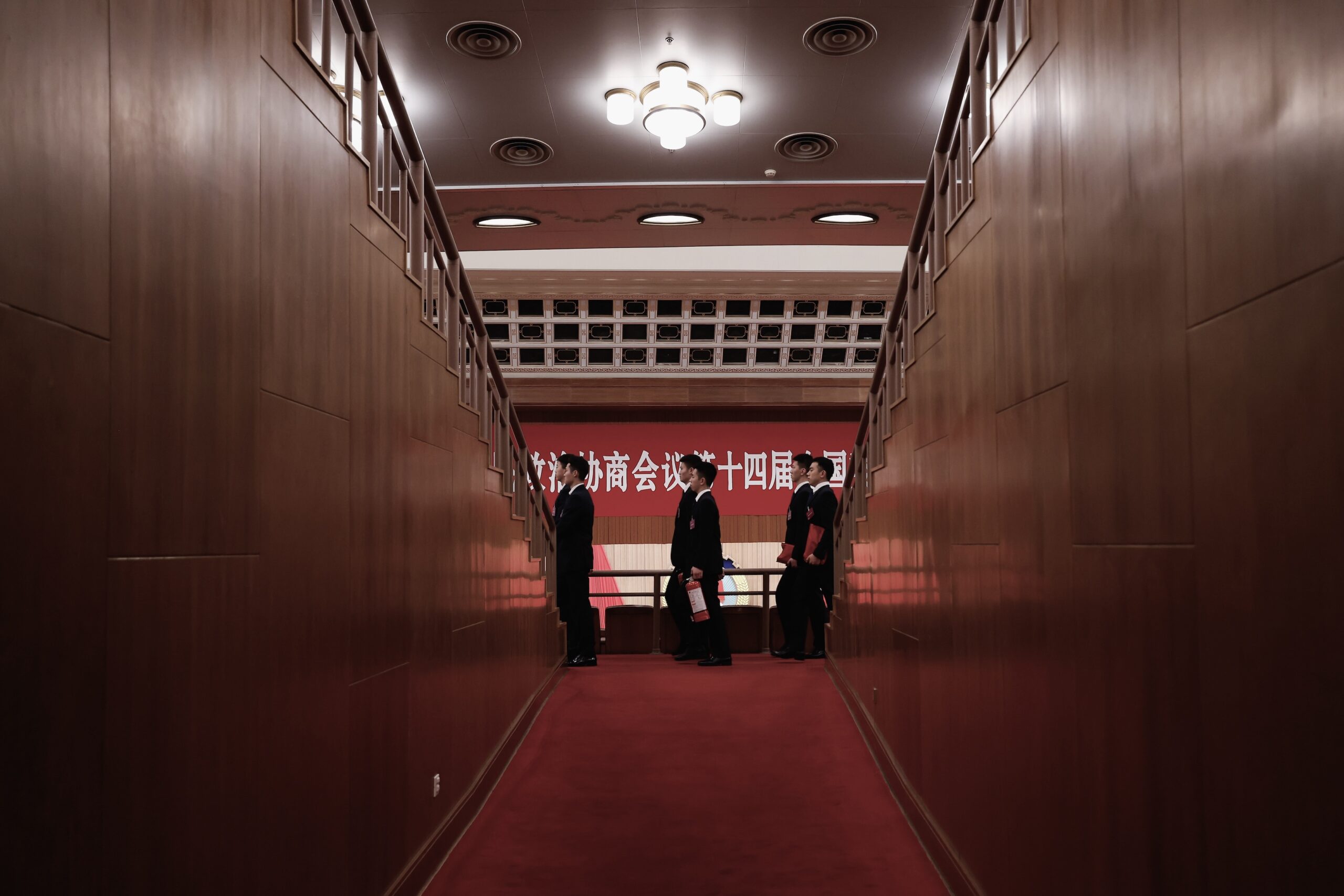
The recent Fifth Plenary Session of the Chinese Communist Party’s Central Committee has sparked significant attention and speculation, particularly due to the notable absence of over a quarter of its members. This unusual situation reflects the ongoing turbulence reminiscent of Mao Zedong’s intensive purges, leading to questions about President Xi Jinping’s next targets in this political cleansing. Reports have surfaced that the military-industrial complex is facing an escalation of its purge, which is beginning to reach influential figures in the Politburo. The fall of certain local officials seems to be dragging their former leaders down as well.
According to sources close to the upper echelons of the Chinese Communist Party, it has been suggested that members such as Politburo Standing Committee member Wang Huning and Politburo members Shi Taifeng and Li Hongzhong may become embroiled in investigations related to other cases in the aerospace industry. Although rumors spread prior to the 21st National Congress hinted at their removal, these three have continued to carry out their duties. However, inquiries surrounding the associates and confidants of Central Commission for Discipline Inspection (CCDI) Secretary Li Xi and State Council Vice Premier Zhang Guoqing are reportedly intensifying.
The complexities of these investigations lead to the speculation that the ramifications may extend beyond individual officials and could potentially reshape high-level appointments in the upcoming 2027 CCP 21st Congress. Sources indicate that several individuals, including Shi Taifeng, Wang Huning, and Li Hongzhong, might be involved in broader aerospace-related political cases.
Currently, sensitive information about the specific allegations against these three high-ranking officials has not been disclosed. There is an emergent narrative surrounding the purge of personnel within the military-industrial and aerospace sectors that has transitioned from high-ranking executives in state-owned enterprises to the ranks of the Politburo.
Highlighting the seriousness of these events, the Fifth Plenary Session confirmed the expulsion of several high-ranking officials, including Politburo member Ma Xingrui, along with other senior figures in the aerospace industry, as part of a larger crackdown that was underscored by a public prosecution launched against Ma Xingrui for corruption on November 5.
Interestingly, despite the serious allegations, Wang Huning, Shi Taifeng, and Li Hongzhong have maintained their official functions. In fact, both Wang and Shi attended the Chinese People’s Political Consultative Conference earlier in November, while Li chaired a constitutional oath meeting on November 6.
Analyzing the career trajectories of these three men, it appears that their domains—ideology, organizational affairs, and provincial party governance—have not shown direct ties to the military-industrial or aerospace systems. However, Li Hongzhong’s fortunes appear to be turning. The recent disciplinary actions against his former close aides from his time as a leader in Hubei and Tianjin have raised alarm, revealing an apparent “cutting of skirts” phenomenon in Chinese politics.
According to the source, there are indications that some individuals came to know about certain decisions regarding inquiries and their outcomes before they were officially announced by the CCDI. It suggests that internal information controls within the CCDI may be compromised.
As for future revelations, the standard practice appears to involve leaving clues that can be compared with official reports once they are made public. This strategy may enhance the credibility of the leaked information, as it demonstrates alignment with forthcoming official announcements.
In reflecting on his past communications regarding personnel changes within the CCP, this individual mentioned that many of his disclosures have closely matched subsequent public information. He also notably referenced the imminent accountability of Du Xiaogang, former secretary of the Wuxi Party Committee, whose issues he had highlighted months prior.
Moreover, he alluded to the change in leadership within the Yunnan provincial committee, remarking that “Old Mo is coming to fish,” a reference to new secretary Mo Gaoyi, who replaced Wang Ning on October 24.
Further digging into the political dynamics, discussions have surfaced regarding the investigations regarding local officials in Sichuan and Liaoning. This individual’s claims highlight that if any senior officials from these areas fall from grace, it could have significant repercussions for affiliated political relationships.
Interestingly, the former head of the National Financial Supervisory Administration, Li Yunzhe, was highlighted as being part of this web. Having dramatically ascended to become the youngest ministerial-level official amidst the establishment of the new regulatory agency, he abruptly exited his post in April 2026. By October 29, the Fifth Plenary Session formally revoked his positions within the party, but the specifics of his case remain undisclosed.
The source continued by noting the close connections between two deputy governors in Liaoning and other high officials, suggesting that investigations could reveal deeper connections that might implicate other top officials.
Understanding the repercussions of ongoing investigations, the source speculated that the officials who had risen through the ranks under Zhang Guoqing and Li Xi are worthy of closer scrutiny as they might become entangled in the fallout of these purges.
As the timeline approaches the 2027 CCP 21st Congress, the implications of various officials’ associations could significantly reshape the landscape. There are indications that Li Xi, upon possibly retiring at future assemblies at over 70 years of age, and Huang Kunming, the current Guangdong Provincial Party Secretary, might also be affected depending on the unfolding investigations surrounding alleged issues.
Except for Huang Kunming, who is still actively serving, other high-ranking officials—including State Council Vice Premier He Lifeng—were also mentioned regarding their subordinates being subjects of inquiry, with whispers surrounding the difficulties they face in navigating their political situations.
In summary, the aftermath of the Fifth Plenary Session indicates that beyond the bureaucracy’s internal oversights, there remains a broader strategy at play. This momentous anti-corruption campaign may not merely be an effort to eliminate corruption but rather a significant maneuver by Xi Jinping to realign positions of power leading up to the 2027 Congress. The ongoing purges suggest a stringent examination of ties among officials, intertwining personnel decisions with broader political imperatives, posing a captivating narrative on the CCP’s internal evolution.