
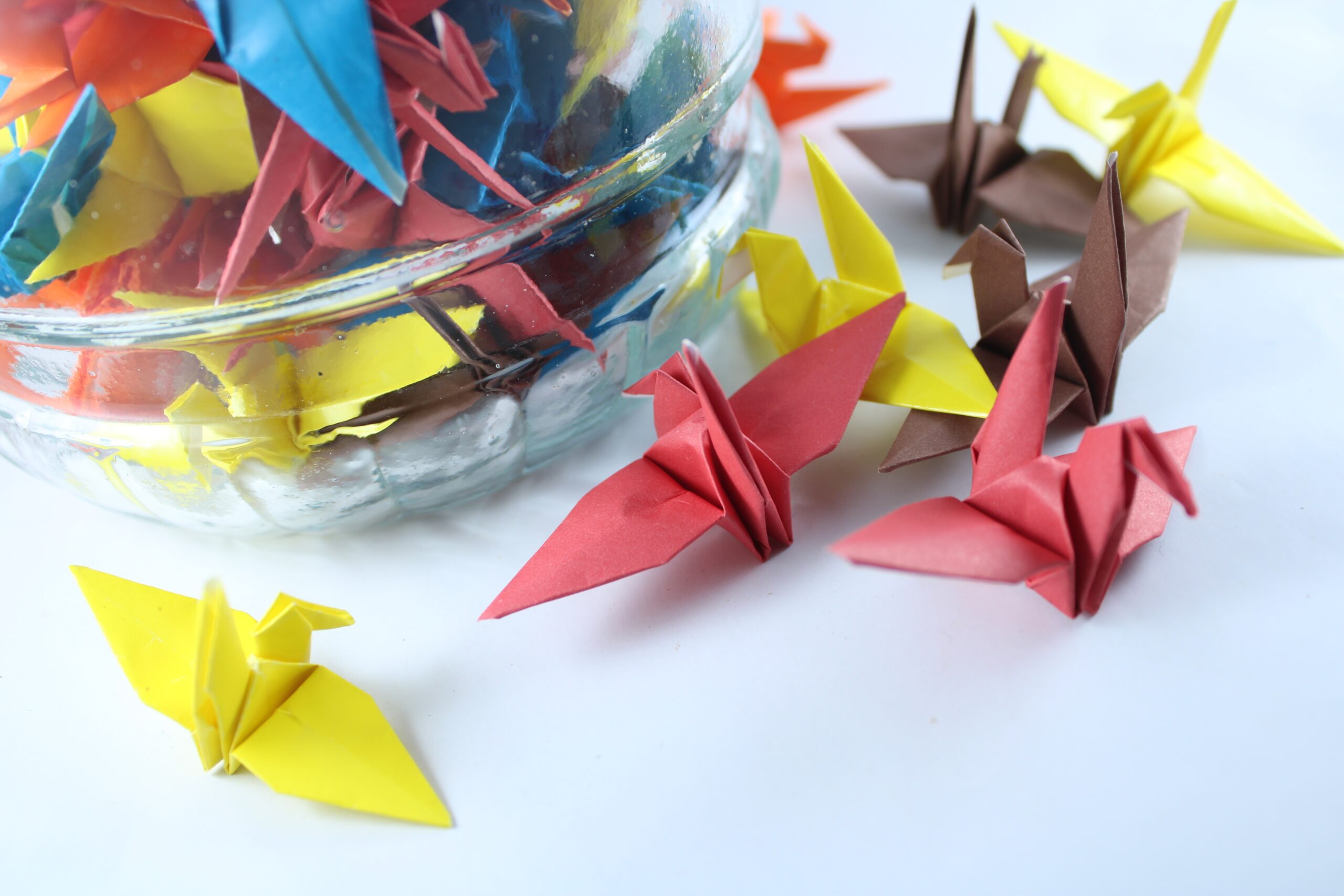
Origami, the traditional paper art form originating from Japan, holds a special place in the hearts of many. Among the myriad of origami creations, the paper crane stands out as the most iconic and revered figure. According to popular belief, folding a thousand paper cranes—known as “Senbazuru”—is said to bring good fortune to the recipient or serve as a heartfelt prayer for the recovery of a loved one facing illness. This tradition gained widespread recognition due to the story of Sadako Sasaki, a survivor of the Hiroshima atomic bomb, whose tale has transcended borders and inspired people across the globe.
In Japanese culture, cranes are regarded as spiritual and auspicious creatures. It is believed that these majestic birds can live for a thousand years, thus symbolizing longevity and good luck. In various artistic expressions and folklore, cranes often appear alongside pine trees, which also represent endurance and longevity.
The elegant posture of cranes, along with their lifelong commitment to monogamy, renders them symbols of loyalty, fidelity, and harmony in marital relationships. Their imagery graces wedding kimonos, ceremonial attire, and various utensils, extending their presence to cultural artifacts such as sake labels, family crests, and traditional artworks.
In the wilds of Japan, the red-crowned crane is the most prominent species, primarily found in the marshes of Hokkaido. Watching these graceful birds dance—especially during courtship—is a coveted and unforgettable wildlife experience for many.
The tradition of folding paper cranes (known as “orizuru” in Japanese) can be traced back to the feudal era, when people would gift one another cranes as a token of honor and loyalty. However, it wasn’t until the 16th century that formal documentation of origami techniques emerged.
The custom of folding a thousand cranes is believed to have begun during the Edo period (1603-1868). The earliest known written guide on how to fold a thousand cranes appeared in the book “Hiden Senbazuru Orikata,” published in 1797.
The Library of Congress in the United States houses an important piece of visual history related to this tradition: a woodblock print titled “The Girl Folding Paper Cranes” by the Edo-period artist Isoda Koryūsai, created between 1772 and 1773. This artwork is considered one of the earliest visual records of the paper crane tradition among the Japanese people.
Initially, the act of folding a thousand paper cranes was a personal prayer for one’s longevity or that of loved ones. Over time, this tradition has evolved into a way to express a variety of heartfelt wishes, such as recovery from illness or injury. Today, paper cranes folded with specific aspirations in mind are often presented as thoughtful and meaningful gifts.
In temples and shrines across Japan, one can frequently find thousands of paper cranes, some hanging from ceilings, while others are beautifully displayed on designated shelves. Additionally, memorials, museums, shopping centers, and various public spaces throughout Japan are adorned with these symbolic creations.
Folding a thousand cranes requires patience, concentration, and dedication, imbuing the process with a spiritual essence. For instance, Canadian photographer David Kawai showcases his remarkable talent by folding cranes smaller than a fingertip using paper squares measuring roughly 5 millimeters each. However, each delicate crane takes about 45 minutes to create, necessitating intense focus to avoid mistakes.
While some may initially find folding cranes to be challenging, it is a skill that can be mastered by individuals of all ages with practice. Numerous instructional videos available online further assist newcomers in grasping this art form.
Sadako Sasaki serves as perhaps the most famous example of the thousand cranes tradition. At just two years old, she was in Hiroshima when the atomic bomb was dropped by the U.S. military in August 1945. Tragically, although she survived the explosion, she was diagnosed with leukemia at the age of twelve due to radiation exposure, with doctors estimating that she had no more than a year to live.
While hospitalized, Sadako learned about the legend of the thousand cranes from her friends, which inspired her to begin folding them in the hope of achieving her recovery. According to popular accounts, she managed to fold only 644 cranes before her health deteriorated, but her classmates completed the remaining 356, allowing her to be buried with a full set of one thousand cranes. Her family insists, however, that she actually folded around 1,400 cranes, surpassing the original goal.
The story of Sadako Sasaki has resonated widely in Japan and worldwide, motivating many individuals to fold paper cranes in her memory. Her narrative has transformed the act of creating these cranes into a powerful symbol of peace and hope during challenging times.
Today, a statue of Sadako Sasaki holding a massive paper crane stands in the Hiroshima Peace Memorial Park. Each year, thousands of visitors pay their respects at this site, often bringing with them garlands made from a thousand folded cranes, commemorating her enduring legacy and the universal quest for peace.