
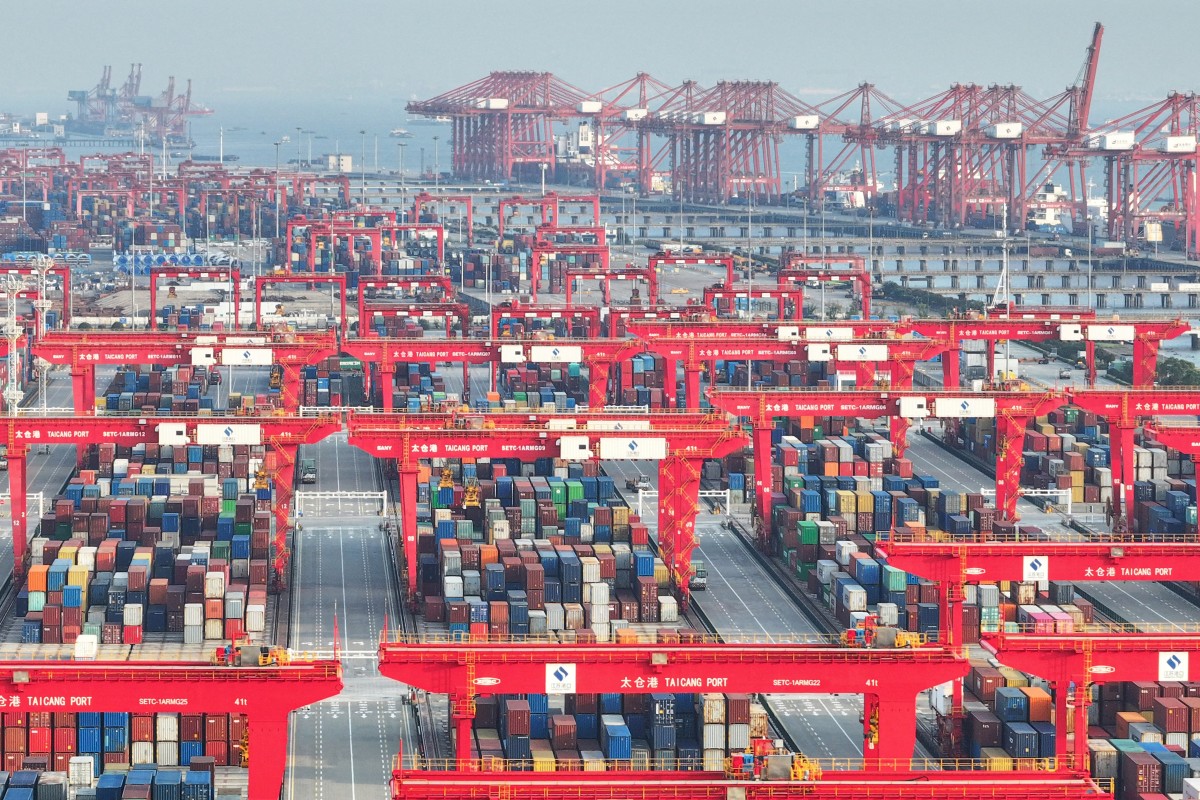
The Chinese government is making significant strides in the development of smart port technology, with a strategic focus on exporting unmanned trucks, automated cranes, and port software to foreign markets. This initiative aims to secure a technological advantage in the shipping industry and expand China’s influence over the global trade network. However, officials and experts in the West express concerns about the potential risks associated with relying on Chinese equipment and digital systems, particularly regarding data security and strategic vulnerabilities.
Over 80% of global merchandise trade relies on maritime shipping, making it a critical component of international commerce. As port operations become increasingly digitized, the competitive landscape is shifting from traditional port construction and equity to technological systems encompassing cargo scheduling, data exchange, and customs operations.
According to a report from Reuters, the Asia-Pacific Economic Cooperation (APEC) Leaders’ Meeting is set to take place in Shenzhen from November 18 to 19. Preparations for the conference have led Beijing to propose leading two working groups focused on promoting electronic bills of lading and utilizing artificial intelligence (AI) and big data in customs databases.
The Chinese Ministry of Transport stated in May this year that entities capable of completing their digitization transformation first would gain a competitive edge in the forthcoming global port and shipping market.
As reported by Reuters, China currently operates 60 automated ports, with plans to increase this number to 90 by 2030. The Mawanhua Port in Shenzhen is already equipped with unmanned trucks, remote-controlled cranes, and AI systems. Meanwhile, the Qingdao Xinqianwan port has transitioned to a fully automated system, with each crane capable of handling 61 containers per hour—more than double the efficiency of traditional ports.
Chinese enterprises are also actively promoting these technologies internationally. For instance, the unmanned trucks from Xijing Technology are currently operational at the Port of Felixstowe in the UK, while Huawei is vigorously marketing smart port technologies in overseas markets.
A report published by AidData, a research organization at the College of William & Mary, noted that since the year 2000, China has provided approximately $4.8 billion in equipment financing to 69 ports across 47 countries and has invested an additional $15.5 billion in building or acquiring interests in overseas ports.
In addition to hardware, Beijing is looking to penetrate the terminal operating system (TOS) market, which has long been dominated by American companies. These software systems play a crucial role in coordinating cargo loading and unloading, vehicle scheduling, and processing customs information.
China Merchants Port Holdings indicated in a 2025 document that it has introduced a self-developed terminal operating system to the Port of Paranaguá in Brazil, with plans for expansion to ports in Sri Lanka, Greece, Italy, and Turkey.
However, the international expansion of Chinese technology has faced obstacles. In October, Reuters revealed that major international collaborations involving the LOGINK logistics data platform, which is backed by China, have stalled. The U.S. has expressed concerns that the platform could allow Beijing access to sensitive shipping data and has pressured allies and related organizations to sever cooperation.
The U.S. Maritime Administration (MARAD), in an updated global maritime warning issued on October 21, specifically named LOGINK, Nuctech scanning equipment, and Shanghai Zhenhua Heavy Industries (ZPMC) cranes, cautioning that such platforms and equipment could present risks related to sensitive data access, remote control, and cybersecurity.
The U.S. government has urged port operators to enhance network isolation, access management, and system monitoring, and to require suppliers to conduct on-site updates for cranes whenever possible to minimize risks associated with remote updates.
Isaac Kardon, a maritime strategy expert at the Institute for Defense Analyses, a U.S. government-funded non-profit research organization, expressed to Reuters that “this is a deeply concerning dependence, with potentially significant strategic disadvantages.” He pointed out that Beijing could leverage monopolistic control over emerging technologies to exert economic coercion or even monitor opponents and disrupt trade networks during crises through backdoors in systems.
A study published in the journal *Pacific Focus* in September indicated that China has significantly engaged in the global digital transformation of ports, with some Chinese companies extending their operations into overseas port telecommunications systems, surveillance technologies, software integration, and information technology services.
The research highlighted that when ports depend on external suppliers to maintain and update their core digital systems, and lack independent oversight capabilities, they could find themselves in a position of long-term technological dependency and information asymmetry. This situation allows external entities to gain strategic influence over critical port operations.
The study concluded that a country may have formal sovereignty over its ports but might lack effective control over the digital systems that actually govern port operations.