
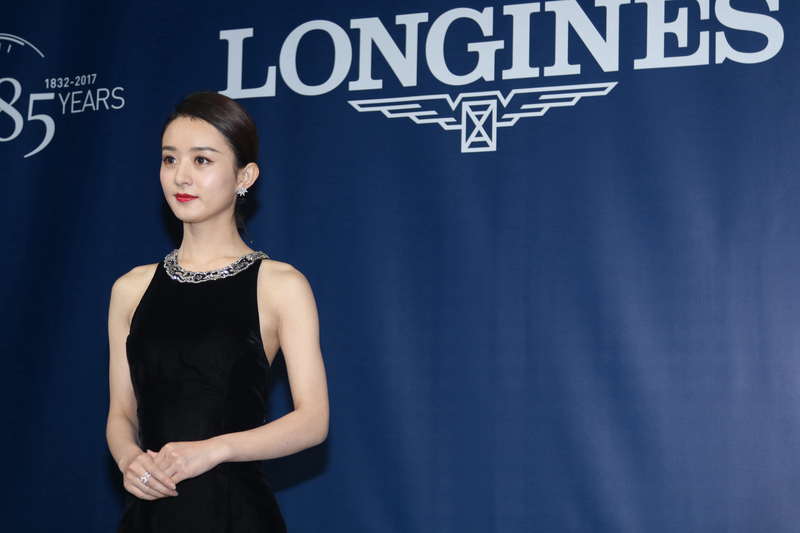
On November 10, a significant legal battle unfolded as Zhao Liying, a prominent actress from China, filed a lawsuit against the operators of the Hongguo short drama platform along with its parent company, Douyin. The case revolves around a dispute related to her portrait rights and the use of AI technology in the unauthorized manipulation of her likeness. The hearing took place online at the Mentougou District Court in Beijing, but a ruling has yet to be announced.
According to reports from various media outlets, Zhao Liying is the plaintiff in the case, while the defendants include the Hongguo short drama operators and relevant companies associated with Douyin. The allegations suggest that the series in question utilized AI face-swapping and facial merging technologies without obtaining permission from Zhao. This unauthorized usage involved superimposing her likeness onto characters in the short dramas, aimed at driving commercial traffic and generating profit. In her lawsuit, Zhao Liying seeks a court order to halt the infringement, demand a public apology, and obtain compensation for economic losses and reasonable legal expenses amounting to 810,000 yuan.
Notably, this lawsuit is groundbreaking as it not only targets the short drama production company but also implicates the Hongguo short drama operators and their fully-owned parent company, Douyin. This move underscores the platform’s responsibility in regulating AI-generated content.
Industry insiders perceive this lawsuit as a deviation from previous approaches to intellectual property protection, which primarily held content creators accountable for such violations. This case represents a potential shift in the mindset towards protecting artists’ rights and could set a crucial precedent for similar disputes regarding portrait rights in the future.
Prior to Zhao Liying’s official lawsuit, numerous stars, including Yi Yangqianxi, Dilireba, Deng Wei, and Guan Xiaotong, had already experienced severe violations of their rights through facial and voice impersonations in AI-generated short dramas, raising significant concerns within the entertainment industry.
In April 2026, several AI short dramas on the Hongguo platform, including titles like “Midnight Bus” and “Trick Me Into a Good Pregnancy,” were found to have unauthorized reproduced and synthesized images and voices of Yi Yangqianxi for profit, with individual episodes reaching viewership figures as high as 75 million.
In response, Yi Yangqianxi’s studio swiftly issued a stern statement, asserting that he had never participated in these productions nor authorized any third parties to engage in AI synthesis of his likeness. Other stars, like Deng Wei, who faced similar identity theft issues, quickly rallied to safeguard their rights, enlisting legal teams to gather evidence and notarize video materials and comments that infringed on their image rights.
Faced with mounting public outrage and criticism, Hongguo short drama platform acted quickly to remove over 670 unauthorized animations and AI short dramas within a few days. They initiated a focused investigation into the unauthorized use of actors’ images in AI-generated content. However, the platform’s response has been criticized as largely reactive, adopting a “complaint—take-down” approach, perceived by many in the industry as merely “sweeping issues under the rug.” This situation was a pivotal motivator for Zhao Liying to escalate her response by filing a lawsuit against the platform’s parent company.
The legal action taken by Zhao Liying signifies an evolution in how Chinese celebrities address infringement of their rights. The strategy has shifted from initially sending requests for the removal of offending content to directly pursuing legal recourse against the short drama platform and its parent company.
The industry now hopes that a favorable verdict for Zhao Liying will serve as a strong deterrent for platforms, compelling them to tighten their content review processes substantially. The aim is to raise the barriers significantly for any unauthorized usage of celebrities’ likenesses, especially for A-list stars, ensuring better protection for artists in the digital landscape.