
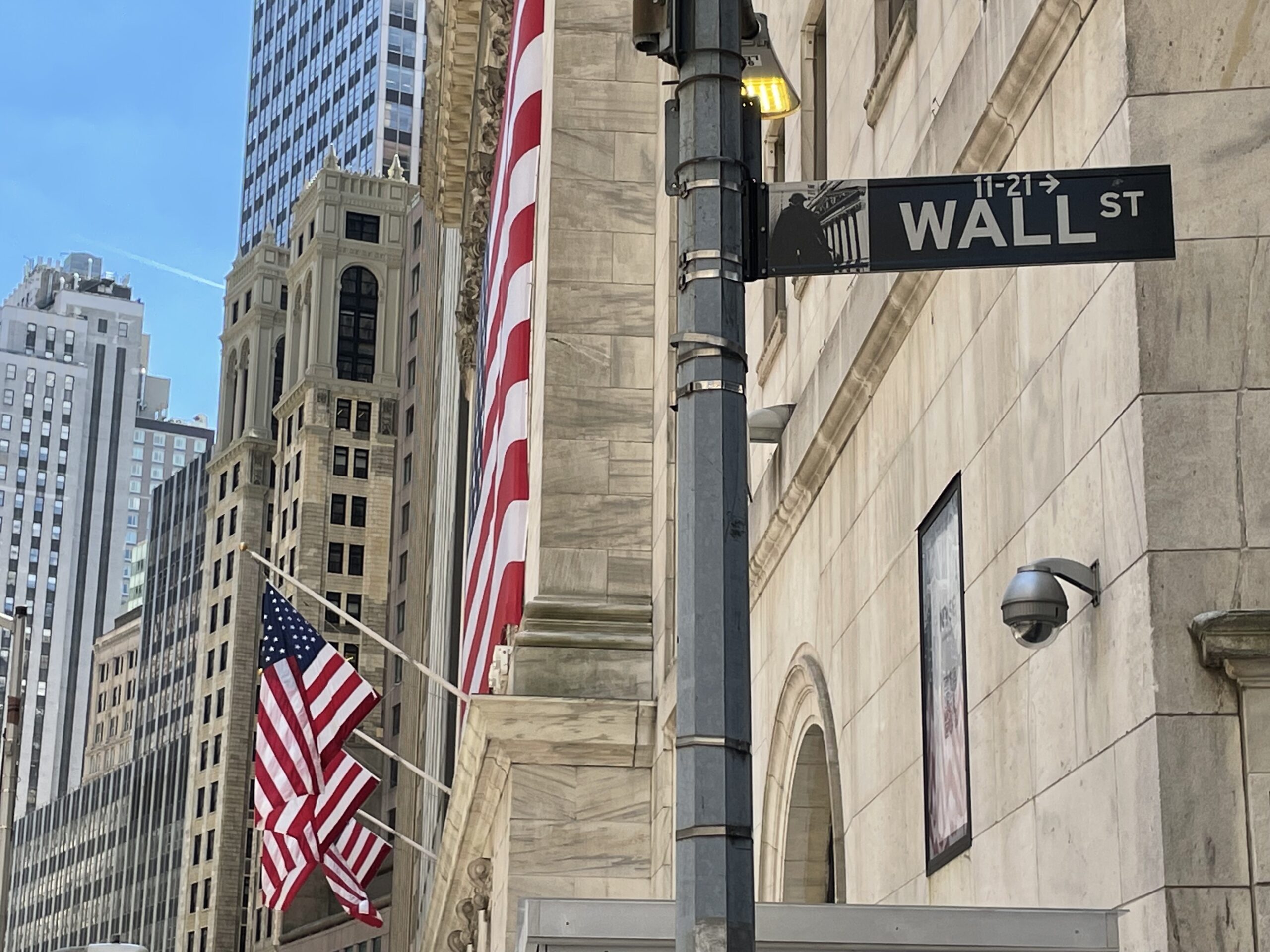
On Friday, October 16th, US technology stocks tumbled, with the Nasdaq index closing down 2.14%. This week, the index has fallen approximately 4.5%, marking the largest weekly decline since June. Market concerns over the risks associated with AI companies’ borrowing for expansion, coupled with consecutive declines in semiconductor stocks and rising oil prices, have led investors to approach tech stocks with caution.
On October 6th, both the Nasdaq and S&P 500 indices hit historic highs. However, the market focus has now shifted to the significant financing needs of AI infrastructure and whether companies can generate sufficient returns amidst rising borrowing costs.
The S&P 500 index fell 1.09% on Friday, nearly 2% for the week, also marking its poorest weekly performance since June. While the S&P 500 has risen by approximately 12% this year, the median increase for its constituent stocks is only around 6%, indicating a concentration of gains in certain AI tech stocks.
CoreWeave, an AI cloud service provider backed by Nvidia, became a selling focus. According to the company’s financial report filed with the US Securities and Exchange Commission (SEC) as of the end of June this year, its total borrowings were approximately $35.6 billion, in addition to significant lease liabilities. The company’s bonds were heavily sold off this week, with some bond yields rising above 15%, reflecting investors’ demands for higher risk compensation.
CoreWeave’s stock price fell nearly 12% on Friday, with a weekly drop of about 25%.
Belonging to the “neocloud” sector, CoreWeave primarily leases computing power to AI companies. Such companies first need to invest heavily in data center construction and then rely on future rental income to recoup costs. With rising interest rates, concerns arise in the market that some companies may struggle to profitably repay debts on time.
Gil Luria, the technology research director at D.A. Davidson, told CNN, “It is still unclear whether CoreWeave can achieve sufficient investment returns to repay its debts.”
He described these types of companies as “subprime tranche” in AI investments, hence being the first to face sell-offs.
Nvidia’s CEO, Jensen Huang, expressed optimism about CoreWeave to Bloomberg on Thursday, causing a temporary rebound in the company’s stock price, but it reversed its course to a sharp decline on Friday. Compared to its high point shortly after going public in 2025, its stock price has dropped by about 65%.
The selling spree also affected chip manufacturers. The Philadelphia Semiconductor Index fell 3.8% on Friday, marking the eighth consecutive trading day of declines and a substantial 11.4% drop for the week, the poorest weekly performance since April 2025. However, despite a over 20% decline from its high point in June, the index still boasts over a 50% increase this year.
The semiconductor industry accounts for about one-fifth of the S&P 500 index market value, making the downturn of chip stocks more likely to impact the overall market.
Asian markets are also under pressure. The South Korean KOSPI index, heavily relying on the major chip companies Samsung Electronics and SK Hynix, plummeted approximately 14.5% this week, its poorest weekly performance since 2008.
In June this year, the KOSPI had surged by 116% from the beginning of the year, but has now converged to around 35%. The Wall Street fear index VIX rose by over 20% on Friday, reaching above 20 points.
China’s storage chip manufacturer CXMT announced on October 10th progress in R&D on the 4F² DRAM architecture that can increase storage density. It is expected to launch a new generation of server memory products utilizing the related technology by the end of the year.
CNN pointed out that this news prompts investors to reassess the market share and pricing power of American and South Korean storage chip manufacturers. However, whether the new technology can achieve large-scale production remains to be verified.
Aside from AI-related risks, concerns over Middle East oil supply have pushed up oil prices, causing market nervousness. Brent crude briefly hit $110 per barrel on Friday for the first time since May.
The US Consumer Price Index (CPI) and Producer Price Index (PPI) released this week exceeded expectations, prompting a reassessment of the possibility of further interest rate hikes by the Federal Reserve (Fed).
Rob Haworth, a strategist at US Bank Wealth Management, told Reuters, “There is some fear in the market, especially with high oil prices which often put pressure on the price-to-earnings ratio of stocks (P/E ratio). Therefore, I believe investors are more inclined to be cautious before the weekend rather than taking on more risks.”
Next week, the US stock market will see important corporate earnings reports. Goldman Sachs forecasts that the combined capital expenditure of five major hyperscale cloud service providers in 2027 will increase to around $1.2 trillion, with AI infrastructure being a significant investment. The market will be watching whether these investments can bring in sufficient profit returns to support long-term expenditure.
Kevin Shea, an analyst at Mellon Bank Wealth Management in New York, told Reuters, “One of the most important observation points in this earnings season would be the profitability of hyperscale cloud service providers, whether they can grow faster than their capital spending.”
SpaceX is set to release its earnings on Tuesday next week, Meta and Tesla will follow on Wednesday. The market will be paying attention to the growth of their AI businesses, capital expenditure, and investment returns.
Semiconductor equipment manufacturer Lam Research, chipmaker Texas Instruments, as well as IBM and Western Digital, will also release earnings successively, providing more clues on chip, cloud services, and AI data storage demand.
Data from LSEG shows that earnings for S&P 500 companies in the third quarter are expected to increase by over 30% year-on-year.