
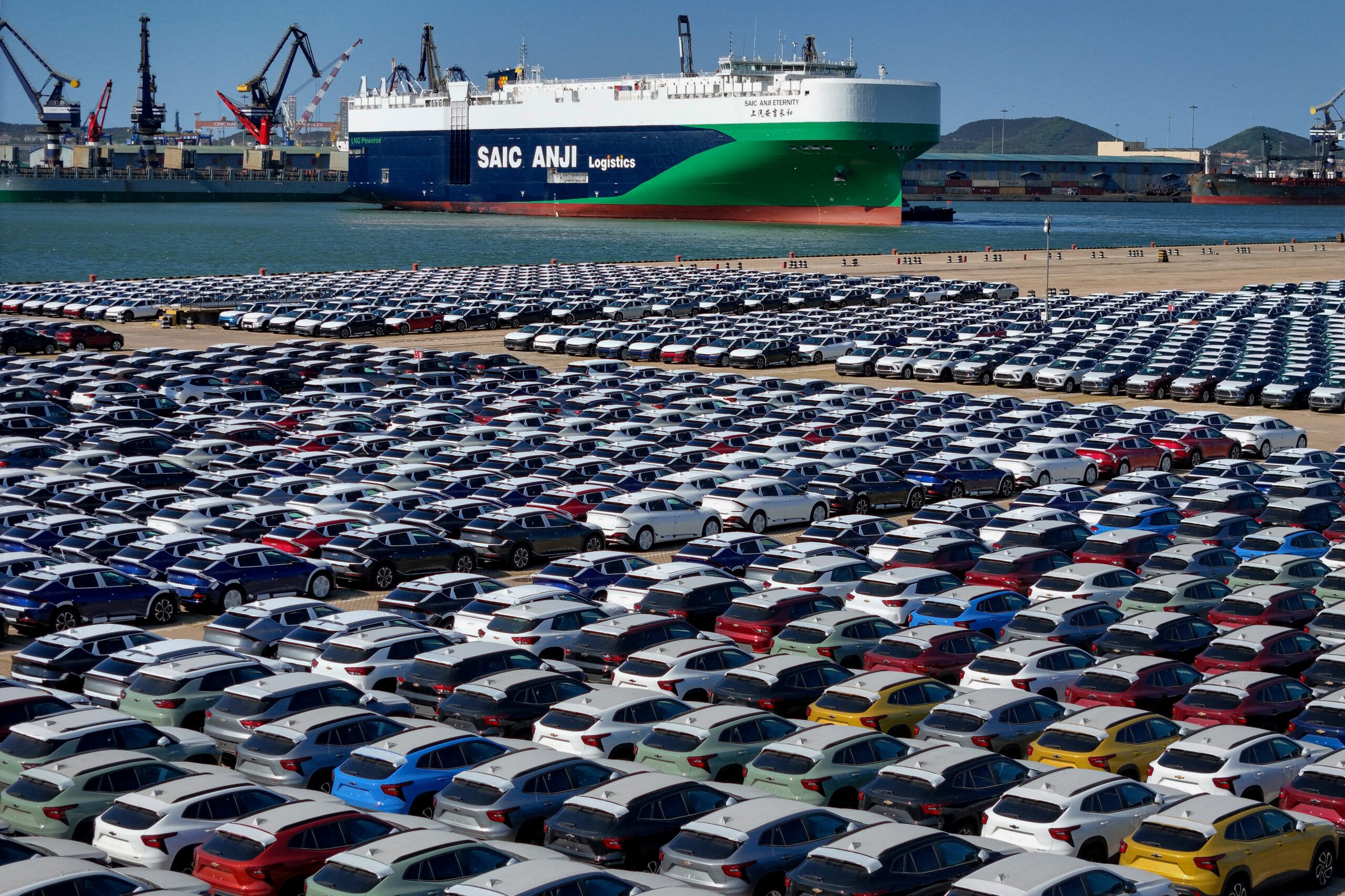
China’s electric vehicles are rapidly entering the Canadian market, with the former director of the Canadian Security Intelligence Service (CSIS) issuing a warning. He believes that everything you do inside or around these cars will become data acquired by the Chinese Communist Party (CCP).
David Vigneault, who led the CSIS from 2017 to 2024 and currently serves as the Chief Intelligence Officer of the strategic intelligence company Strider, expressed his concerns in a rare interview. He emphasized that all your data such as conversations, whereabouts, contacts, and activities around the vehicles will be accessed by China.
Vigneault highlighted the potential risks posed by Chinese electric vehicles and devices in collecting data to build intelligence databases. His remarks were fueled by recent reports in the National Post raising concerns about Chinese surveillance camera giant Hikvision’s operations in Canada.
He explained that platforms like these allow for mass data collection, not necessarily targeting individuals but gathering information like facial expressions to train algorithms.
Once data is stored, analyzed, and used to develop artificial intelligence models, it can be utilized for monitoring or surveillance of specific individuals overseas.
Using a hypothetical individual named Chris, Vigneault illustrated how this data could be leveraged for intelligence purposes, highlighting the potential surveillance capabilities facilitated by data collection from Chinese-made vehicles.
Amid Vigneault’s warnings, the Canadian government is actively seeking partnerships with Chinese automakers to produce electric vehicles in Canada, following the departure of American car manufacturers.
Earlier this year, during a visit to China, Canadian Prime Minister Justin Trudeau announced new bilateral trade agreements aimed at boosting the electric vehicle manufacturing industry in Canada. This includes reducing tariffs on nearly 50,000 Chinese electric vehicles to attract Chinese investment in joint ventures.
Chinese automaker Geely Auto announced last week its plans to introduce its vehicles – including brands like Lynk & Co and Zeekr – into the Canadian market next year.
Despite mounting concerns over Chinese technological and espionage activities, Trudeau has emphasized the importance of maintaining a strategic partnership with China while being vigilant.
Vigneault stressed that while engaging in business with China is crucial for Canada, it is equally important to safeguard against intellectual property theft and espionage activities orchestrated by the CCP.
He emphasized the significant economic losses incurred by Canada and its allies due to decades of Chinese intellectual property theft targeting governments, corporations, and research institutions.
CSIS and other Canadian intelligence agencies have repeatedly warned of increased Chinese espionage activities targeting Canadian intellectual property, including research on vaccines during the COVID-19 pandemic and potentially sensitive information for military purposes.
Vigneault contends that the scope, value, and impact of such theft activities are often underestimated, pointing out that the stolen intellectual property could have spurred significant prosperity if retained within Western countries.
He underscored China’s dual approach in considering the industrial and military applications of any new information, innovation, or technology entering the country.
Although cases of successful Chinese intellectual property theft in Canada are deemed classified, Vigneault emphasized the imperative for both private institutions and the federal government to acknowledge and address this ongoing threat.