
The global electric vehicle market saw a decline in sales in September after six consecutive months of growth. While Europe achieved a historic high in sales, both the Chinese and North American markets experienced significant decreases, leading to an overall performance slump and highlighting clear regional disparities in the global market.
According to data released by Benchmark Mineral Intelligence (BMI) on October 16, global electric vehicle (including pure electric and plug-in hybrid vehicles) sales in September dropped to 2.15 million units, a 2% year-on-year decrease. Cumulatively, global electric vehicle sales reached 15.5 million units in the first nine months of the year, still showing a 3% increase compared to the same period last year.
Europe emerged as the primary growth driver in the global electric vehicle market in September, with a 39% year-on-year increase in sales. Nearly 600,000 units were sold during the month, setting a new record high, surpassing the previous record set in June by 10%. BMI analysis attributes this continuous growth in the European market to strong consumer demand and supportive policies.
In contrast, the North American market experienced a significant decline. Electric vehicle sales in North America in September plummeted by 44% year-on-year, totaling around 130,000 units, marking the largest monthly drop this year. This decline is mainly attributed to the expiration of the U.S. federal electric vehicle tax credit policy at the end of September 2025.
Following the expiration of the tax credit policy last year, which led to an artificial boost in sales, the year-on-year drop in September was further amplified due to a high sales base during the same period the previous year.
In August 2022, the U.S. President signed the Inflation Reduction Act, providing tax credits for eligible electric vehicle purchases. New vehicles could receive up to $7,500 in tax credits, while qualified used electric vehicles could receive up to $4,000.
However, in July 2025, the U.S. Congress passed the One Big Beautiful Bill Act, prematurely ending related incentives. As per the regulations set by the Internal Revenue Service (IRS), tax incentives for eligible new, used, and commercial clean energy vehicle purchases were no longer applicable for vehicles acquired after September 30, 2025.
Charles Lester, Data Manager at BMI, mentioned that as the year progresses into the fourth quarter, the significant year-on-year sales decline in North America should gradually narrow as the lower base formed by last year’s tax credit expiration comes into comparison.
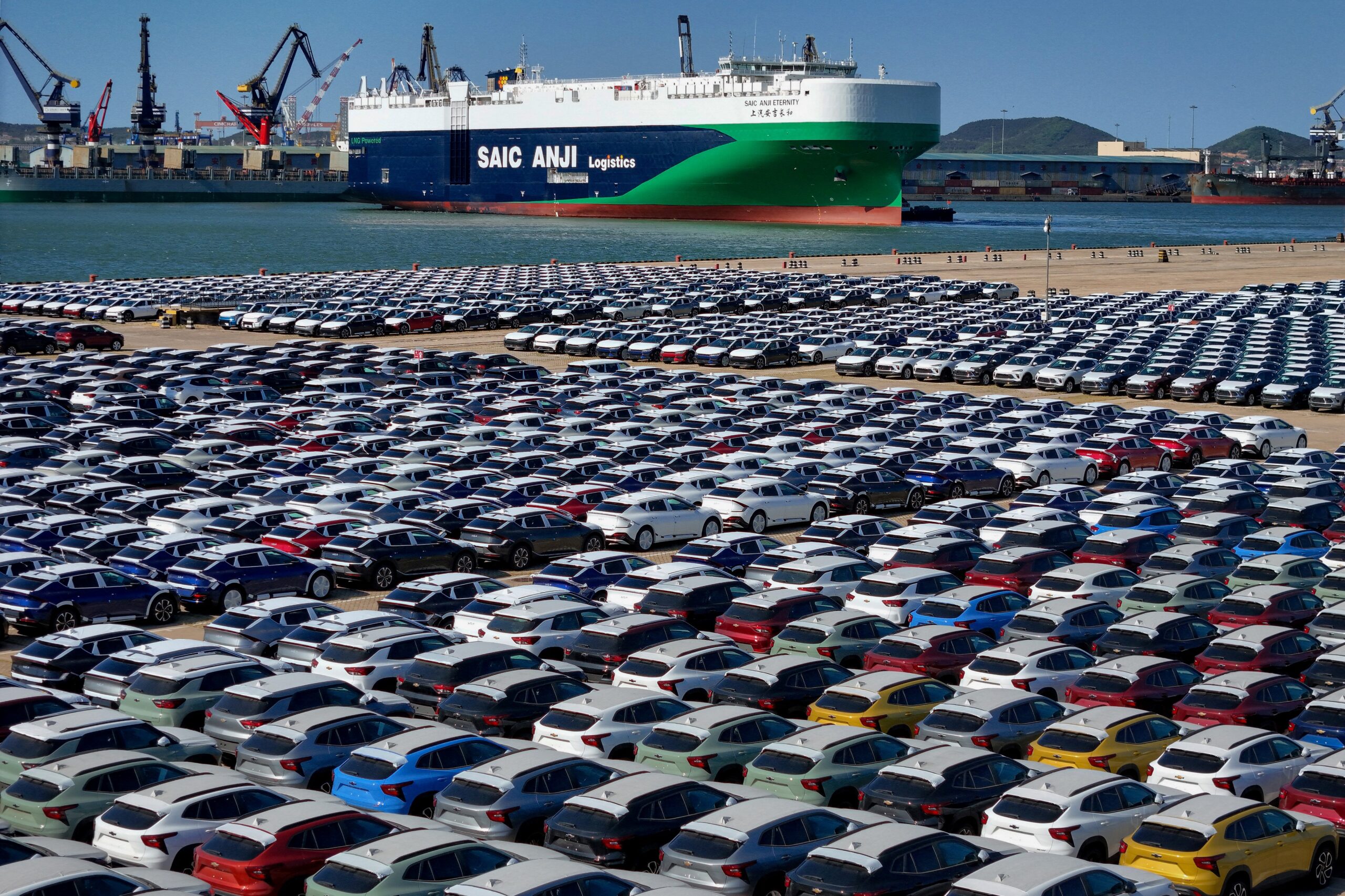
The decline in the Chinese market also dragged down global sales figures. Electric vehicle sales in China in September dropped by 18% year-on-year, amounting to 1.11 million units. Despite China being the largest electric vehicle market globally, BMI observed weakening domestic demand, leading car manufacturers to increasingly rely on overseas markets for growth.
Data from China Passenger Car Association (CPCA) indicated that Tesla’s Shanghai factory produced a combined total of 95,366 units of Model 3 and Model Y in September 2026, including exports, showing a 5% increase year-on-year. Of these, retail sales in China reached 64,837 units, with 30,529 units exported, marking a 58.29% year-on-year growth.
In the first nine months of the year, Tesla’s retail sales in China totaled 381,088 units, down by 11.93% year-on-year, while export volume from the Shanghai factory reached 361,972 units, showing a 108.44% increase from the previous year.
In response to domestic competition and slowing demand, Chinese automakers have been actively expanding into overseas markets. However, the growth in exports also faces uncertainties such as trade policies, with market analysts pointing out that the ability of overseas markets to absorb more Chinese-made electric vehicles will impact the future growth potential of car manufacturers.
Looking at the cumulative sales figures for the first nine months of this year, the global electric vehicle market continues to grow. However, September’s data indicates clear variations in development trends across different regions. While the European market continues to expand, China faces pressure due to insufficient demand, and the North American market is affected by the withdrawal of U.S. tax incentives for vehicle purchases.
Overall, the global electric vehicle market has yet to experience a comprehensive contraction, but the growth momentum is showing regional disparities. The future sales trends are expected to depend on local consumer demand, government policies, and car manufacturers’ ability to tap into overseas markets.
(Report referenced from Reuters)