
The Huawei case trial continues in court. A retired FBI supervisor testified yesterday, detailing the meeting in 2007 between Huawei’s founder Ren Zhengfei and highlighting discrepancies between shipping records and statements made by Huawei executives regarding dealings with Iran. The testimony provided evidence supporting the prosecution’s accusations.
Retired FBI Chief Legal Counsel and Special Agent Supervisor Tim Lucey recalled the meeting on the evening of July 11, 2007, in a Manhattan hotel lobby where Ren Zhengfei voluntarily and cooperatively spoke with FBI agents and a Chinese translator for 45 to 60 minutes. Ren Zhengfei presented his Chinese passport and business card, emphasizing Huawei’s ownership of a portion of the US company Futurewei and claiming the company’s partial independence as it is not a wholly-owned subsidiary. He asserted that Huawei did not engage in direct business with Iran and prioritized intellectual property protection.
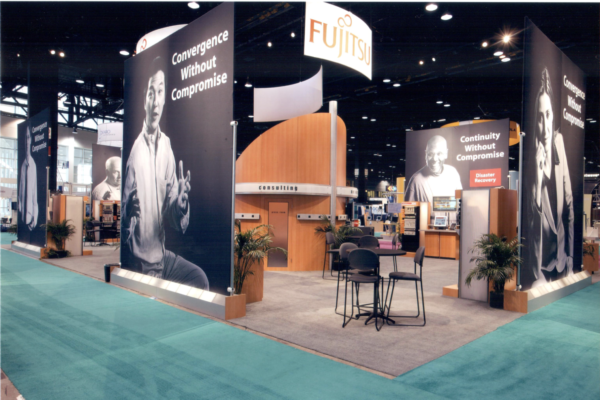
During the meeting, Ren Zhengfei unexpectedly mentioned the 2004 incident at a technology conference in Chicago where a Huawei employee was caught taking unauthorized photos of competitors’ products. Ren Zhengfei acknowledged the incident, confirmed the employee’s dismissal, and defended the employee’s actions, suggesting that photographing products may not necessarily constitute intellectual property infringement. Despite Ren Zhengfei’s belief that the behavior was not a violation, the employee was still fired.
Testifying in court in the morning was Seth Bridge from the US Department of the Treasury’s Office of Foreign Assets Control (OFAC). He explained the strict economic sanctions imposed on Iran by the US government under the International Emergency Economic Powers Act (IEEPA) and various executive orders. OFAC oversees enforcement of these sanctions and has licensing systems for non-US companies.
Beginning November 10, 2008, the US further prohibited “U-turn transfers” involving Iran, where foreign banks settle Iranian funds through US banks in USD before transferring to other overseas accounts to prevent the flow of sanctioned funds through the US financial system.
According to court documents, Huawei submitted voluntary disclosure documents related to transactions with Skycom to OFAC per a subpoena in 2025. The documents revealed sales by Huawei’s majority-owned subsidiary, Chengdu Huawei Symantec Technologies Co., Ltd., to distributors CMEC and Panda, suspected of potentially reselling the products to Iran and Syria. Huawei’s Chief Legal Officer also provided evidence of sales made to these distributors.
The prosecution highlighted discrepancies between the voluntary disclosure documents and the testimony of Charles Ding, Huawei’s chairman in North America, regarding dealings with Iran. The documents showed Huawei products potentially flowing to distributors linked to Iran, contradicting Ding’s assertion to Congress that Huawei had “never” supplied equipment to the Iranian government.
During cross-examination, the defense focused on the legal definition of the “Iranian government,” specifically questioning whether MCI, an Iranian state-owned enterprise, accurately fit that definition. The prosecution cited relevant sections of US sanctions documents prohibiting services, software, and hardware for use by the Iranian government, emphasizing the importance of accurate compliance in such dealings.