
China, with nearly one-fifth of the world’s population, only possesses about 6% of the global freshwater resources, according to statistics from the Ministry of Water Resources in Beijing. This poses a challenging question for central planners in China: how to sustain 20% of the world’s population, support over 18% of the global economic output, and the expanding digital economy in the face of relatively scarce water resources.
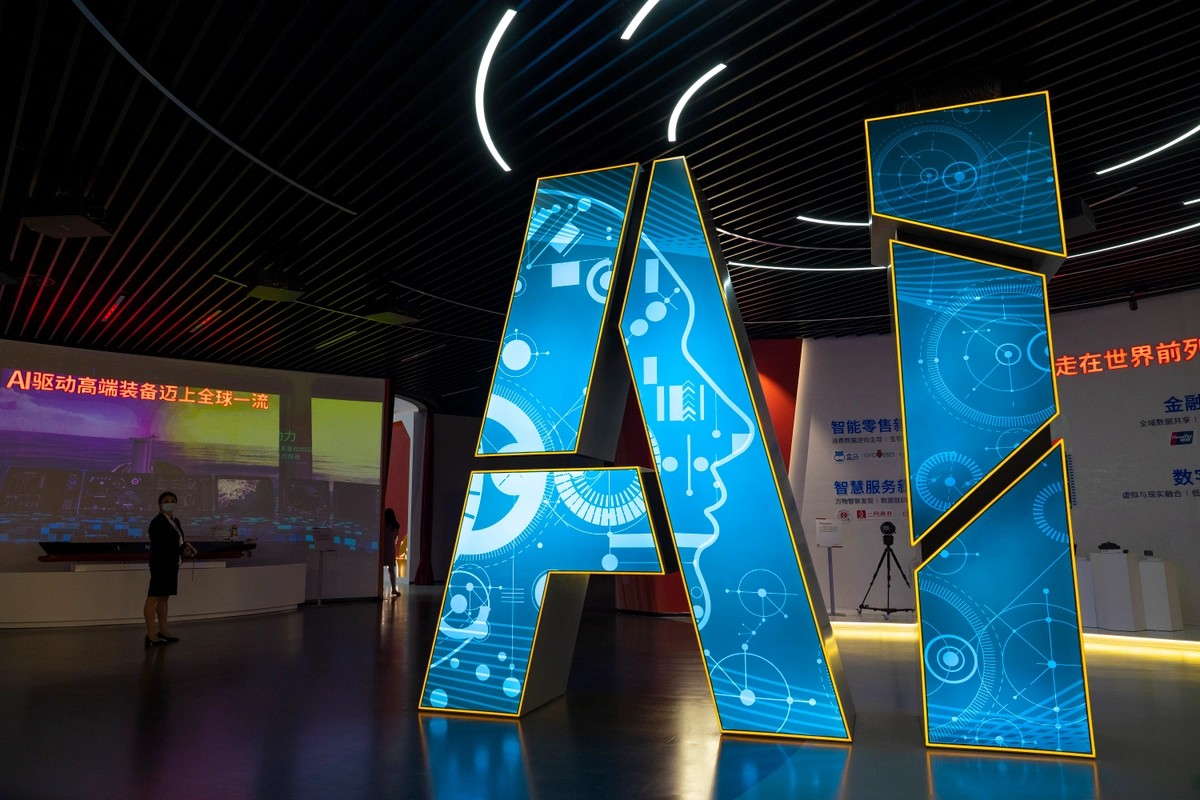
The situation has become even more complex as the most economically developed regions in China are not necessarily the most water-rich areas. Beijing is now aiming to significantly enhance artificial intelligence (AI) computing capabilities. The Chinese Communist Party (CCP) is actively constructing the computing infrastructure required to compete with the United States in the field of AI, which in turn demands substantial amounts of water. This raises another fundamental question: can China expand its AI infrastructure without exacerbating the existing water resource crisis?
Over the next five years, the CCP plans to invest around 2 trillion yuan (approximately 295 billion US dollars) to expand the national AI data center infrastructure. The project aims to establish interconnected computing centers and heavily relies on domestic technology suppliers.
Rystad Energy, headquartered in Oslo, estimates that by the end of 2025, China’s data center installed capacity will be around 32 gigawatts, potentially exceeding 60 gigawatts by 2030. The electricity consumption of data centers could reach 289 terawatt-hours by 2030, more than twice the level in 2025. AI and high-performance computing are expected to be the primary drivers of this growth.
However, electricity is just part of the infrastructure. Due to the significant heat generated by AI servers, data centers rely on cooling technologies that require substantial amounts of water.
Furthermore, existing data centers in China are already heavily reliant on such technologies. A study published in 2025 in Applied Energy, based in Amsterdam, revealed a crucial warning.
Researchers estimated that in 2022, China’s data centers consumed approximately 15.7 billion cubic meters of water, accounting for about 2.7% of China’s total water consumption. Importantly, researchers found that 72% of China’s computing capacity is located in severely water-stressed regions.
The CCP has been attempting to shift computing capacity from the population-dense eastern regions to western provinces where electricity, particularly renewable energy, is more readily available.
While this strategy makes sense from an energy standpoint, it presents challenges in terms of water supply. The “Eastern Data and Western Computing” strategy may exacerbate water stress in western regions like Gansu and Ningxia.
The imbalance between China’s water supply and the increasing demand for refrigeration is evident. Beijing, in solving one bottleneck, has created another.
This is the core issue of China’s strategy. Western provinces have abundant solar and wind resources and ample land for data center construction, but some areas are among the driest in China.
This creates a fundamental trade-off as China cannot simply allocate more water resources to AI without impacting other critical sectors. Water resources used for cooling AI data centers would inevitably compete directly or indirectly with agricultural, industrial, municipal, and ecological water demands.
In 2025, agricultural water accounted for about 62% of China’s total water consumption, industrial water usage was at 16%, and domestic water usage stood at 15.8%. China’s total water consumption had reached around 594.45 billion cubic meters. The dominance of agricultural water is crucial as food security is a strategic priority for Beijing.
On the other hand, China’s water use efficiency is improving. By 2025, water use per unit of GDP had decreased by 4.5%, and water use per unit of industrial value added had dropped by 7.2%.
While these gains are significant, efficiency improvements cannot eliminate scarcity. Even if the water consumption of the entire industry increases, data centers can become more water-efficient as AI computing develops rapidly.
This is where the danger lies. Beijing aims to have 80% of its data center electricity come from green energy sources by 2030, up from 11% in 2023. However, the high variability of AI computing loads makes integrating data centers with renewable energy systems challenging.
The CCP encourages improving data center efficiency through measures that enhance the utilization of electricity and water. Technological advancements could bring about significant changes.
Research in Applied Energy suggests that by 2050, enhancing electricity efficiency, water resource efficiency, and decarbonizing the power grid could reduce water consumption in China’s national data centers by 51.5% to 58.3% compared to business as usual scenarios.
However, these are just projections, not guarantees. As the demand for AI grows, China’s data center industry continues to expand. Technological advances driving the wider application of AI also increase the demand for computing capacity.
Rystad Energy forecasts that between 2025 and 2030, China’s data centers’ electricity consumption will increase by about 19% annually. Yet, efficiency improvements may not be sufficient to offset the water resource impacts of rapid computing capacity growth.
The outcome may follow a familiar economic pattern: while machines become more efficient, the sheer number of such machines grows.
This highlights the more severe aspect of China’s water resource dilemma. It can reduce the water required per unit of computation while also increasing the total water consumption.
If water resources are scarce in the vicinity of major AI centers, China may face pressures limiting new data center locations. This could raise infrastructure costs and compel companies to relocate computing capacity to areas with more abundant water resources.
This could intensify competition among agriculture, urban areas, manufacturing, and technology companies. This is critical as China’s economy heavily relies on water-intensive industries and food production.
China can construct reservoirs, pipelines, water delivery systems, recycling facilities, and increasingly efficient industrial infrastructure. It can compel all industries to meet the efficiency targets set by the state. However, it cannot mass-produce freshwater to meet the fundamental needs of AI, industry, agriculture, and public water supply.
Water resources are ultimately constrained by geography and climate and may become one of the less visible but crucial constraints on China’s AI expansion in the 2030s.