
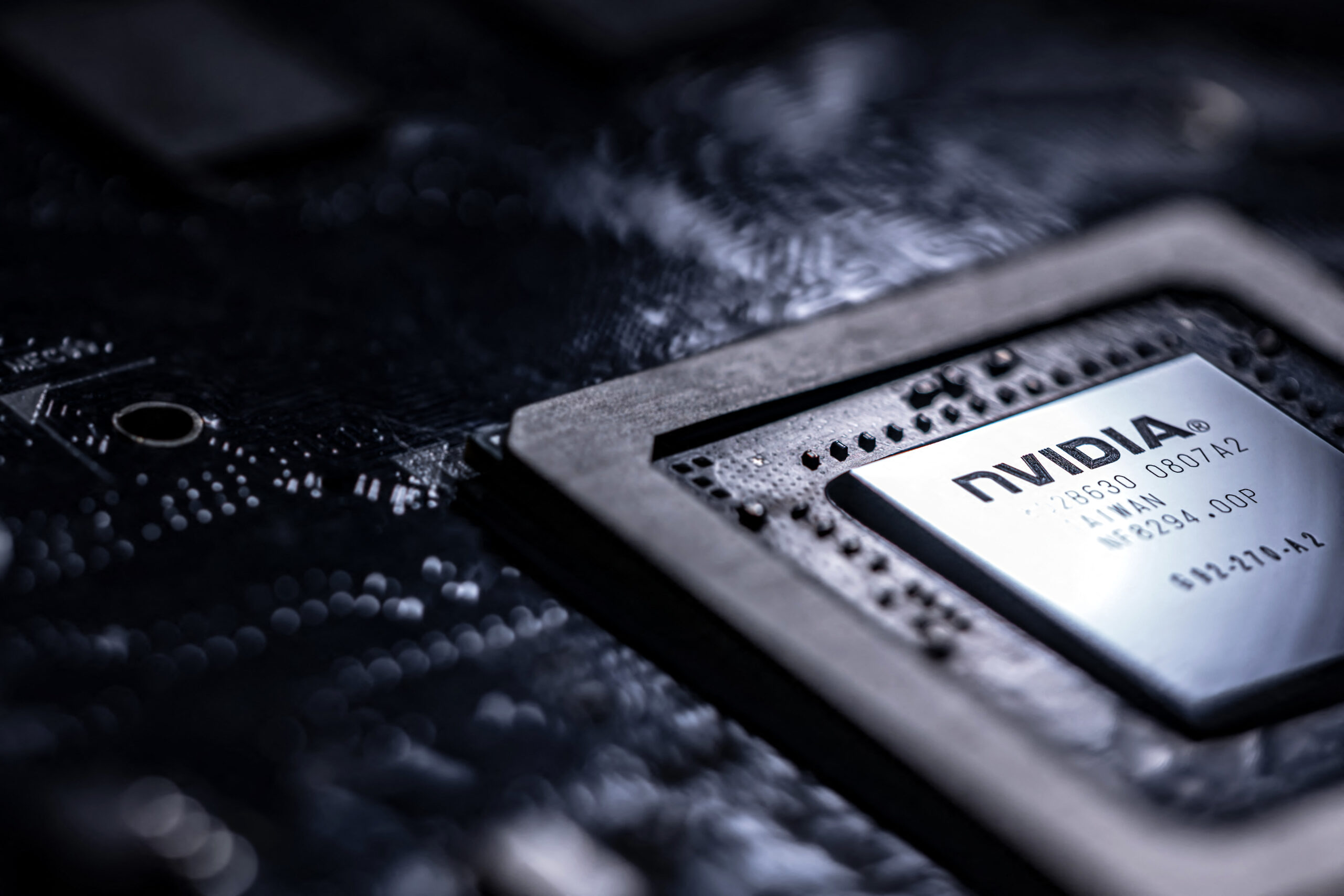
China’s artificial intelligence (AI) companies are ramping up efforts to secure overseas computing power supplied by Nvidia chips and are stockpiling related chips. This strategy aims to mitigate the impact of potential further restrictions from the United States on chip exports to China and the remote use of advanced processors.
According to a November 12 report by Reuters, citing three knowledgeable sources, Chinese AI firms are actively seeking to lease data center computing power equipped with Nvidia chips outside of China. Concerns have arisen following a recent controversy involving Nvidia’s CEO, Jensen Huang, which may prompt the U.S. to enhance export controls.
It has been reported that a major Chinese cloud service provider is internally discussing whether to lock in overseas Nvidia chip computing resources in advance. Several companies have already reached out to data center operators to negotiate computing power reservations. Smaller AI firms are also considering similar actions, including contacting key computing power leasing providers in Southeast Asia.
The apprehension among Chinese companies is closely tied to recent events surrounding Huang. On November 8, he publicly acknowledged past infidelity, with media reports indicating that the woman involved, Alice Huang, previously held an executive position at Megaspeed, a cloud computing and data center company in Singapore. U.S. intelligence officials have identified her as a personnel associated with Chinese intelligence.
In response to these developments, several members of the U.S. Congress have called for stricter regulation of Nvidia’s chip exports to China. John Moolenaar, the chair of the House China Task Force, along with Brian Mast, chair of the House Foreign Affairs Committee, and Rick Crawford, chair of the House Intelligence Committee, have sent a letter to Huang. They have requested his participation in a closed-door briefing on November 18 to discuss his relationship with Alice Huang and the measures Nvidia is taking to prevent foreign intelligence penetration.
According to insiders, there is concern among Chinese enterprises that this controversy could heighten political pressure on the U.S. to tighten access to overseas computing power, ultimately affecting Chinese AI companies’ ability to obtain high-end computing resources and train large models.
Currently, the U.S. restricts the export of Nvidia’s most advanced AI chips to China. However, Chinese companies can still lease computing power from overseas data centers to remotely utilize these advanced processors. This arrangement enables Chinese AI developers to access cutting-edge computing resources without directly importing chips.
Nevertheless, if the proposed Remote Access Security Act (RASA) passes, it would grant the U.S. Department of Commerce regulatory powers over remote and cloud access to restricted technologies. This legislation was approved in the House of Representatives earlier this year by a vote of 369-22 and is now awaiting Senate consideration.
Two sources have noted that concerns regarding potential U.S. enforcement intensification have also fueled demand for restricted Nvidia AI chips within China’s gray market. Some dealers and intermediaries have begun to stockpile these critical processors.
Buyers fear that the U.S. might step up efforts to combat the smuggling of advanced chips and AI servers into China as a result of these tensions.
Additionally, a report on November 11 highlighted that Northwestern Polytechnical University, which has close ties to the Chinese military, procured two Nvidia H200 AI chips last month for a total of 874,700 RMB (approximately $123,000), despite being listed on the U.S. export restriction list. This incident underscores ongoing gaps in U.S. measures aimed at restricting the Chinese Communist Party’s access to advanced technology.
Furthermore, in March, the U.S. Department of Justice charged Yih-Shyan “Wally” Liaw, co-founder of Super Micro Computer, along with two others, accusing them of diverting servers powered by Nvidia chips to China through a Southeast Asian company. Prosecutors allege that the defendants facilitated the transfer of at least $2.5 billion worth of U.S. AI technology, which includes servers equipped with Nvidia chips.