
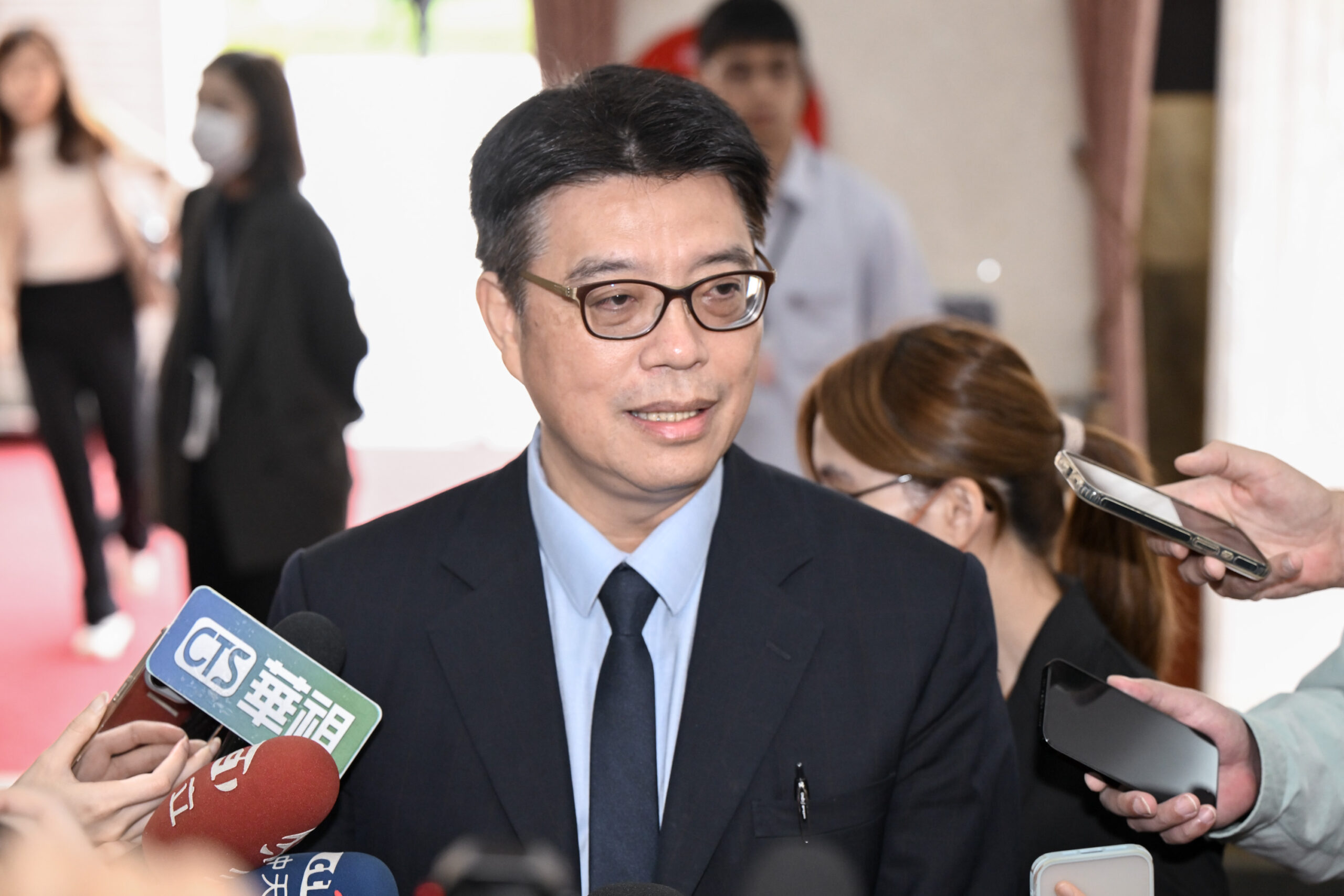
In a recent development, 260 experts and scholars, including former legislator Ding Shouzhong of the Kuomintang (KMT), have initiated a “Cross-Strait Peace Initiative.” This announcement comes in conjunction with the 160th anniversary of Sun Yat-sen, the founding father of the Republic of China. In response to this initiative, the head of Taiwan’s Mainland Affairs Council, Qiu Chui-zheng, emphasized on November 12 that the greatest threat to peace in the Taiwan Strait is the Communist Party of China’s (CPC) ambitions to eliminate the Republic of China and annex Taiwan. He urged the public to recognize the true nature of the Chinese regime.
Notably, Ding Shouzhong, who was a candidate for the mayor of Taipei in 2018, along with other influential figures during the presidency of Ma Ying-jeou, aimed to promote dialogue between both sides of the Taiwan Strait based on principles of peace, equality, and mutual respect. They advocate for collaborative negotiations concerning the ultimate political arrangements between Taiwan and mainland China.
During a meeting of the Legislative Yuan’s Internal Affairs Committee, participants invited officials from the Mainland Affairs Council and the Straits Exchange Foundation to provide reports on relevant issues. Prior to the meeting, Qiu Chui-zheng granted a joint interview with the media, where he reiterated that the recent G7 meeting had also underscored the critical importance of stability and peace in the Taiwan Strait. According to him, it is widely acknowledged that the main threat to peace in this region stems from the actions and policies of the CCP, which persistently aim to undermine the Republic of China and pursue forceful annexation of Taiwan, contributing to a significant risk in the Taiwan Strait, a fact recognized by the international community.
Qiu elaborated on the complex pressures applied by the Chinese government towards Taiwan, which include military maneuvers, diplomatic isolation, economic coercion, social infiltration, cross-border legal battles, extensive cognitive warfare, and gray-zone operations. He characterized the escalating pressure from the CPC as a primary cause for instability in both the Taiwan Strait and the surrounding regions.
He firmly stated, “Taiwan values peace but will not relinquish its freedom. We are open to dialogue but will not accept any form of humiliation. We strive for stability but not at the expense of the sovereignty of the Republic of China, nor our way of life rooted in liberty and democracy. We are willing to engage in meaningful communication and dialogue with the CPC on the principles of equality and dignity, aiming to foster positive interactions across the Strait. The government’s policy is to maintain the status quo with both assertiveness and respect.”
In addition, when questioned about a recent controversy involving Alice Huang, a former supervisor at Megaspeed International, which is based in Singapore, it was revealed that she was alleged to have connections with Jensen Huang, the CEO of NVIDIA. Reports also surfaced suggesting that she is under suspicion of being an informant for China’s Ministry of State Security by U.S. intelligence agencies.
Regarding Huang’s previous entries into Taiwan on a Hong Kong passport, Qiu clarified that she is originally from mainland China and entered Taiwan using her Hong Kong credentials. Given her potential involvement in activities that may violate regulations pertaining to the entry and residency of Hong Kong and Macau residents in Taiwan, as well as concerns over national interests, public safety, and public welfare, future applications for entry will be meticulously scrutinized and subjected to strict examination. The government emphasizes that all cases perceived with doubts will see intensified scrutiny to ensure rigorous oversight, thus assuring the Taiwanese public of their safety and security.