
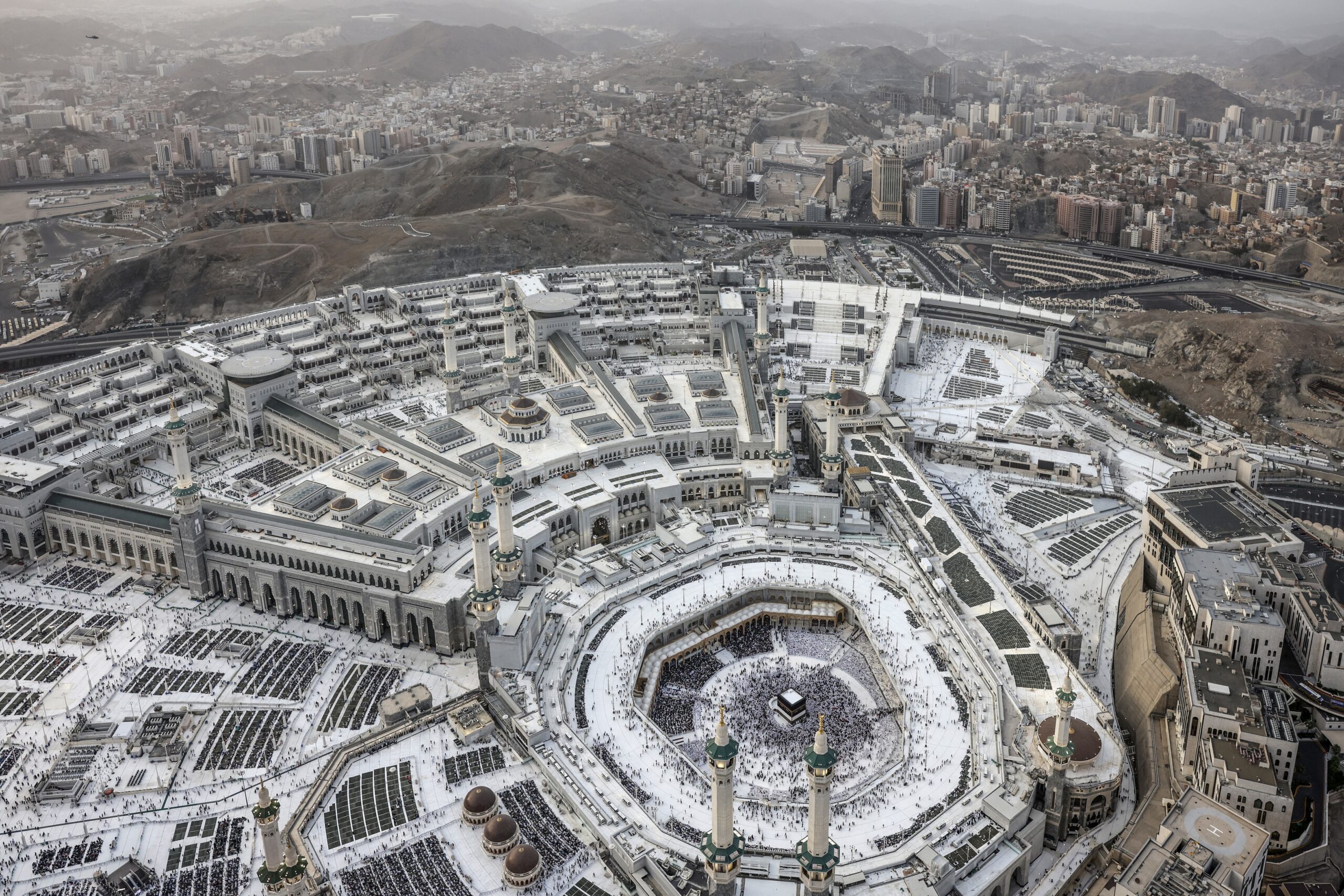
On Thursday, November 12, Saudi Arabia announced that its air defense forces successfully intercepted and destroyed two ballistic missiles that were launched by the Houthi forces in Yemen the day before. The debris from these missiles fell into the vicinity of Mecca, with one piece landing approximately 21 kilometers away from the Grand Mosque.
Recently, Saudi Arabia has experienced escalated clashes with the Houthis, an Iranian-backed group, leading to a series of missile and drone attacks across multiple regions. As of now, the Saudi authorities have not reported whether the debris caused any casualties or property damage.
According to reports from Reuters and Arab News, the coalition led by Saudi Arabia announced on Wednesday that it had intercepted a total of five missiles and two drones that day. These projectiles were aimed at various locations, including the capital city, Riyadh, and the holy city of Mecca, among others. Mecca, a central hub of Islam, annually hosts millions of Muslims traveling for the Hajj pilgrimage.
Major General Turki al-Maliki, the spokesperson for the Saudi-led coalition, stated that the intercepted weapons included three cruise missiles targeting the Riyadh area, two ballistic missiles intercepted in western Saudi Arabia, and the two drones aimed at Mecca and the southern region.
Saudi state television reported that the debris from the ballistic missiles fell in two locations: one area called Sabuhah, located about 35 kilometers northeast of the Grand Mosque, and another site in the Wadi al-Maghmas valley, approximately 21 kilometers east of the mosque.
The Anadolu Agency reported that the coalition also announced early Thursday that it had intercepted and destroyed a drone in the eastern province of Saudi Arabia.
Yahya Saree, a military spokesperson for the Houthi forces, denied on Wednesday that the group had launched drone attacks against Mecca, asserting that their operations were focused on oil facilities and military bases. The Houthis have consistently denied targeting Mecca and Medina.
The Saudi civil defense authorities condemned the missile attacks on Thursday, stating, “Such hostile actions targeting civilian objectives blatantly violate international humanitarian law and reflect the dangerous tactics employed by the Houthi forces.”
In 2025, the U.S. State Department officially designated the Houthis as a foreign terrorist organization.
According to Reuters, Saudi air defense forces had already intercepted one ballistic missile and one cruise missile on November 10. On November 8, a Houthi attack resulted in damage to an administrative building of Saudi Aramco in the financial district of Riyadh.
Saree also claimed that the Houthis had attacked a pumping station in Yanbu, a major oil hub in western Saudi Arabia, though this report has not been confirmed by Saudi officials.
Saudi Arabia utilizes its pipeline to transport oil to the port of Yanbu, subsequently exporting it via the Red Sea and bypassing the Strait of Hormuz. On November 11, the Saudi civil defense department issued warnings for cities such as Taif and Yanbu, but later declared the threat level to be safe.
The ongoing conflict in Yemen began when the Houthis seized the capital, Sana’a, in 2014. In response, Saudi Arabia launched a military intervention the following year to support the internationally recognized Yemeni government. A UN-brokered ceasefire agreement in 2022 momentarily halted hostilities; however, clashes have resumed this year.
Since September, the fighting between the two sides has intensified, with the Houthis making advances towards the Bab el-Mandeb Strait, a crucial maritime passage connecting the Red Sea and the Gulf of Aden, while Saudi airstrikes have targeted Houthi positions within Yemen. The Bab el-Mandeb Strait is an important conduit for international shipping.
In October of this year, the Riyadh King Khalid International Airport was attacked by the Houthis, resulting in the deaths of 13 individuals and injuries to over three hundred more.