
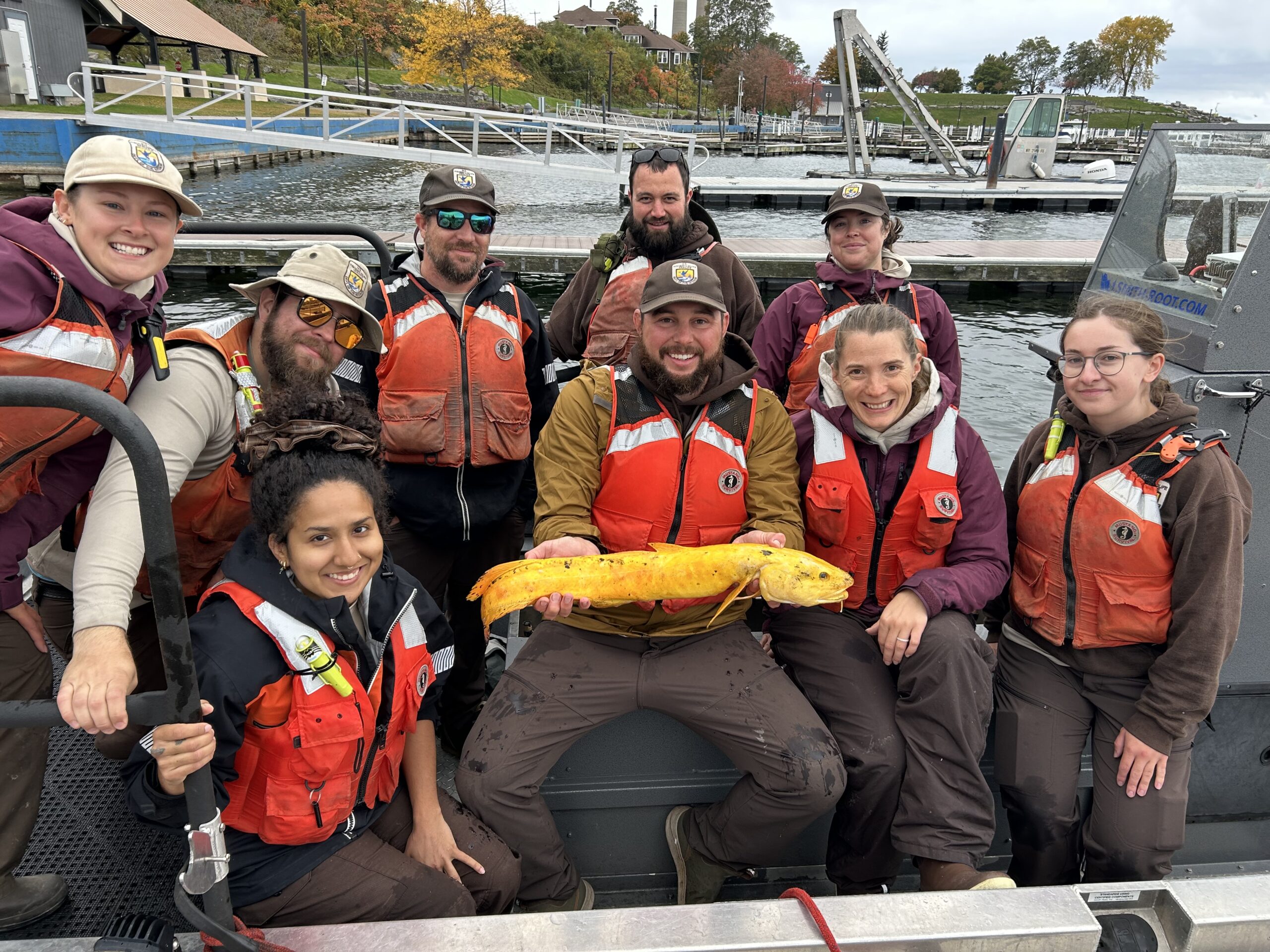
**Unusual Yellow-Orange Burbot Captured in Oswego Harbor, New York**
In a fascinating development, biologists from the U.S. Fish and Wildlife Service (USFWS) have reported the capture of a strikingly colorful yellow-orange burbot at the mouth of a river in Oswego, New York. This remarkable fish exhibits a hue that rivals the vibrant colors of autumn leaves, a phenomenon attributed to a rare genetic mutation.
According to a news release issued by the USFWS on November 10, the biologists captured this local species during a routine Aquatic Invasive Species Survey conducted last month at Oswego Harbor. Located at the mouth of the Oswego River, the harbor serves as an entry point for this river, which flows into Lake Ontario in upstate New York.
During the investigation, the biologists primarily observed native species already present in the lake. The unexpected capture of a rare native burbot signals the survey’s effectiveness in identifying those elusive fish that are seldom seen.
This discovery is particularly noteworthy given that burbot numbers in the lake are minimal, and this species typically inhabits deeper and colder environments than the harbor waters. While anglers have caught burbots in the past, this marks the first recorded instance of a burbot in Oswego Harbor during the course of comprehensive fisheries surveys.
Burbot, known as the only freshwater cod species in the world, typically displays yellowish-brown or grayish hues. However, the remarkable yellow-orange coloration of this particular burbot is the result of a condition known as xanthochromism.
Xanthochromism is a rare biological phenomenon triggered by genetic mutation, which suppresses normal pigmentation. As a result, the fish showcases the impressive yellow-orange color. In wild fish populations, xanthochromism occurs less frequently than conditions like albinism or melanism, making this catch all the more extraordinary.
Fisheries biologists from the U.S. Geological Survey (USGS), upon examining the fish, noted that it appeared emaciated and in poor health, prompting them to send it to Cornell University’s veterinary school for a thorough health analysis.
This extremely rare fish could provide invaluable insights into the overall health of the burbot population within the entire watershed, serving as a reference point for potential management strategies.
The USFWS advises that burbots tend to move slowly along the bottoms of rivers and lakes during the winter months, presenting an ideal opportunity for anglers looking to catch this species. Moreover, burbots breed beneath the ice in the winter, gathering in groups and intertwining with one another.
For those interested in successful fishing, it is essential to grasp the dietary preferences of the fish one aims to catch, their feeding times, seasonal breeding and migration patterns, and the types of habitats they prefer.
In the case of burbots, they are highly adaptable bottom-dwelling predators that tend to thrive in lakes or slow-moving waters, preying on other fish that inhabit the same aquatic environments.