
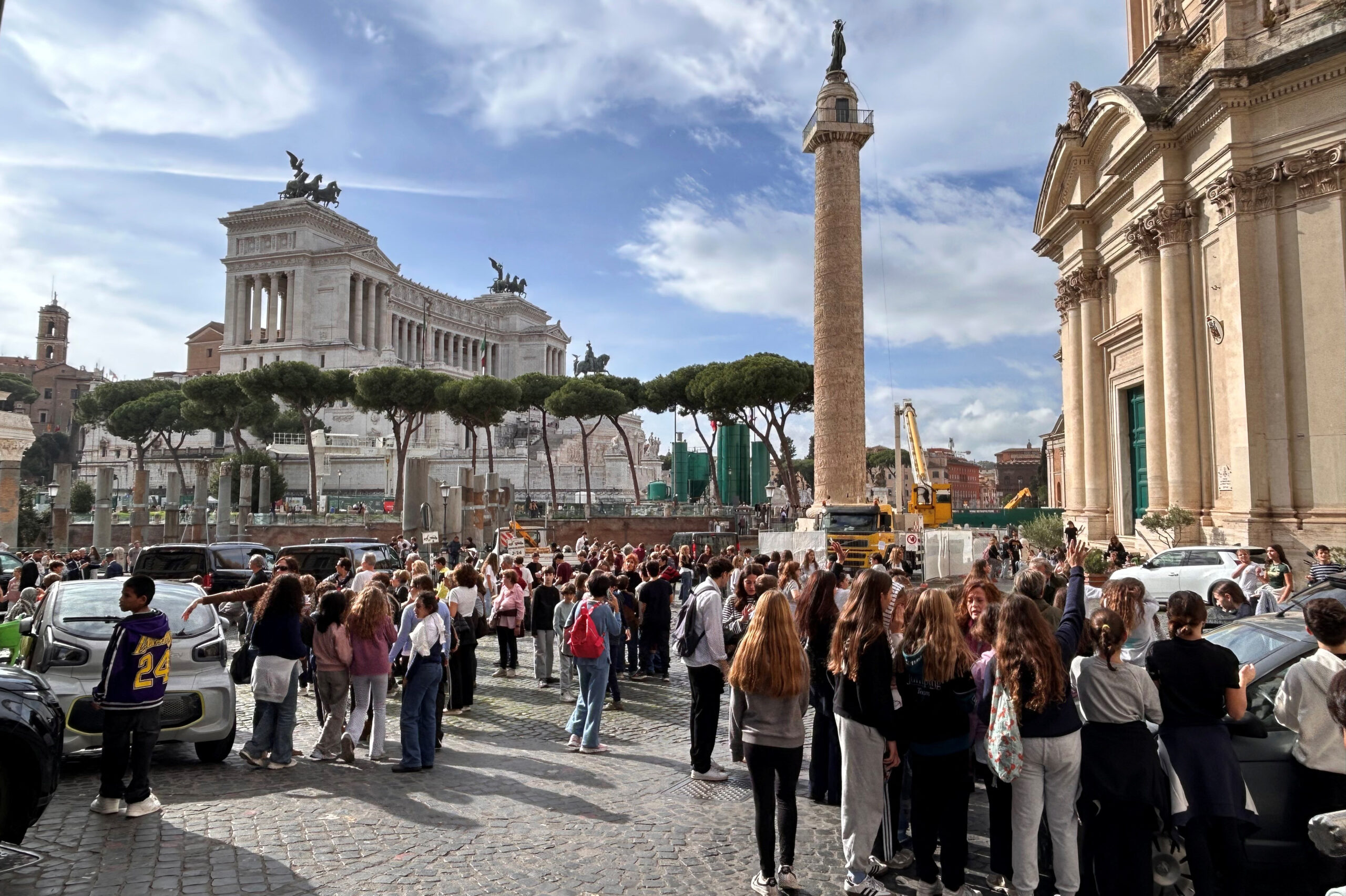
On November 11, a series of bomb threats sent via email to multiple countries across Europe resulted in the emergency evacuation of over 300 schools in Italy. Schools in Scotland, Northern Ireland, and Ireland were also affected by this alarming situation, marking yet another instance of mixed harassment against public institutions in Europe following recent cyberattacks and threats targeting supermarkets, blood banks, air traffic, and television broadcasters.
In Italy, the bomb alerts triggered widespread evacuations. Education Minister Giuseppe Valditara confirmed that a total of 312 schools had to implement evacuation procedures after receiving the threatening emails. At Mamiani High School in Rome, students initially mistook the alarm for a bell signaling recess, only to realize the seriousness of the situation once they stepped outside.
The sudden evacuations created a tense atmosphere both on campuses and at home. Nensi Bego, a parent of a student at Mazzini High School in Rome, expressed her concern, stating, “My daughter Dafne started crying because the kids had no idea what was happening. I picked her up, and she was still shaken. It’s truly disgusting; it’s clear that this is just a false alarm intended to disrupt classes and disturb everyone’s daily life.”
Eighteen-year-old high school student Anita Bartocci from Rome told the Associated Press, “They announced a bomb alert because they received an email from Russian hackers threatening to kill everyone. The content was quite violent.”
Despite the panic the alerts caused, Italian Prime Minister Giorgia Meloni stated that the alarms posed no “concrete danger” and were aimed at “provoking fear and concern.” Both police and public institutions are closely monitoring the situation, and Meloni has summoned her cabinet ministers for a meeting. Authorities in Scotland, Northern Ireland, and Ireland have classified the alarms as hoaxes, determining that there were no substantial threats, and thus did not carry out school evacuations locally.
According to copies of the emails obtained by Reuters and Italy’s LaPresse, the threatening letters sent to Italy were signed by Mikhail Andropov, the purported leader of the “Vilayat of Misoginistan.” This individual had claimed responsibility for bomb threats received by newsrooms in Ireland and Bulgaria the previous week, and the emails included personal threats directed at Prime Minister Meloni.
Italian Defense Minister Guido Crosetto remarked to Adnkronos that these threats represent a clear strategy: to spread fear and create anxiety. He noted that such actions are not always the work of foreign or hostile entities, but can sometimes be attributed to attention-seekers and individuals eager to incite panic.
Nevertheless, some European officials suspect that these disruptions could be linked to Russia or Iran. France had previously accused Iran of conducting cyberattacks that paralyzed the refrigeration systems of hundreds of supermarkets, leading to the summoning of the Iranian ambassador. Both Russia and Iran have vehemently denied any involvement and dismissed the allegations. Italian authorities emphasized that there is currently no concrete evidence directly linking the false alarm to a specific foreign government, and investigations are still ongoing.
While false bomb threats are relatively common, the recent surge in such incidents in such a short timeframe is indeed unusual. Just last week, dozens of flights across Europe were forced to make emergency landings, escorted by fighter jets or experienced significant delays due to a series of bomb threats.