
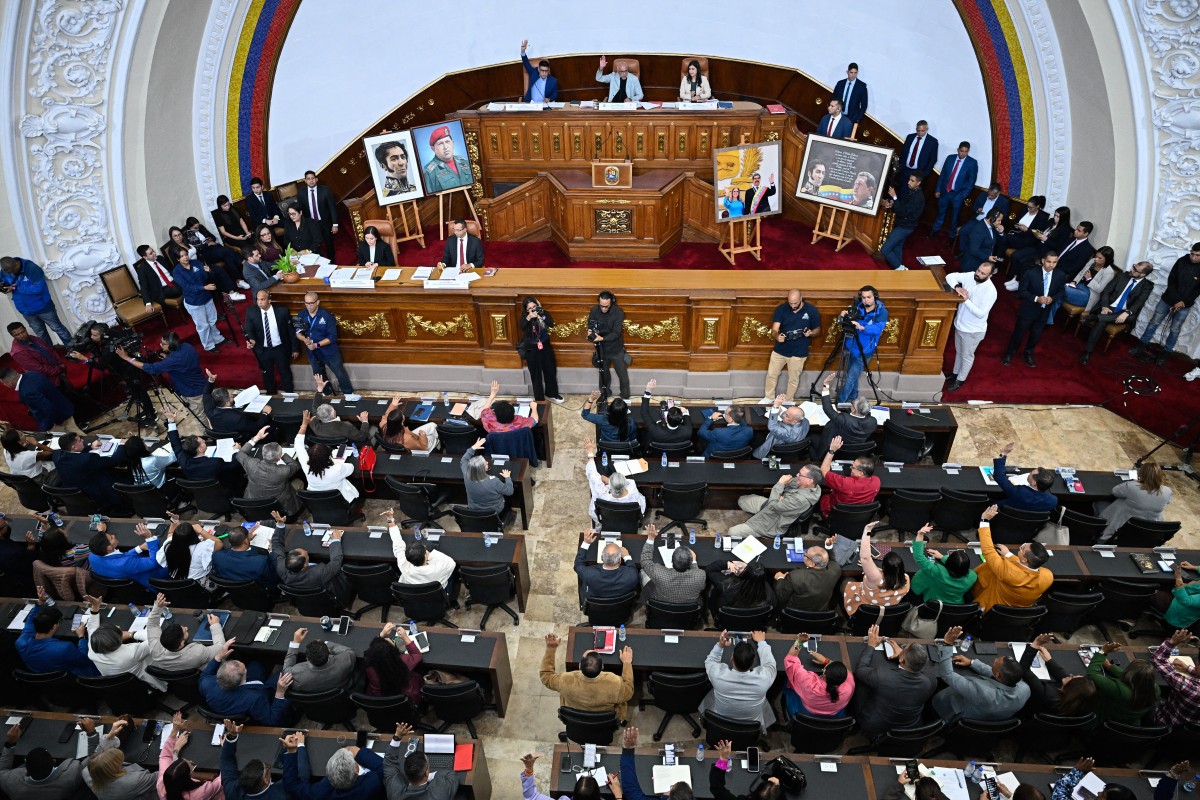
On November 10, Venezuela’s National Assembly voted unanimously to approve partial reforms to the Organic Law on Electricity Systems and Services (Ley Orgánica del Sistema y Servicio Eléctrico), which opens the door for private, including foreign, investment in the electricity sector. This landmark decision breaks a state monopoly that has lasted nearly two decades and aims to address the chronic electricity supply issues and attract funding for the restoration of electricity infrastructure.
The newly enacted law permits private enterprises to enter the power sector through joint ventures, concessions, and related authorizations, with some concession periods extending up to 25 years. These private entities will be able to participate in various segments of the electricity business, including generation, transmission, distribution, and sales.
Jorge Rodríguez, the president of Venezuela’s National Assembly, emphasized the necessity of opening the electricity market, allowing the private sector to facilitate power supply, particularly for large consumers and industrial companies. He clarified that the reform does not equate to complete privatization, asserting that the state will maintain control over the power system and continue to provide subsidies for vulnerable populations.
The reform was also deemed essential by opposition assembly member Antonio Ecarri, who pointed out the imminent collapse of the national power grid as a stark justification for the changes.
Venezuela’s electricity system has been plagued for years by underinvestment and inadequate maintenance. Following the nationalization of the electricity system in 2007, a lack of sustained investment has resulted in deteriorating generation capacity and a crumbling transmission network. Many areas across the country frequently experience blackouts, with some regions facing power outages lasting several hours daily, and occasionally extending up to 18 to 20 hours at a time.
Moreover, the electricity shortages have had adverse effects on various sectors, including water supply, telecommunications, agriculture, and food production. A dairy farmer in the western Táchira region reported that power outages have persisted for at least a decade, hampering the normal use of milking and refrigeration equipment in their operations.
Currently, only about 40% of Venezuela’s installed power generation capacity is operational. In September, national electricity demand peaked at 16,400 megawatts, while actual generation fell short at less than 13,000 megawatts, indicating a significant supply gap. The frail state of the electricity system has severely hindered the recovery of Venezuela’s oil production and the overall economy.
This electricity reform is part of broader economic reforms initiated by interim President Delcy Rodríguez, aimed at expanding economic openness. Following the arrest of then-President Nicolás Maduro earlier this year, Rodríguez’s government has progressively pushed for reforms in the oil, gas, and mining sectors to increase private capital participation.
In September, Venezuela signed a major oil agreement with the United States concerning over 65 billion barrels of oil resources. Chris Wright, the U.S. Secretary of Energy, previously emphasized during his visit to Venezuela that restoring the electricity infrastructure is crucial for the normal operation of the oil sector.
Simultaneously, the Inter-American Development Bank (IDB) is formulating a two-year cooperation plan with Venezuela, focusing primarily on electricity and social security. Additionally, the Venezuelan government is contemplating utilizing transitional loans offered by Qatar to repay over $2 billion owed to the IDB, aiming to regain access to financing support.