
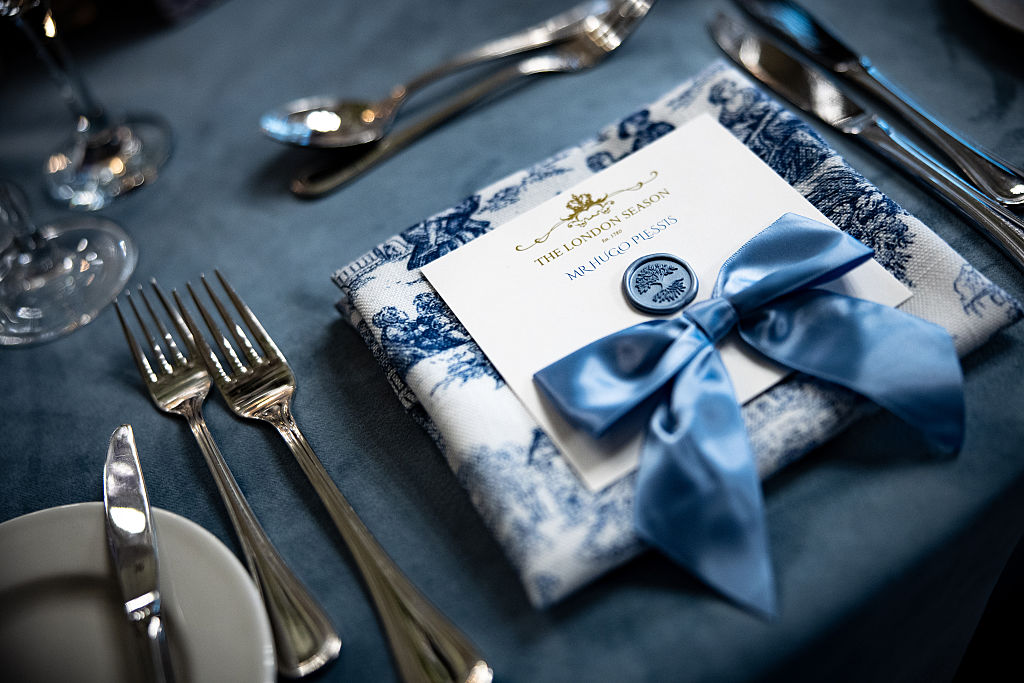
Many diners, before settling their bill and leaving a restaurant, have a habit of carelessly crumpling their napkin into a ball and placing it on their plate. While this may seem like an unimportant action, it can silently reveal a lot about one’s dining etiquette, particularly from the perspective of the servers in upscale restaurants.
In Houston, Texas, the restaurant manager of the iconic Brennan’s Houston, Dylan Emerson, emphasizes that napkins are not merely tools for wiping one’s mouth; they represent a “silent signal” exchanged between diners and servers. The manner in which a napkin is placed on the table can convey significant meaning, from the moment a patron is seated, to temporary departures, and finally to the conclusion of the meal.
For example, during private dining events, guests typically wait for the host to signal the start of the meal before they pick up their napkin. However, in a restaurant setting, patrons are encouraged to unfold their napkin and lay it on their lap as soon as they are seated. Emerson recommends that diners fold their napkin in half with the folded edge faced toward their waist. This way, they can effortlessly lift the top layer when needed, maintaining an elegant appearance while dining.
Emerson has identified five common mistakes that patrons often make when it comes to napkin etiquette, and he urges diners to be mindful of these habits to avoid creating awkward situations with the staff.
First and foremost, regardless of how messy a dish may be, diners should never use their napkin as a makeshift bib. Emerson cautions against tucking napkins into shirts, collars, or belts, likening this behavior to wearing a bib and encourages diners to maintain a polished look.
If a guest needs to leave the table momentarily, the recommended approach is to simply fold the napkin into a basic square and place it on their chair. This signals to the servers that the table is still in use, preventing staff from mistakenly clearing the table, thinking that the guest has finished their meal.
Another frequent error that Emerson witnesses is guests placing their napkin directly over their plates. He acknowledges that with a diverse clientele from across the globe, individual dining habits may vary. However, covering dishes with a napkin often leaves servers in a difficult position, unsure whether the guest has finished eating or just stepped away momentarily, which can lead to confusion regarding the state of the meal.
Moreover, covering a plate with a napkin can lead to food residues getting onto the napkin, necessitating a replacement.
When dining in an upscale venue, if a napkin accidentally falls to the floor, guests should resist the urge to quickly retrieve it from under the table. Emerson reminds patrons that it’s best to avoid touching a napkin that has fallen on the floor to keep their hands clean. Instead, guests can discreetly signal or raise their hand to ask a server for a new napkin.
Another tip that Emerson provides is regarding the proper method of using the napkin when wiping one’s mouth. Diners should utilize the inner folded side of the napkin and gently press or dab at the corners of their mouth, rather than making large sweeping motions. This technique helps to conceal oil and food particles within the layers of the napkin, keeping the outer appearance tidy. Furthermore, prior to sipping water or tasting wine, gently pressing the lips with the napkin can help prevent leaving greasy lip marks on the glass rim.
As the dining experience comes to a close, it’s essential not to randomly crumple the napkin and leave it on the table. Emerson notes that neatly placing the napkin back on the table is a sign of respect and gratitude towards the service staff. He likens this simple gesture to a “friendly and intuitive nod” between diners and servers, embodying mutual respect and kindness.
He suggests that when the meal is finished, diners can simply fold the napkin into a basic square and place it to the left of their plate. There’s no need to achieve perfection in the fold or recreate the intricate presentation style of the napkin as it was initially placed. A simple, tidy gesture is often more than enough to convey appreciation for the service received.