
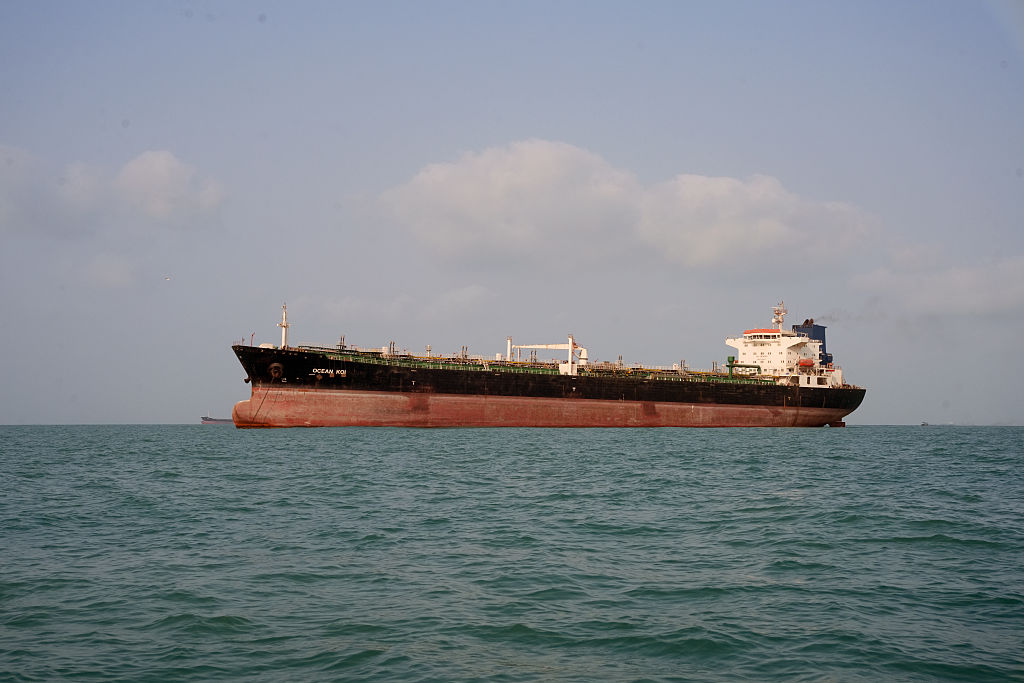
Confidential documents obtained by the independent media outlet Iran International indicate that Iran is taking advantage of China’s oil terminals and storage facilities in order to bypass U.S. sanctions and maintain operations of sanctioned oil tankers. According to sources within the Iranian Ministry of Oil, this strategic move reinforces Iran’s efforts to keep its oil exports flowing despite the significant pressures from international sanctions.
The report reveals that Ali Shamkhani, the former secretary of Iran’s Supreme National Security Council, criticized the administration of President Masoud Pezeshkian about the poor performance of oil sales during that period in a letter addressed to Supreme Leader Ali Khamenei. Shamkhani, who also served as a political advisor to Khamenei, lost his life in an airstrike by Israeli forces on February 28 of this year.
In response to Shamkhani’s concerns, Hamid Bovard, the former CEO of the National Iranian Oil Company and current acting oil minister, criticized the new tanker policy implemented under former President Ebrahim Raisi’s administration. He highlighted the juxtaposition of Pezeshkian’s instructions to reliable oil intermediaries to continue utilizing sanctioned tankers that could dock at designated ports, while simultaneously engaging in negotiations with China to secure rights to utilize port facilities and oil terminals. This arrangement effectively established a transshipment hub for Iranian crude oil.
Furthermore, reports suggest that Iran has long-term leases on several large oil storage facilities across various locations in China, allowing for a direct sale of crude oil from Iran to China.
According to the arrangements put in place, a fleet of tankers operated by Hossein Shamkhani, a son of Ali Shamkhani and often referred to as the “shadow fleet,” transports Iranian crude oil to ports controlled by Iran in China. This clever maneuver is designed to evade U.S. sanctions, effectively enabling Iran to continue its oil sales without direct interference.
It has come to light that the U.S. Treasury has already imposed sanctions on 51 oil tankers associated with this shadow fleet. Over the years, Iran has worked with the Chinese Communist Party (CCP) to sell oil to smaller independent refineries in China, colloquially known as “teapot refineries,” through intermediaries. Despite numerous U.S. sanctions, major Chinese banks and three large oil companies have found ways to escape direct repercussions through these intermediary transactions.
Citing sources from the Iranian Ministry of Oil, Iran International reported that the country has gained control over three port facilities in China. One of these locations is situated in the Ningbo-Zhoushan Free Trade Zone, while the other two comprise smaller terminals in which Iran holds undisclosed shares in ports located in Shandong, specifically Qingdao and Pant. These terminals are strategically positioned close to pipelines, facilitating the rapid delivery of Iranian crude oil to Chinese refineries without the need for transshipment to other vessels.
Additionally, it has been reported that Iran has purchased seven oil storage tanks in China, allowing for crude oil to be stored before gradually seeking buyers. Among these tanks, four are located in major ports such as Dalian, Huizhou, Dongying in Shandong, and Weifang, while three others are situated in the Ningbo-Zhoushan Archipelago, including storage tanks on Aoshan Island, at Shulanghu Island Dock, and the Zengjiabu Oil Zone.
Just two months ago, Iran International disclosed a document indicating that Mohammad Javad Bavand, a special assistant to the Iranian oil minister, had instructed oil intermediary Mohammad Hadi Momenin—who owed $2 billion—to utilize the shadow fleet headed by Hossein Shamkhani to transport oil to a port in China for storage.
Chinese interests are also reaping benefits from these transactions. A report by Reuters approximately two years ago indicated that about 25 million barrels of Iranian oil were stranded in Chinese storage facilities, for which Iran was paying a storage fee of $450 million.
Communications between officials demonstrate that while the CCP appears to assist Iran in evading U.S. sanctions, it quickly takes advantage of key moments for its own gain. In a confidential letter to Khamenei’s office, Bovard mentioned that even before the outbreak of war, the CCP began distancing itself from Iranian oil, rebuffing requests from Iran to increase quotas for Chinese crude oil imports while simultaneously increasing imports from Venezuela and using this situation to demand lower prices from Iran.
Two months ago, U.S. Treasury Secretary Scott Bessent pointed out that the common ground between the U.S. and China exceeds their differences, noting that around 50% of China’s energy needs are sourced from the Persian Gulf.
In his correspondence, Bovard emphasized that Ali Shamkhani was more concerned with his son’s financial gains from oil trade rather than the survival of Iranian oil interests. Bovard revealed that Hossein Shamkhani had utilized tankers purchased with Iranian government loans primarily to transport Russian oil instead of Iranian crude. He asserted that the UAE has essentially become a trade territory monopolized by the Shamkhani family, suggesting that the Iranian Ministry of Oil has been effectively turned into a proxy for Hossein.
Recently, Ahmad Amirabadi Farahani, a former Iranian legislator, stated that the head of the International Trade Department of the National Iranian Oil Company had prohibited Hossein Shamkhani and three other intermediaries from selling Iranian crude oil due to their significant debts amounting to billions of dollars.
This developing situation underscores Iran’s ongoing efforts to navigate the complex geopolitics surrounding its oil exports while highlighting the intricate relationships it maintains with both China and its internal actors.