
**Massive Riots Erupt in France, Government Implements Curfew Measures**
Over the weekend, France experienced widespread chaos with reports of looting in multiple cities, damage to public buildings, and clashes between protesters and police. Prime Minister Sebastien Lecornu announced on Monday that local authorities were instructed to impose curfews in certain areas to restore public order.
According to Reuters, Lecornu stated after a government crisis meeting that he was “firmly committed to restoring public order.” While the government has the option to declare a state of emergency if necessary, Lecornu believed that implementing localized curfews at this stage would be more appropriate.
Lecornu did not disclose the specific locations or measures for potential curfews but ruled out the possibility of a comprehensive curfew across Paris. He emphasized that curfews should be limited to specific areas and not imposed citywide.
Interior Minister Laurent Nuñez stated on Monday that there were no plans to cancel the football match between Paris Saint-Germain (PSG) and Barcelona scheduled for Tuesday night.
The weekend’s riots swept through several cities in France. Prior to the incidents, student-led demonstrations had been ongoing for weeks with sporadic outbreaks of violence. Protesters expressed dissatisfaction with rising living costs, deteriorating public services, and issues related to education.
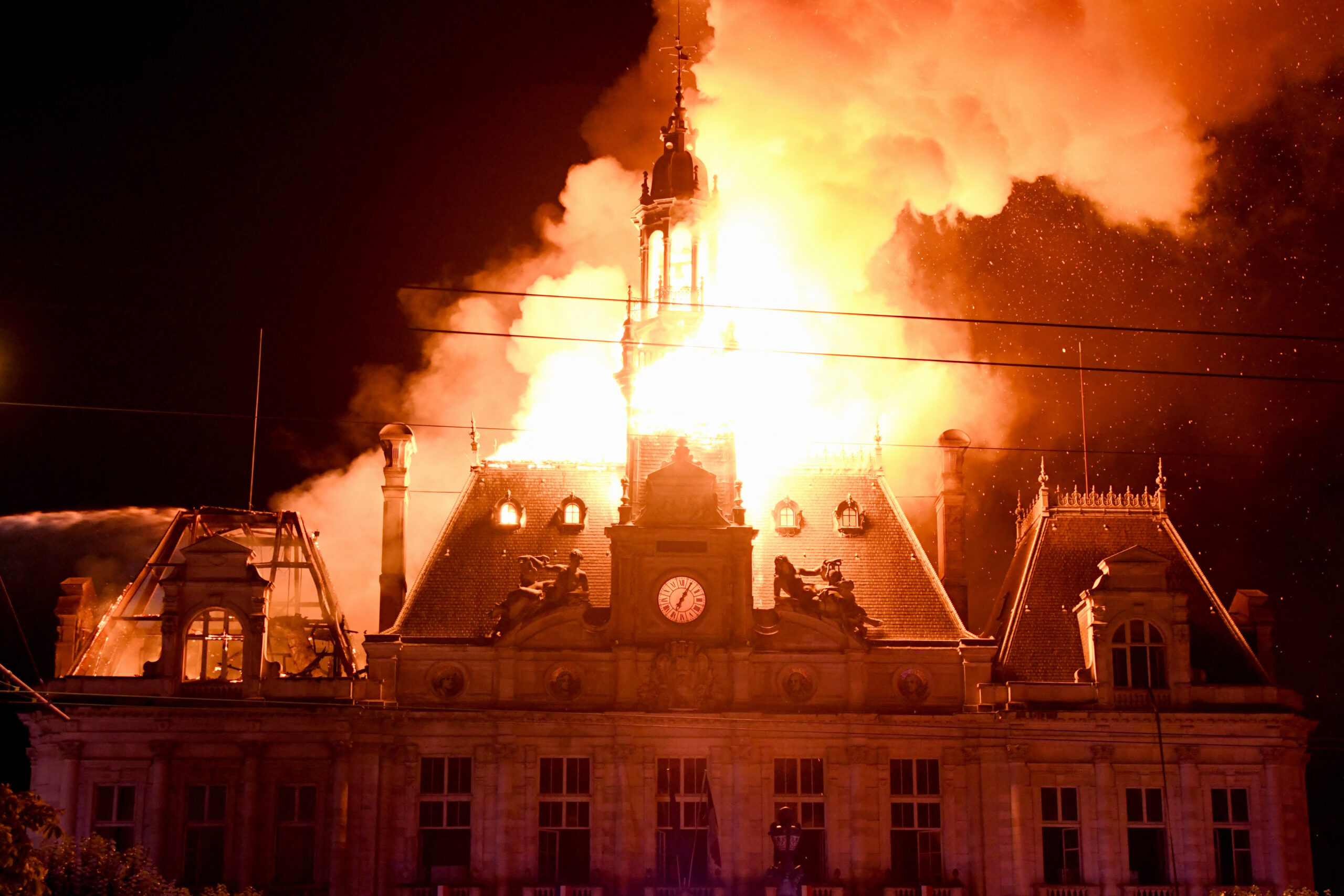
On Saturday, protests across the country escalated into violent clashes. The town hall in Limoges was set on fire, Marseille’s town hall was breached and vandalized, and the tourism office in Lyon was also targeted. Sunday saw renewed clashes in Paris and Marseille, with riot police intervening to prevent attempted looting.
The French government deployed around 60,000 police officers and other security personnel to handle the protests last Saturday. However, Nuñez admitted that in some cities, law enforcement struggled to effectively control violent crowds.
The mayors of Paris, Marseille, and Lyon jointly released a statement on Monday demanding explanations from the government regarding insufficient preparedness of security forces. They noted that while protests were not uncommon in their cities, the recent riots had left certain areas virtually unprotected.
The mayors emphasized the need for local authorities to repair damaged city facilities and address residents’ anger and unease over the violent events.
The riots have prompted a reassessment of security deployments within the French government. President Macron rejected the resignation offered by Interior Minister Nuñez on Monday and instead requested him to remain in office to maintain command over the police and security forces.
The President’s office stated that Macron urged Nuñez to propose new measures promptly to prevent rioters from setting up barricades, looting, and to ensure transparency in investigating the errors in security deployment and intelligence gathering during these events.
Nuñez, a former head of the Paris police department, took responsibility for the current situation and offered his resignation, but Macron decided to retain him to address the crisis.
Marseille has imposed bans on gatherings and protests in certain areas. Meanwhile, French labor unions have called for a nationwide strike and protest on November 5, indicating that societal discontent may persist.
These disturbances come approximately six months before the next presidential elections in France. The country is currently facing economic challenges, high living costs, and escalating public debt, with the government striving to pass budget legislation to improve the national fiscal situation.
Reuters reports that the political controversies arising from the inadequacy of security deployments could further erode confidence in Macron’s government externally and increase pressure on the government’s fiscal reform efforts.
As the government strives to restore order, opposition parties are seizing on the riots as an opportunity to criticize the government’s performance. Balancing the security situation with addressing long-standing public discontent over living costs and public services will be a crucial test for the French government moving forward.