
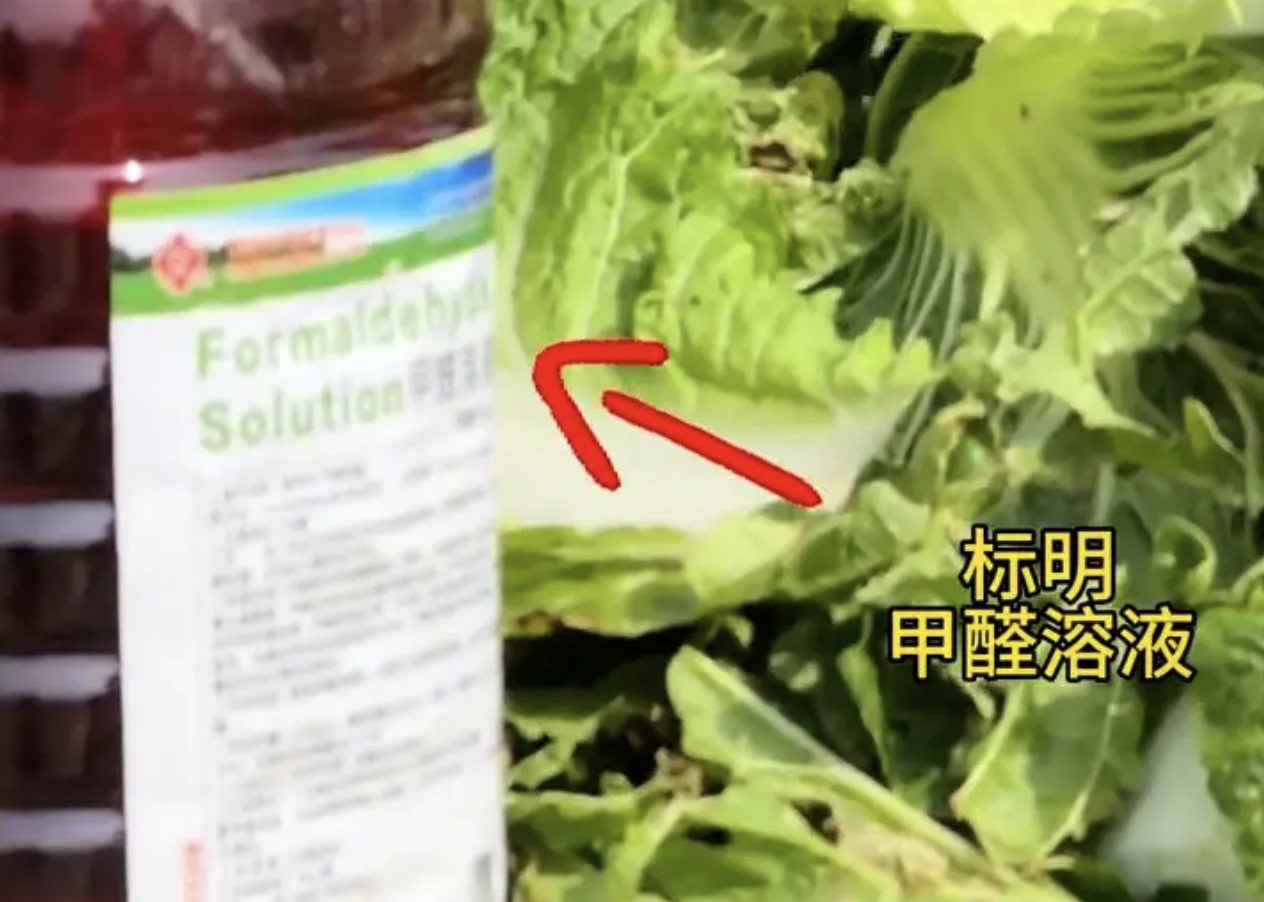
In recent days, the controversy surrounding the “cancer-causing formaldehyde cabbage” in Hebei Province has escalated, spreading panic to the largest fruit and vegetable distribution center in southern China. According to reports, “in recent days, the sales volume and prices of cabbage have decreased by 20%.”
Hebei Province’s purchasing agents have been soaking cabbage in a solution of carcinogenic substance formaldehyde in an attempt to preserve freshness, affecting various aspects of cabbage distribution in multiple regions.
Formaldehyde is a known carcinogen, and its use in food has long been strictly prohibited. Excessive intake of formaldehyde can increase the risk of cancer and blood diseases in humans, with the ingestion of large amounts potentially leading to acute poisoning and even death.
As reported by the Southern Metropolis Daily, on the afternoon of August 24, journalists visited the largest fruit and vegetable wholesale market in the southern region, Jiangnan Fruit and Vegetable Wholesale Market located in Guangzhou’s Baiyun District. Many cabbages from other regions were gathered there before being distributed to various locations within the province and the city. Some stall owners noted that “in recent days, the sales volume and prices of cabbage have decreased by 20%.” This situation has persisted for about three days, with buyers expressing concerns during their purchases.
In response to interviews, some stall owners refused to comment while others expressed difficulties with furrowed brows. The interviewed stall owners revealed that their cabbage sources primarily come from Gansu and Yunnan. Despite the source not being the crisis-hit Hebei Province, their business is still being impacted.
“The phenomenon of dipping cabbage in formaldehyde solution mainly occurs in non-cold chain transportation segments,” said a stall owner. Some purchasers opt for “direct transportation” (non-cold chain) using open trucks to transport field cabbages directly to wholesale markets. Due to the lack of refrigeration to ensure freshness, formaldehyde solution is chosen for preservation. Some stall owners admitted that while some businesses at the Jiangnan Fruit and Vegetable Wholesale Market use cold chain transportation, there are also instances of “direct transportation.”
Recent reports have revealed that cabbage purchasers in Kangbao County, Zhangjiakou, a significant cabbage-producing area in China, have been found to dip cabbage in formaldehyde solution before loading them onto trucks for transportation, with related videos exposed.
Environmental blogger “Fish Hunt Brother” stated that his on-site investigations found cabbage purchasers dipping each cabbage in formaldehyde solution before loading them for preservation. Some implicated cabbages have already been shipped to Jiangsu, Anhui, and other areas, potentially affecting millions of people, causing consumer panic.
Various mainland Chinese media reports have disclosed that in response to this incident, an official notification was issued by the local authorities on August 22, confirming that the purchasers resorted to illegal means for preservation and antifungal purposes.
This news has sparked widespread public outcry. It is noteworthy that this is not an isolated case, as the use of formaldehyde by professionals in China to preserve food has been previously reported.
Internet users have compiled a list of eight food categories commonly subjected to formaldehyde treatment by vendors, including cow tripe, beef omasum, and yellow throat, with abnormal appearance characteristics such as exceptionally white color, oversized, or uncharacteristically fresh and tender texture serving as red flags for consumers to be cautious when making purchases.
Another common food item subject to formaldehyde treatment is pickled pepper chicken feet. Due to its inherent spicy and flavorful seasoning, it is challenging to determine if it has undergone illegal processing based on smell alone. Normally, pickled pepper chicken feet should exhibit a mild yellow color, and consumers are advised to pay attention to any abnormal appearance features when making a selection.
Additionally, shrimp is another category of food items that may be of concern. While some consumers believe that a plump and shiny appearance of frozen shrimp denotes freshness, thawed shrimp typically exhibit some softening and shrinkage. It is recommended to purchase shrimp from reputable supermarkets to avoid buying bulk shrimp of unknown origin.
Furthermore, recent attention has been directed towards baby bok choy and cabbage. In response to consumer panic, “Meal Information” suggests that purchased cabbage should be thoroughly rinsed under running water and soaked for about ten minutes in clean water before being cooked well.
Moreover, when it comes to beltfish, consumers are advised to remain vigilant if the fish appears unnaturally bright or white, as a normal beltfish should display a fading or yellowing of its silver scales after a certain period.
Lastly, products like soaked sea cucumbers and trotters are also under scrutiny. Due to their soaking and processing method, they have been known to be treated with formaldehyde or hydrogen peroxide to increase their size and enhance their tender texture. Consumers are advised to follow the “look, smell, touch” principle when selecting these products, avoiding purchases if they appear exceptionally white, significantly oversized, emitting an irritating odor, or break easily when squeezed.
Similarly, noodle strips, wide noodles, and konjac-like noodles may exhibit extraordinary tenacity if they have been improperly processed. “If noodle strips remain as hard as rubber bands after boiling for 10 minutes, there is a problem.”
Lastly, dried products like shredded squid, dried kelp, and white fungus should be scrutinized carefully. Unscrupulous vendors may use formaldehyde to improve the appearance, prevent pests, and expedite the soaking process, extending their shelf life. Normal dried white fungus should have a pale yellow hue, not white. Similarly, dark brown dried kelp turning abnormally green or overly bright is a cause for concern, and consumers should be cautious when making their purchase decisions.