
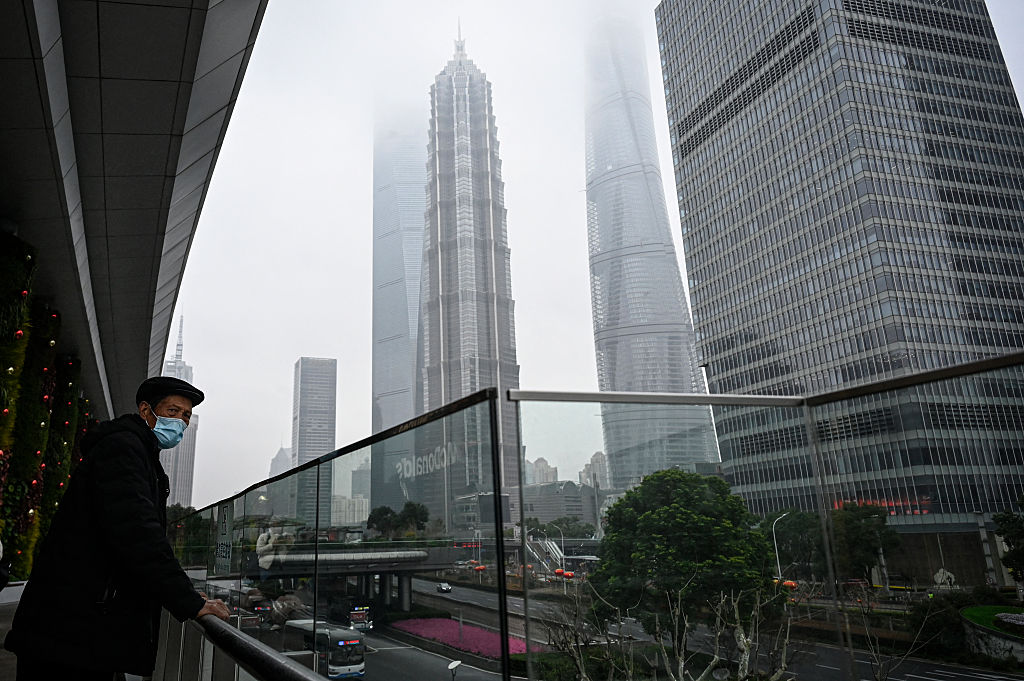
In recent years, Shanghai has been a beacon for many young individuals from different regions seeking career opportunities and a stable life. However, with the ongoing economic downturn and a shrinking job market, even white-collar professionals who once enjoyed high salaries in the city are now facing the harsh realities of unemployment. Many couples find themselves jobless, forced to leave Shanghai in search of alternative livelihoods. What experiences are these former white-collar workers in Shanghai encountering in their struggle for survival?
According to reports gathered from various households comprising individuals born in the 1980s and 1990s, there was a time when a monthly income of tens of thousands of yuan made it easy for them to manage housing, childcare, and elder care. Yet, upon losing their jobs, the burden of mortgage payments has become overwhelmingly heavy.
For example, Zhou Wei, a member of the post-80s generation, graduated from university over a decade ago and chose to stay in Shanghai to build his life alongside his wife. At that time, both held white-collar positions with a combined monthly income that reached around 40,000 to 50,000 yuan (approximately $5,600 to $7,000). They even brought their parents to live with them and took on their medical expenses. Although the cost of living was significant, their love for Shanghai fueled their commitment to settle down in the city.
However, as fate would have it, Zhou Wei and his wife were laid off when they still had over 200,000 yuan (about $28,000) remaining on their mortgage. “In the end, there were one or two years when they had to cut jobs, which was quite challenging. Now, with no income, we’re exploring ways to generate revenue. Whether through self-media, street vending, or other types of work, we are striving to find a source of income,” Zhou Wei expressed.
This burden of economic pressure has left them with little room for complacency. As such, they made the difficult decision to leave Shanghai and transition into the e-commerce sector.
“I am working hard, putting in my best effort. However, no matter how hard I try, the poor economic environment is difficult to overcome. Now, we need to focus on transforming quickly; we cannot afford to give up,” Zhou Wei added.
Meanwhile, Wang Yi, a member of the post-90s generation, found herself in a similar predicament after graduating from university and starting a career in IT programming. Unfortunately, she also fell victim to the disruption caused by artificial intelligence (AI) and lost her job in August this year. “With AI’s arrival, many programmers like myself faced layoffs. In smaller cities, AI may not be as widespread yet, but in major cities, layoffs are happening first,” she shared.
In 2023, Wang Yi and her husband took out a loan of 2.7 million yuan (around $378,000) to purchase a home, with monthly repayments of 13,000 yuan (around $1,800) still required for over 20 years. As they now lack savings and struggles with job hunting ensue, the anxiety is beginning to mount for Wang Yi.
“I feel a bit anxious. Without any savings, I feel insecure and restless. This is definitely a time when the pressure is intensifying,” Wang Yi admitted.
She candidly acknowledged that the challenging economic environment makes it difficult for the post-90s generation to make money, plunging many into survival struggles. “Some of us born in the 90s find ourselves caught in the wave of AI. In earlier times, the post-80s generation had opportunities to venture out and start businesses with greater ease. However, now that there are so many individuals in the 90s cohort competing, starting a business has become exceedingly challenging,” she lamented.
With the economic landscape continuously evolving and job security becoming increasingly precarious, the stories of Zhou Wei and Wang Yi reflect a broader trend among many young professionals in Shanghai. The city that was once a symbol of hope and prosperity is now facing a significant transformation, leaving its residents to grapple with unforeseen hardships and adapt to new realities in their quest for success.