
Exercise is one of the best methods to fend off diseases and enhance physical fitness. It is not only essential for the general public, but even practitioners of traditional Chinese medicine, who examine and treat patients daily, also need to engage in regular physical activity to maintain a healthy body.
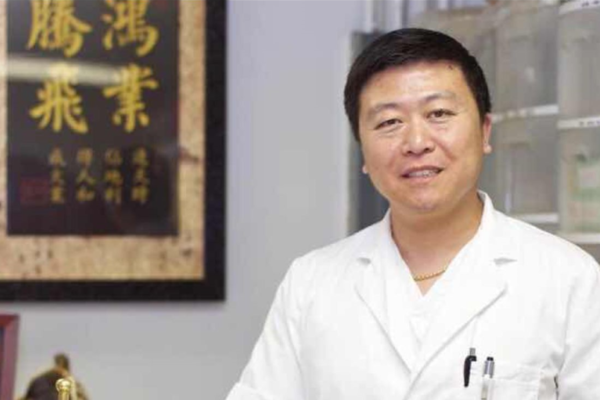
In California, a seasoned practitioner of traditional Chinese medicine and an orthopedic specialist, has dedicated nearly four decades to his medical career. Since he began practicing medicine at a young age, he has witnessed several traditional and western medicine practitioners who succumbed to disease or burnout, leaving this world far too early. He shared insights on the importance of maintaining a balance of yin and yang and nurturing one’s vitality, emphasizing that while doctors possess a wealth of health knowledge, it is crucial for them to cultivate their own health as well. His perspective aligns with the traditional Chinese saying, “When the righteous energy resides within, evil cannot disturb.” When one is healthy, they can better utilize their medical skills.
He elaborated on the principle of “observation, listening, inquiry, and pulse-taking,” fundamentals of traditional Chinese medicine. If a doctor lacks “essence, qi, and spirit,” suffers from poor eye clarity, or feels foggy-headed, how can they accurately diagnose and treat patients?
He likened acupuncture to a concept called “伏虎” or “subduing the tiger.” When a traditional Chinese medicine practitioner wields needles, they must channel their energy through their hands with a grip akin to holding onto a tiger. Achieving this level of mastery allows for better needle techniques. Conversely, as he pointed out, “If your hands lack strength and precision during acupuncture, it becomes challenging to not only insert needles steadily but also to measure a pulse accurately.”
Many practitioners of traditional Chinese medicine in California place considerable emphasis on physical fitness; this particular doctor has a fondness for traditional Chinese martial arts. His dedication to consistent training has ensured that he maintains a robust physique. For instance, while attending a graduation ceremony for traditional Chinese medicine students, numerous doctors were present. Following the event, students’ parents remarked that among all attending physicians, his vitality stood out the most.
From a young age, he trained under the esteemed master of “六合门,” focusing on traditional martial arts forms, including Five Tiger Long Fist, Southern Tang Sabre, Zilong Spear, and Tai Chi. His internal martial arts practice primarily includes Crane Tremor Stance and Thirteen Protectors Gong. Even in his fifties, he is capable of performing one-handed, three-finger push-ups, showcasing exceptional strength and endurance.
One of his frequently practiced exercises is “shoulder relaxation and wrist shaking.” This movement requires not only the wrist to be in motion but also a coordinated effort from the waist and legs. He typically performs this exercise between fifty to one hundred times, noticing significant benefits in unblocking his body’s meridians.
When it comes to how to train in martial arts, he advocates for an individualized approach, as different martial arts equipment may suit different body types. He himself has trained with various weapons, including the three-section staff, Emei dagger, single sabre, double daggers, and long spear.
Reflecting on his master, he recalled that his skill could be described as “running up walls and leaping rooftops” – capable of jumping onto roofs with just a single bounce while also displaying immense strength, able to tackle and bring down two fighting bulls with ease. He also described how, back in his native Tianjin, he could strike a cement telephone pole hard enough to make it sway back and forth.
Among the techniques in their school is a “breath-holding skill,” allowing practitioners to hold their breath for extended periods. He noted that this skill eventually became adopted by swimming teams, contributing significantly to China’s emergence of prominent swimming champions, with breath-holding techniques playing a pivotal role.
Moreover, he cautioned that martial arts training should not be done haphazardly. Nowadays, social platforms like YouTube are filled with various instructional videos, and some individuals may be tempted to practice blindly following along. However, without proper attention and awareness, it could lead to health risks—like striking a tree and forgetting to open their mouth while training, which could result in internal injuries from holding their breath.
“Martial arts are not about quick results; it’s a daily practice that builds up over time. A day without practice makes you ten days weaker,” he stated. Regardless of whether one is an ordinary individual or a medical professional, regular exercise is paramount, and practicing Chinese martial arts is always encouraged. However, he emphasized that martial arts require patience and gradual progression, ideally under the guidance of an experienced teacher for optimal health benefits.