
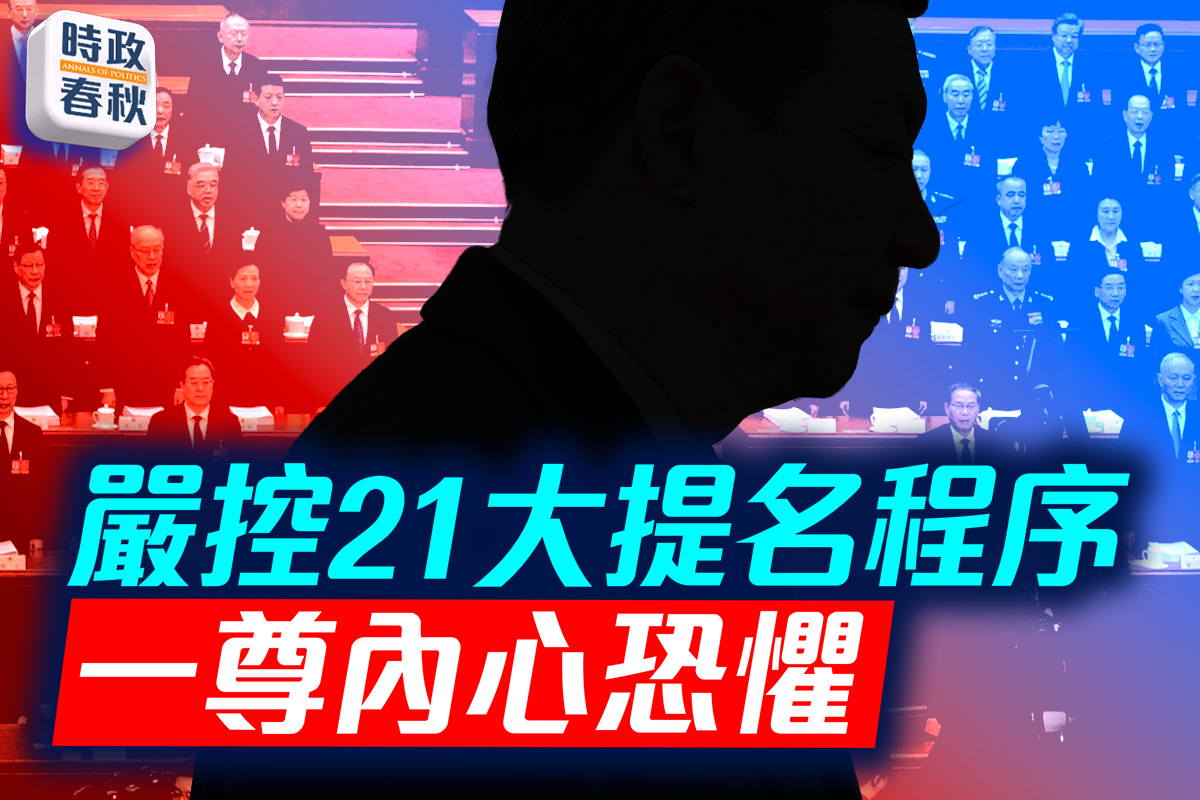
Recently, the Chinese Communist Party (CCP) has initiated the election process for representatives of the 21st National Congress. A notable emphasis has been placed on political loyalty as the foremost criterion for selection. Individuals deemed to hold divergent political views are subject to a strict one-vote veto, effectively barring them from consideration.
This process for selecting party representatives starkly contrasts with election systems in Western democracies. In the CCP’s framework, the central committee first establishes specific regulations and then selects individuals based on those pre-determined criteria. This top-down approach is often characterized as a façade of democracy, misleadingly labeled as “whole-process democracy,” a term that has garnered significant skepticism for its ironic implications.
Since the implementation of the National Security Law in Hong Kong, elections for the Legislative Council and the Chief Executive have mirrored this internal party election process on a broader scale. The systemic approach employed in Hong Kong further exemplifies how the CCP extends its control under the guise of democratic processes, evoking concern regarding the authenticity of representation.
The apparent contradiction between the CCP’s insistence on loyalty and the notion of democratic representation raises significant questions about the future of governance and political discourse in China. The ramifications for citizens who seek genuine political pluralism are profound, as the party continues to solidify its grip on power through carefully orchestrated electoral mechanisms.
This evolving political landscape has prompted widespread discussion and debate, both within China and internationally, about the nature of governance and individual rights under one-party rule. As the CCP’s electoral practices become increasingly scrutinized, the dichotomy between its proclaimed democratic ideals and the reality of enforced political conformity is likely to remain a central theme in future political analyses.
In light of these developments, observers continue to monitor the situation closely, weighing the implications for civil society and the potential for political reform in the long term. As the eve of the election draws near, the stakes appear to be higher than ever, signaling a complex interplay between power, loyalty, and the future of political expression in China.
The narrative surrounding these elections is likely to evolve, prompting renewed interest and scrutiny from both domestic and international audiences who are invested in the prospects of democratic governance and human rights in the region.