
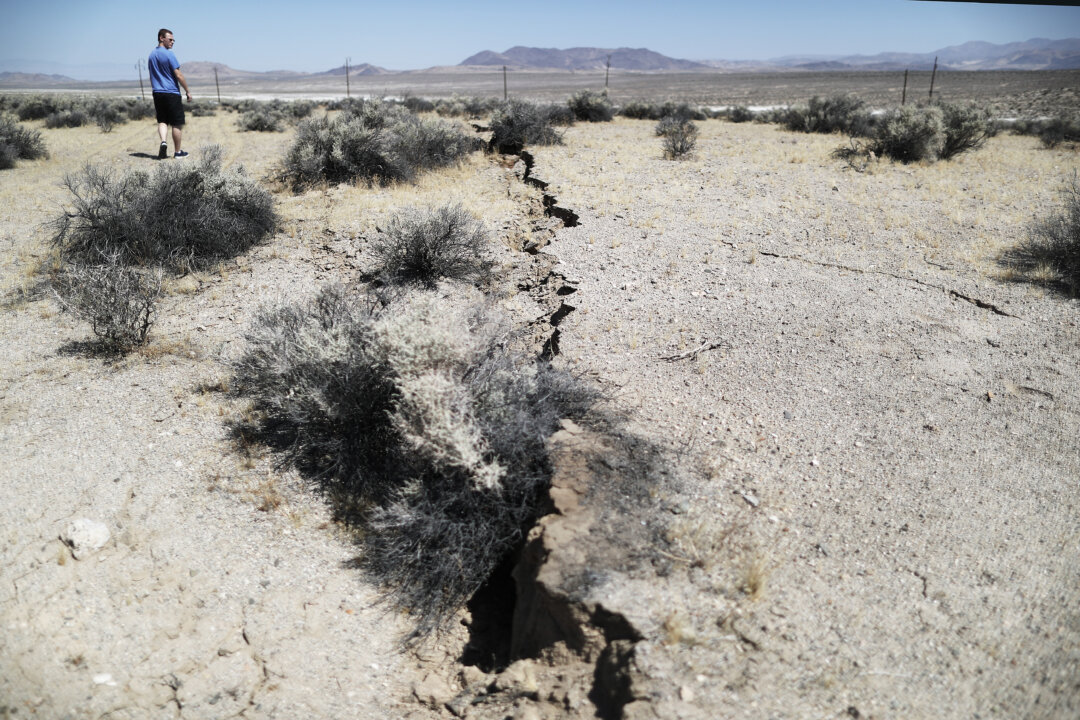
A recent study conducted by the United States Geological Survey (USGS) has shown that the probability of a magnitude 6.7 or higher earthquake occurring in the Bay Area within the next 30 years has increased from 72% to 74%. Geological experts have stated that while they cannot predict the exact timing, an earthquake could happen at any moment.
Researchers have pointed out that the continuous accumulation of crustal stress due to the lack of significant earthquakes on multiple fault lines since the last study over a decade ago is a contributing factor to the increased probability.
Among the fault lines covered in this study, the San Andreas Fault has seen the largest increase in probability, rising by 3.6 percentage points compared to the previous study. USGS seismologist Lucy Jones commented, “This is the longest fault in California and therefore could potentially trigger the largest earthquakes.”
However, the fault line with the highest probability in this study is not the San Andreas Fault but the Hayward-Rogers Creek Fault, with a probability of 34.3%. The study also suggests that if the Hayward Fault and the Rogers Creek Fault were to rupture in tandem, it could potentially lead to a magnitude 7.4 earthquake, which is a worst-case scenario estimated by the study model, not a prediction of earthquake occurrence or timing. The Hayward-Rogers Creek Fault zone is located in the densely populated East Bay area, stretching from Fremont through Hayward, Oakland, and north to Santa Rosa.
Despite the increase in probability, Jones emphasized that the timing of earthquakes remains unpredictable: “It could happen again in a hundred years, tomorrow, or even in the next minute.”
Residents of the East Bay experienced a noticeable earthquake on August 13th. Following the earthquake, resident Caitlin Fitzpatrick told ABC7, “Everything started shaking, my immediate reaction was, wait a minute, and then I just jumped up and ran out,” mentioning that her 2 and a half-year-old nephew also said, “This is a big earthquake.” The initial reported magnitude of the earthquake was 4.1, later revised to 3.8.
Jones also warned that the impact of earthquakes goes beyond the risk of casualties: “We often underestimate the social and economic impacts. We focus too much on the fear of death and overlook the fear of bankruptcy.”
The USGS had previously conducted a simulated study called “HayWired,” envisioning a scenario of a magnitude 7.0 earthquake on the Hayward Fault to evaluate the potential social and economic impacts of such an earthquake.
According to a related study published in 2022, in the event of such a scenario, the Bay Area region could suffer an estimated loss of around $44.2 billion in Gross Regional Product (GRP) within six months after the earthquake, equivalent to 4.2% of the California baseline GRP. The study also indicated that with measures such as reducing downtime and finding alternative supplies, losses could potentially be reduced by about 43% to $25.3 billion. Estimated losses from disruptions in vital lifelines such as water, electricity, and communication systems are around $1.4 billion, with the possibility of over 80% reduction through mitigation measures. The research team emphasized that this is a simulated analysis based on hypothetical scenarios, not a prediction of the actual future losses in the Bay Area.
Furthermore, a study released by researchers at San Jose State University on August 20th revealed that the slip rate of the San Andreas Fault is faster than previously thought. Led by Professor Kim Blisniuk, the study conducted sampling at Sanborn County Park and has not yet undergone peer review, standing as an independent discovery separate from the USGS study.