
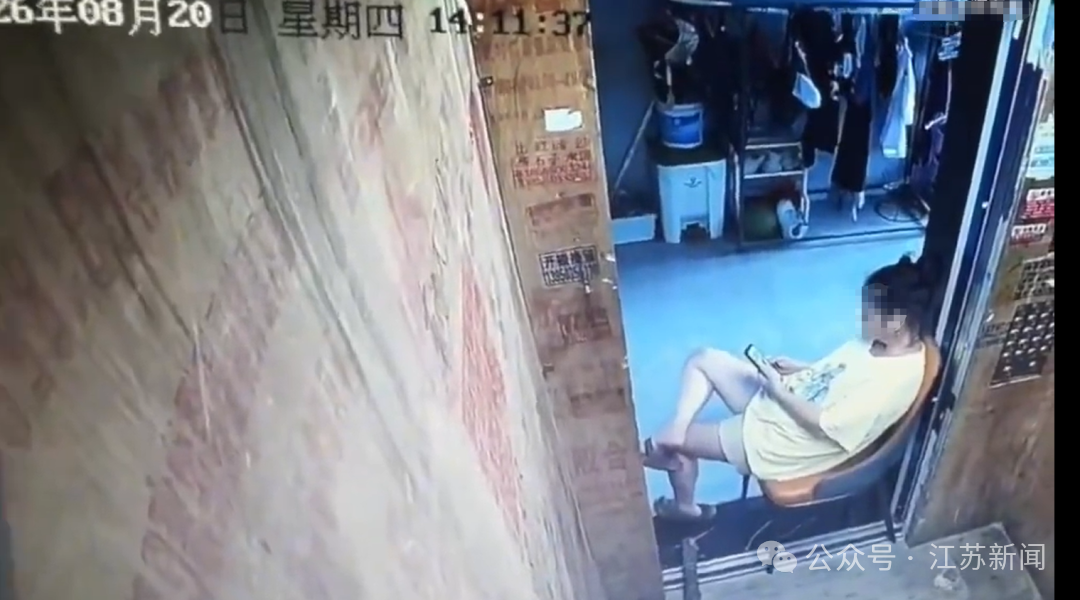
In recent days, a woman in a residential community in Anhui province did something quite out of the ordinary to enjoy the air conditioning inside the elevator cabin, sparking a heated debate.
According to a report from “Jiangsu News,” the woman in a residential community in Anhui province brought a chair into the elevator to have the air conditioning all to herself. She wedged the chair under the elevator door, preventing it from closing and effectively “locking” the elevator on her floor.
What made the neighbors even more upset was that she wasn’t temporarily moving things or needing to keep the elevator door open for any valid reason; instead, she sat on the chair, browsing on her phone, continuing to enjoy the cool air inside the elevator. The report described her as sitting “leisurely” on the chair while using her phone.
The woman’s actions prevented all the other residents in the building from using the elevator.
After receiving feedback from the residents, the property management tried to communicate with the woman but to no avail, so they eventually called the police. It was only after the woman moved the chair that the elevator was able to resume operation.
In response to this incident, an article titled “When Will Reckless Behavior in the Community Have Consequences?” was published by “Shangguan News.” The article expressed concerns about turning a public facility into a personal item for the sake of a bit of air conditioning, forcing residents of the entire building to use the stairs up and down multiple floors.
“What’s even more unacceptable is that she acted willfully for ‘several hours’ with ‘zero consequences’—no fines, no warnings, no real accountability. This phenomenon of ‘unreasonable behavior without consequences’ is the most worrying,” the article stated. The elevator belongs to all the owners of the building, and the person involved knowingly blocked the elevator door with a chair, even after being warned multiple times to stop. When such unreasonable behavior carries no cost, more people will follow suit.
This incident has garnered attention across the internet, causing the topic to trend on social media platforms.
Some netizens have pointed out that the elevator is a shared facility of all the owners, and by occupying it without permission and disrupting others’ normal use, it violates relevant provisions of the Civil Code. This behavior requires bearing civil liabilities such as removing the obstruction and compensating for losses; in severe cases that disrupt public order, there may even be public security penalties.