
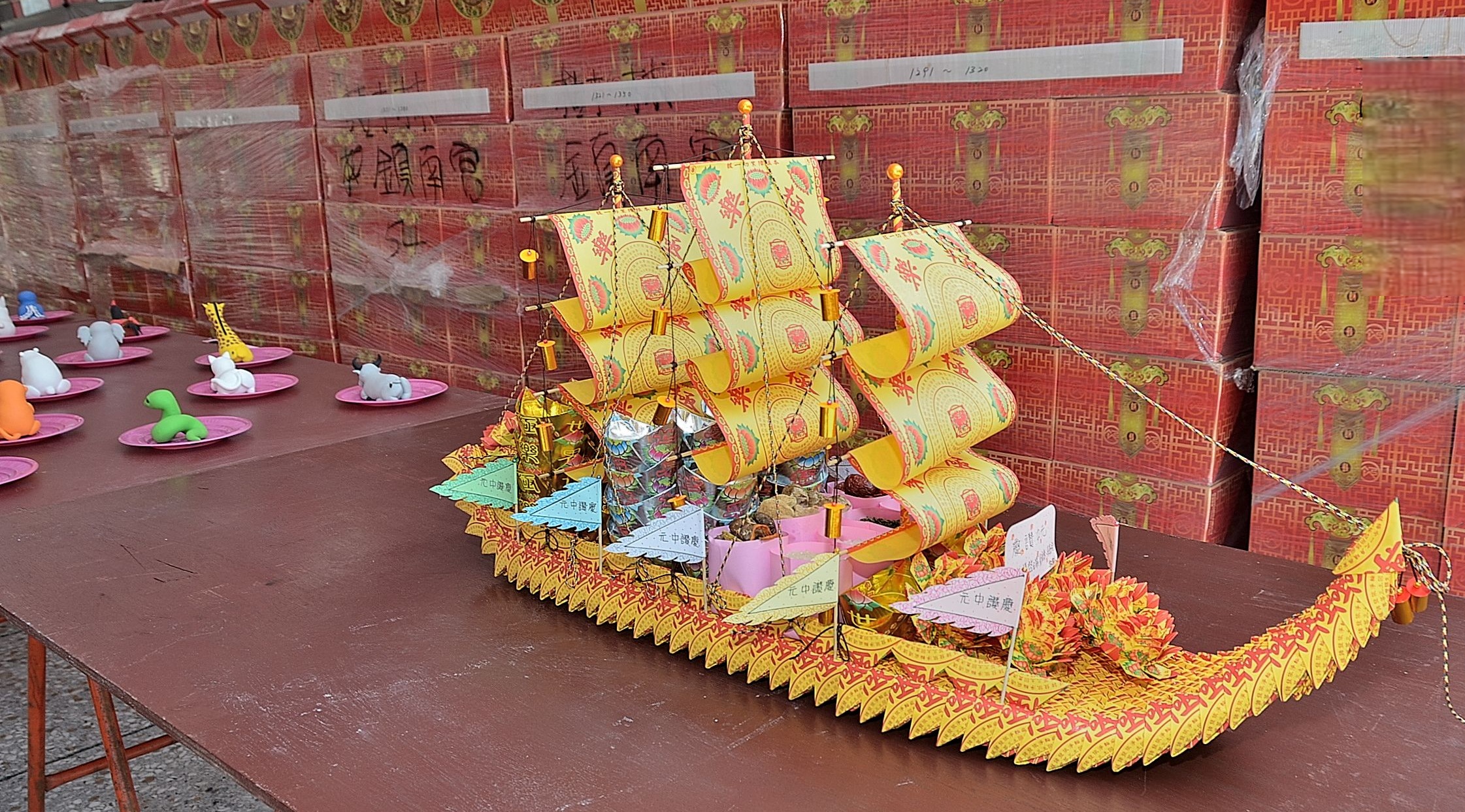
Today is the fifteenth day of the seventh lunar month in the Chinese calendar, known as Zhongyuan Festival. The Ministry of the Interior of the Republic of China pointed out that the taboos surrounding the seventh lunar month, as circulated online, are mostly folk customs. For example, the taboo against playing in water is related to the hot summer and typhoon season, while the taboo against whistling at midnight was originally a way to remind people to be cautious of safety and theft.
The Ministry of the Interior of the Republic of China issued a press release today stating that Zhongyuan Festival is an important seasonal ritual in Taiwan, integrating the filial piety and food offering concepts from Buddhism’s “Ullambana Festival” and the framework of Taoism’s “Zhongyuan Festival” for earth officials to pardon sins and rescue souls from suffering. It also incorporates Taiwan’s early immigrant history of development, maritime disasters, and conflicts, gradually evolving into a folk culture that worships spirits without descendants and cares for “good brothers,” reflecting Taiwan’s societal values of honoring ancestors, showing compassion to the needy, and respecting the divine and humanity.
According to the Ministry of the Interior, today coincides with the Zhongyuan Festival on the fifteenth day of the seventh lunar month in the Chinese calendar, but the festival is not limited to a single date. Temples, communities, and people in various regions follow local traditions to conduct rituals. For example, the “Chicken Cage Zhongyuan Sacrifice” in Keelung rotates surnames and releases water lanterns, symbolizing guidance and blessings. The “Dashiye Sacrifice” in Minxiong, Chiayi, where Dashiye symbolizes maintaining order and on the last day of the ceremony, paper-made deity figures are burned to guide the lonely souls to leave the human realm.
The Ministry of the Interior stated that in Yilan, the “Toucheng Soul Snatching” combines worship with competition, embodying the traditional significance of sharing offerings, aiding the underprivileged, and warding off wandering spirits. These local customs integrate historical backgrounds, ethnic memories, and community characteristics, showcasing Taiwan’s diverse and deeply rooted folk traditions with unique regional flavors.
Regarding the taboos surrounding the seventh lunar month as circulated online, the Ministry of the Interior mentioned that there is no need to be overly alarmed as these are mostly traditional practices passed down through generations. For instance, the taboo against whistling at midnight and avoiding running around aimlessly was due to the lack of streetlights in the past, reminding people to be cautious of nighttime safety and theft. The taboo against playing in the sea or by the stream is related to the hot summer and typhoon season during the seventh lunar month, serving as a reminder to pay attention to water safety.
The Ministry of the Interior pointed out that the practice of not hanging clothes out at midnight was to prevent theft as fabric was precious and not easily obtained in the past, aligning with the traditional lifestyle of working from sunrise to sunset. As for the custom of worshiping empty vegetable soup, the saying “invite with sincerity, let go without attachment” symbolizes ensuring that “good brothers” are well-fed and at peace before departing. These customs embody the wisdom and compassion of early generations and provide an opportunity for the public to appreciate the cultural significance of the seventh lunar month.
The Ministry of the Interior emphasized that the sincerity of the Zhongyuan Festival lies not in the quantity of offerings or the number of burned paper money, but in the heartfelt reverence. Therefore, they encourage practices such as using rice or deeds instead of money, transforming the intention behind purchasing and burning paper money into practical items, daily necessities, or charitable donations. Through eco-friendly rituals, air pollution can be reduced, and the respect for ancestors and “good brothers” can be further channeled into care for the environment and support for vulnerable communities.