
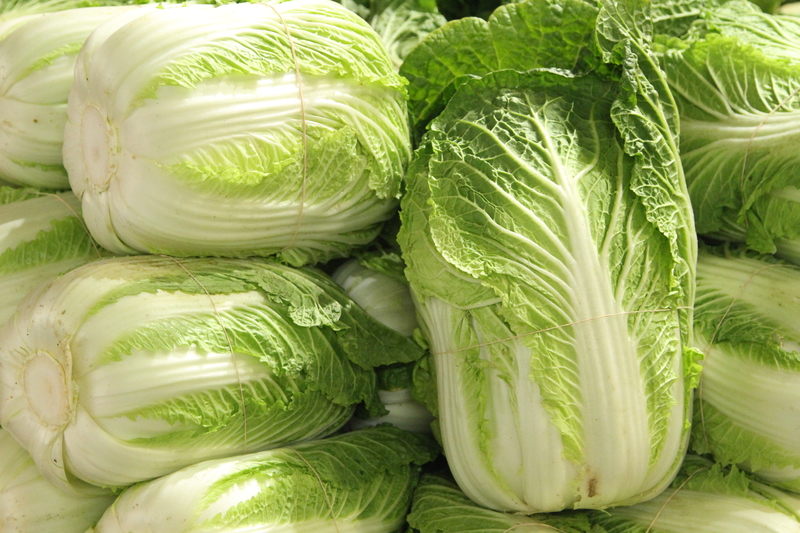
In recent days, a scandal has erupted in Kangbao County, Hebei Province, China, where vegetable buyers were found soaking the roots of Chinese cabbages in a “formaldehyde solution” for preservation during transportation. A environmental blogger publicly released a video last week showing workers immersing Chinese cabbages in a liquid before loading them onto trucks.
The exposure of this incident, involving a known carcinogen like formaldehyde, has sparked a heated debate in China. As China is a major exporter of Chinese cabbages, this food safety scandal quickly spread to neighboring countries, with both Japan and South Korea taking measures in response.
The South Korean food industry heavily relies on supplies from China, with up to 99.9% of imported kimchi coming from China. Facing the upcoming kimchi-making season in autumn (Kimjang), the Korean Ministry of Food and Drug Safety (MFDS) has urgently activated a level three customs inspection. Besides strengthening border checks, they are also verifying whether the affected Chinese cabbages have entered the domestic market.
The Japanese Ministry of Agriculture, Forestry and Fisheries (MAFF) and the Ministry of Health, Labour and Welfare (MHLW) have started inter-agency cooperation to actively verify import logistics and supply chain data. As of Tuesday (August 25), the Ministry of Health, Labour, and Welfare stated that there is no evidence to suggest that Chinese cabbages containing formaldehyde have entered the Japanese market.
Unlike South Korea, Japan has maintained a high level of vigilance but has not implemented a comprehensive border ban, mainly because the local supply chain’s dependence on Chinese cabbages from the affected region is not high.
China produces over 30 million tons of Chinese cabbages annually, accounting for nearly half of the world’s total production, with a significant portion exported to neighboring Asian countries. According to the American Cancer Society, exposure to relatively high concentrations of formaldehyde in specific workplaces can increase the risk of cancer. Ingesting large amounts of formaldehyde can cause varying degrees of damage to the respiratory, digestive, circulatory, and nervous systems.
The World Health Organization (WHO) has classified formaldehyde as a carcinogenic substance.
As tensions escalate in Japan and South Korea, Taiwan, which has not allowed the import of fresh Chinese cabbages, is closely monitoring the situation.
The Food and Drug Administration of the Ministry of Health and Welfare in Taiwan stated that according to the regulations of the Bureau of Foreign Trade of the Ministry of Economic Affairs, fresh or refrigerated Chinese cabbages are classified as “prohibited from importation (MW0)”. After checking the border inspection system, the Food and Drug Administration confirmed that as of August 20 this year, there have been no records of Chinese cabbage import inspections in Taiwan.
Responding to concerns about Chinese cabbages being potentially “processed into kimchi in South Korea and then sold to Taiwan,” the Food and Drug Administration compared the list of recalled products released by South Korea’s government and confirmed that the related problematic products have not been imported into Taiwan. The Food and Drug Administration has also initiated a cross-border notification mechanism, requesting the Korean representative office in Taipei to share the latest alerts promptly, and announced that dynamic sampling inspections will continue at the border. Any violations found will be promptly returned or destroyed.