
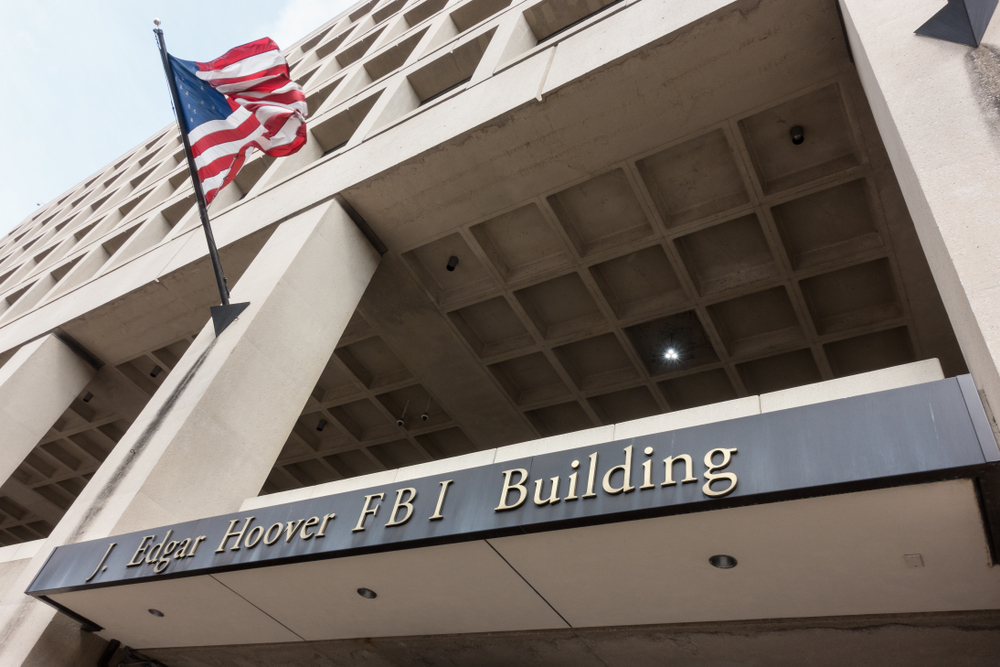
A recent investigation by the U.S. Department of Justice has uncovered a vast international “ghost student” fraud network, revealing over 830,000 suspicious student financial aid account identifiers. It is estimated that the scale of this fraudulent operation could exceed $200 million.
What’s particularly astonishing is that some individuals have been registered as students at universities hundreds of miles away, despite never having attended college. Their personal information, including names and Social Security numbers, has been compromised by criminals who used this stolen data to apply for federal financial aid.
On October 29, the Justice Department launched a nationwide investigation dubbed “Operation Ghostbusters.” The term “ghost students” refers to individuals who do not actually attend school but are instead registered using false or stolen identities with the intent of defrauding the government for student financial aid.
According to information released by the Justice Department, criminals begin by stealing the personal information of U.S. citizens and then fraudulently fill out the Free Application for Federal Student Aid (FAFSA). Following this, they apply for admission to colleges or community colleges.
Once the applications are approved, the federal government disburses financial aid funds to these educational institutions. After deducting tuition and other fees, schools refund the remaining funds to the supposed students, who are then able to use this money for living expenses and other educational costs.
The criminals are specifically targeting these refund checks. They receive the funds into bank accounts under their control and subsequently transfer the money, with some of it reportedly sent overseas.
But how can schools not notice that these students are not attending classes? The Justice Department noted that some criminals have begun using AI to complete required assignments, attempting to maintain the illusion of being a legitimate student in order to continue receiving funds.
This means that a “student” who has never genuinely pursued an education could seemingly leave behind a record of completed assignments, allowing the fraud to persist.
In Nebraska, Francis Mogambi, a Kenyan national, has been charged with participating in such fraudulent activities. Prosecutors allege he collaborated with accomplices from Kenya to use stolen identities of U.S. citizens to apply for financial aid, splitting the ill-gotten gains.
Court documents reveal that Mogambi retained 30% of the fraudulent proceeds, while sending the rest to his Kenyan associates. He also attempted to recruit others to join the scheme and disclosed that he could earn around $2,000 per week from these fraudulent activities. Furthermore, he expressed a desire to establish a company to cash larger checks while avoiding taxes.
Mogambi entered the U.S. in May 2024 through the diversity immigrant visa lottery program and later obtained a green card. A federal grand jury indicted him on October 19, this year, on ten counts of stealing government funds and severe identity theft, and he is currently detained awaiting trial.
This incident is not isolated. In Virginia, another Kenyan defendant is accused of using multiple bank accounts to receive over 700 fraudulent student financial aid refunds, totaling approximately $1.44 million, of which at least $1.3 million was transferred to other accounts in the U.S. and Kenya.
Additionally, three individuals in New Jersey face charges for collaborating with Kenyan accomplices to fraudulently claim over $1 million in aid since 2021. They would send the payments overseas after deducting their commissions, with the recipients linked to a business claiming to operate in wildlife tourism.
These fraudulent schemes can be traced back at least as far as 2021, when various colleges and community colleges across the U.S. began noticing that stolen identities were being used to apply for financial aid, with refund checks flowing into bank accounts that did not match the applicants.
From September to October this year, investigators identified 830,840 potentially fraudulent federal student aid account identifiers, amounting to nearly $130 million in questionable claims, recommending that the Department of Education deactivate these accounts. This list of over 830,000 accounts still contains many cases under suspicion, and not all have been confirmed as fraudulent.
The FBI has confirmed that similar “ghost student” scams have resulted in losses exceeding $32 million, with additional millions suspected to have been stolen. The Justice Department estimates that the overall scale of the fraud may far exceed $200 million.
Currently, 26 FBI field offices are investigating over 40 related cases, with participation from more than 20 federal prosecutors’ offices. U.S. law enforcement is also collaborating with Kenyan authorities to seize a cryptocurrency account linked to the fraud network, involving more than $750,000.
The Justice Department has indicated that five individuals have already been criminally charged or indicted, and the investigation remains ongoing. The FBI has sent notification letters to some victims whose identities were compromised, cautioning them to check whether their personal information has been used to apply for financial aid. All defendants are presumed innocent until proven guilty in court.