
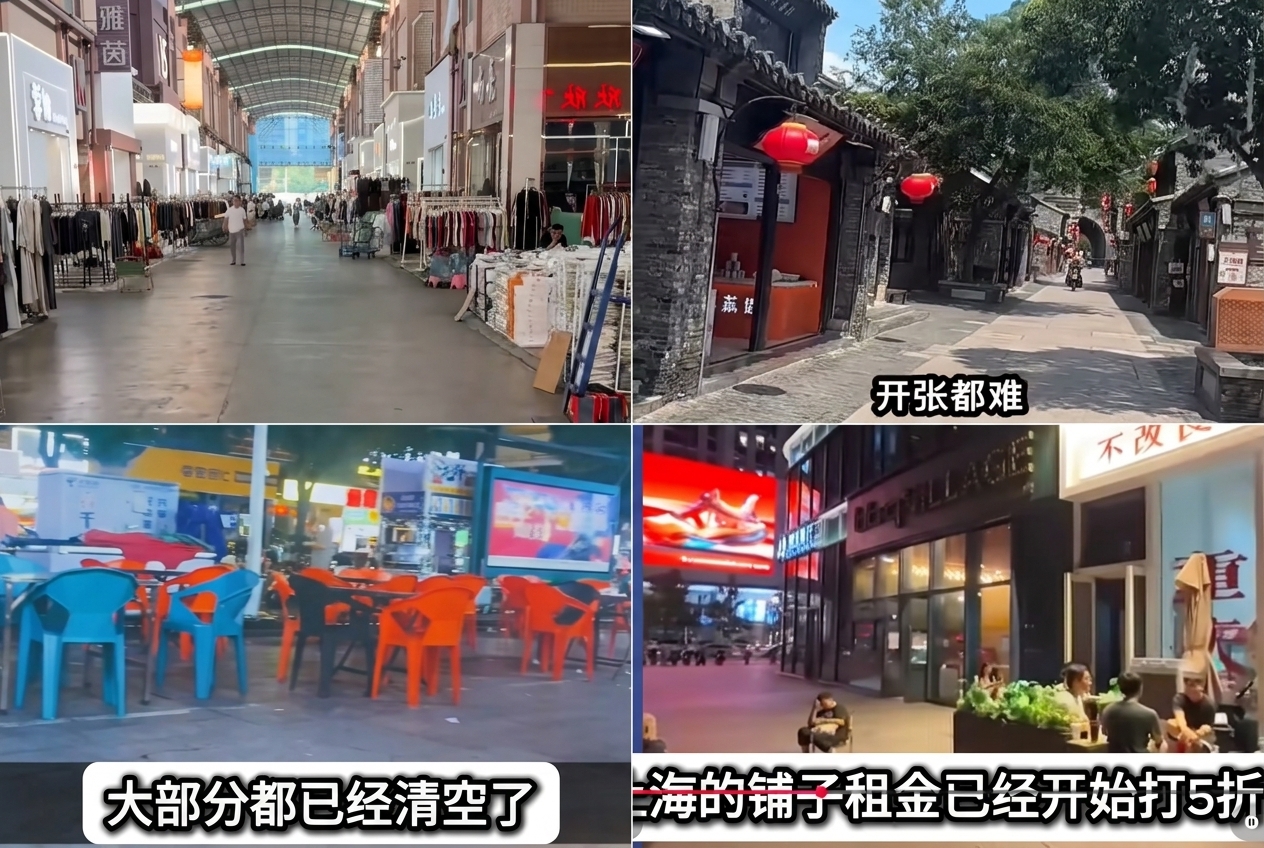
In recent years, a peculiar phenomenon has emerged within China’s economy: despite a continuous increase in the money supply, an abundance of bank funds, and relatively low loan interest rates, consumers remain hesitant to borrow money for spending, and businesses are reluctant to take out loans for investment. Banks find themselves flush with cash but are struggling to locate an ample number of clients willing to borrow and capable of repaying the loans.
This raises the question: what exactly is the underlying issue?
Current economic data suggests that China is beginning to exhibit some classical characteristics of a liquidity trap. The issue isn’t the absence of funds; rather, it is the ineffectiveness of translating this money into consumer spending and investment. At the core of this situation lies a pervasive lack of confidence among households, enterprises, and markets regarding the future.
According to data from the People’s Bank of China, by the end of September 2026, the country’s broad money supply (M2) reached 359.63 trillion yuan, reflecting a year-on-year growth of 7.2%. In the first three quarters, the new total social financing amounted to 27.46 trillion yuan, which is 2.63 trillion yuan less than the same period last year.
In that timeframe, the total increase in renminbi loans also saw significant changes. While loans to businesses rose by 12.55 trillion yuan, household loans decreased by 1.03 trillion yuan. This decline in household loans indicates a significant reluctance among families to borrow, which points to a broader trend where the overall momentum for financing is weakening.
Looking at consumer activity, the National Bureau of Statistics reported that the total retail sales of consumer goods for the first three quarters of 2026 only grew by 1.1% year-on-year, coming in at 37 trillion yuan.
When we combine these data points, a troubling picture emerges: although the money supply is increasing, consumer spending hasn’t correspondingly picked up, indicating a significant divergence.
For ordinary families, the crucial factors are not how much low-interest lending banks can provide but the stability of their jobs, potential income growth, real estate prices, and the assurance of future healthcare, retirement, and children’s education.
If individuals lack faith in their prospects, even a reduction in loan interest rates to zero may not motivate them to incur additional debt. Borrowed funds must eventually be repaid, and in uncertain economic conditions, keeping debts to a minimum often becomes a safer choice.
Over the past two decades, real estate has served as the cornerstone of wealth for Chinese households. When housing prices rise, families feel wealthier and are more inclined to spend. However, when real estate values decline, the dynamic changes dramatically.
For example, consider a family that purchases a house for 5 million yuan, incurring a mortgage of 3 million yuan. If the market value of the property subsequently drops to 4 million yuan, that family effectively sees a 1 million yuan reduction in net worth, while their mortgage remains unchanged.
In such scenarios, families tend to adopt a cautious approach; they cut down on discretionary spending, postpone purchases like cars or renovations, and focus on saving, often channeling extra income towards early loan repayments.
This reflects an economic concept known as “balance sheet recession”: households and businesses prioritize debt reduction and financial recovery over increasing consumption or investment.
However, when everyone starts to save, overall market demand diminishes. Businesses experience lower sales, leading them to reduce investment, hiring, and wages. Citizens, anticipating poorer future incomes, further cut back on spending.
This creates a self-reinforcing cycle of economic contraction: families hesitate to spend, businesses shy away from investing, and with weakened market demand, the economy can quickly descend into a vicious cycle.
Competition among banks is intensifying under these pressures.
By the end of the second quarter of 2026, commercial banks were reporting a net interest margin of about 1.41%. Non-performing loans stood at around 3.72 trillion yuan, corresponding to a non-performing loan ratio of 1.52%.
The net interest margin can be simply understood as the difference between the interest earned on loans and the interest paid on deposits. A smaller margin translates into limited profitability for banks.
The rise in non-performing loans means that a portion of borrowers may struggle to meet repayment deadlines, compelling banks to set aside more capital for potential losses. Consequently, banks are naturally more cautious about lending, particularly to private enterprises and small and medium-sized businesses facing operational difficulties, insufficient orders, and unstable cash flows.
It is essential to note that banks are not entirely devoid of lending capacity. As of the end of the second quarter of 2026, the loan loss reserve coverage ratio for commercial banks was still at a robust 202.87%, and the capital adequacy ratio was 15.26%. The real challenge lies in the need for banks to prioritize loan quality in an environment where risks are escalating and profit margins are constricted.
A contradiction then arises: the central bank desires banks to lend more, yet banks observe that the number of potential borrowers who are willing to invest and capable of repayment is not as large as anticipated.
Having funds available does not equate to businesses having the willingness to invest; low loan interest rates do not necessarily mean that households can absorb new debts.
Now let’s turn our attention to the large-scale government-led construction projects.
Take, for instance, the vision for the Xiong’an New Area, which is a part of Xi Jinping’s “grand plan”. Official reports indicate that during the 14th Five-Year Plan, the Xiong’an New Area is projected to maintain an investment scale of approximately 200 billion yuan annually, accumulating over 1 trillion yuan in total investments. This marks a substantial urban construction initiative.
While large infrastructure projects have their merits in improving transportation and public facilities and can stimulate related industries such as construction and materials, the scale of the Xiong’an project—twice the size of New York City—has seen little enthusiasm from potential residents despite financial incentives for those relocating from Beijing for work.
However, simply investing vast amounts in building a new city does not guarantee that residents will move in, businesses will profit, or that sufficient consumer demand will materialize.
The true capability of a city to thrive is not only measured by the number of buildings, roads, and public amenities constructed but also by the willingness of people to make it their long-term home, the viability of businesses to sustain operations, the availability of stable job opportunities, and whether residents can support their livelihoods with their income.
If the government continues to escalate investment without concurrent improvements in household income, private consumption, and corporate confidence, the economic benefits gleaned from these investments may be severely curtailed.
In 2025, the national budget for general public expenditure was projected to be around 28.74 trillion yuan, with approximately 4.44 trillion yuan allocated for social security and employment, 4.34 trillion yuan for education, and 2.14 trillion yuan for healthcare.
While these figures appear substantial, critical questions arise regarding the sufficiency of these allocations, the fairness of their distribution, and whether they genuinely alleviate the burdens faced by ordinary citizens.
The International Monetary Fund (IMF), in its 2026 economic assessment of China, pointed out that the economy still heavily relies on investment, with consumer confidence hampered by a sluggish real estate market and concerns about income and employment prospects. The IMF recommended redirecting more fiscal resources toward rural pensions, healthcare, and social security, reducing reliance on inefficient investments, and encouraging economic growth that is more driven by consumer demand.
For the average citizen, the pressing concerns are not about the number of large-scale construction projects but rather whether wages can increase, whether job stability can be ensured, whether mortgages are manageable, whether there is adequate protection during health crises, and whether retirement can be spent in peace.
When household income does not improve and retirement and healthcare protections are insufficient, residents naturally opt to save more and consume less. This behavior isn’t driven by a reluctance to support the economy but rather reflects a necessity to preserve a safety net for the future.
Therefore, beyond supporting large-scale projects, fiscal resources should also focus more on direct assistance for low and middle-income households, enhancing pension and healthcare security, alleviating educational and housing burdens, while simultaneously improving the operating environment for private enterprises.
Economic policies that overly emphasize investment scale and large-scale infrastructure while neglecting citizens’ income, employment, and life security risks creating a disconnect between policy goals and the interests of the common populace.
The key takeaway from how Western nations address liquidity traps is that they empower citizens to have disposable income and the confidence to spend it.
However, the Chinese government is currently confronting a liquidity trap where residents are unwilling to borrow, and businesses are hesitant to expand investment. Even with abundant funds, banks cannot effectively convert this liquidity into market demand. The confidence of both consumers and enterprises has been eroded.
The IMF also noted that increasing social security spending in rural areas and enhancing basic retirement protections would help reduce citizens’ need for excessive savings in anticipation of future risks, thus boosting consumption.
Once an economy genuinely falls into a liquidity trap, it becomes difficult to extricate it in the short term. The challenge no longer centers on insufficient money supply but rather on structural obstacles in the monetary policy transmission mechanism.
The underlying reasons are clear:
1) Lowering interest rates has already proven ineffective in stimulating investment and consumption when rates are extremely low; enterprises lack the incentive to invest due to inadequate future demand, while households tend to save instead of spend.
2) Banks may be reluctant to expand credit even when they possess adequate liquidity.
3) Continuous increases in money supply by the central bank do not guarantee that funds will flow into the real economy.
The difficulty in achieving a quick recovery from this situation stems from the transition of the problem from a monetary issue to a balance sheet issue.
Businesses prioritize debt repayment rather than expanding production.
Households focus on repairing their balance sheets instead of increasing consumption.
Banks, wary of potential defaults, are hesitant to lend actively.
The declining prices of real estate and financial assets further diminish the wealth effect.
Under such circumstances, even substantial liquidity released by the central bank may not swiftly change the behavior of economic actors.
In a report published on November 5, the Chinese National People’s Congress outlined the “State Council’s Report on Financial Work” presented during the 25th session of the 14th National People’s Congress. The report maintained a commitment to implementing a moderately expansive monetary policy to cultivate an optimal monetary financial environment that supports sustainable and high-quality economic development. It proposed a comprehensive use of various tools to maintain ample liquidity, aligning the growth of social financing and money supply with economic growth and overall price expectations.
While the Chinese government’s policies continue to unfold, they seem disconnected from the actual needs and aspirations of the general populace.