
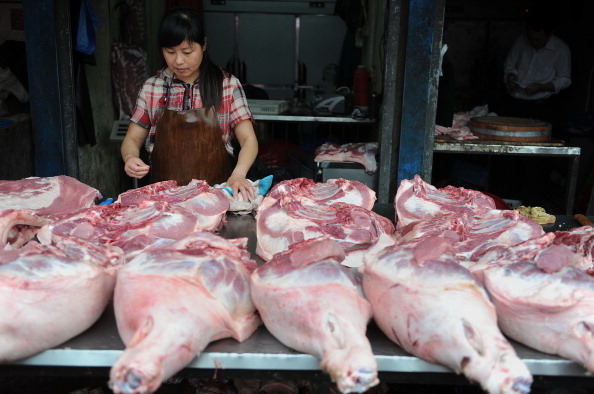
On November 9, 2026, the price of live pigs in China fell to 8.63 yuan (RMB) per kilogram, reaching a ten-year low and plunging the entire breeding industry into severe losses. This decline has garnered widespread attention, particularly as it coincides with a decrease in food prices, which have contributed to a reduction in China’s Consumer Price Index (CPI) growth rate for October, marking a three-month low with a year-on-year increase of just 0.7%.
According to data released by the National Bureau of Statistics of China, the average price of external pigs dropped to 8.63 yuan per kilogram on November 9, falling below the mid-April price of 8.77 yuan per kilogram. This represents not only the lowest price of the year but also the lowest domestic price for pigs in nearly a decade.
Throughout the current year, pig prices have shown a consistent downward trend. After hitting rock bottom in mid-April, prices fluctuated between 9 to 10 yuan per kilogram during May and June. A temporary rebound occurred in July and August, with prices surpassing 11.5 yuan per kilogram. However, since late August, prices have once again dropped, revealing a troubling pattern where prices did not increase during the peak sales season of the National Day holiday, but instead continued to fall.
Reports from First Financial have indicated that the fourth quarter usually represents a traditional peak consumption season, particularly with preparations for pickled products and the upcoming Chinese New Year. Contrary to expectations, demand this year has not alleviated the pressure of supply in the market. Industry statistics from the second quarter showed an average selling price of live pigs nationwide at 9.47 yuan per kilogram, which increased by 13.31% to 10.73 yuan per kilogram in the third quarter. However, this still represented a significant year-on-year decrease of 22.08%, and prices have continued to decline post-October. Overall, the demand side remains weak, and the imbalance of strong supply against weak demand has not fundamentally changed.
As the price of pigs declines steadily, revenues for companies are shrinking, leading to deepening losses in the pig farming sector. Monitoring data from the mainland’s agricultural and livestock sector consultancy, Boya Hexun, revealed that as of November 6, each pig raised under self-breeding and self-raising practices incurred an average loss of around 396.7 yuan. Additionally, figures from the Ministry of Commerce indicated that pork feed ratios were at 4.22 on October 28, still below the warning line for excessive decline.
Leading pig farming enterprises are also reporting losses. For instance, Muyuan Foods saw its operating income drop to 92.20 billion yuan during the first three quarters, a year-on-year decrease of 17.52%, with a net loss attributable to shareholders of 9.32 billion yuan. Meanwhile, Wen’s Group reported revenues of 72.20 billion yuan, down 4.74%, and losses of 4.96 billion yuan. Xinhe Foods, despite achieving a revenue of 87.70 billion yuan—a growth of 8.94%—still faced losses amounting to 2.57 billion yuan. Collectively, the three enterprises recorded a staggering loss of 16.85 billion yuan.
With the diminishing profits, companies are also experiencing heightened financial strain, reflected in rising debt ratios. Wen’s Group saw its debt ratio rise from 58.94% to 59.15%, and Muyuan’s ratio increased to 55.89%. Additionally, Tianbang Foods had a debt ratio at the end of the third quarter of 91.84%, while New Five Ventures reached 89.98%, reflecting a quarter-on-quarter increase of 5.8 percentage points. Many other firms, such as Jinxinnong, Juxing Agriculture, Tangrenshen, and Zhenghong Technology, are also reporting varying degrees of rising debt rates, contributing to an overall historical high in asset-liability ratios among pig farming firms.
First Financial anticipates that with the fourth quarter approaching, pig prices are likely to decline further, exacerbating losses within breeding enterprises. The persistent issue of oversupply in the pig market remains a significant factor contributing to the ongoing price decline.
According to Global Times, senior director Bian Shuyang from Nanhua Futures Research Institute opines that the observed stasis in terminal consumer demand and abundant market supply are primary reasons for the continuous languishing of the pig market. The daily output of pigs has noticeably increased, with the national output climbing from 173,700 pigs on July 7 to 213,000 pigs on October 13—an increase of approximately 22.6%. This surge has directly contributed to the accelerated drop in spot prices since September.
Analyst Fan Qingqing of Zhuochuang Information highlighted that the demand side is not meeting earlier market expectations, resulting in weaker pull from peak season sales, which has failed to form a robust support system for prices. Consequently, the current situation in the pig market remains one of oversupply, where prices are likely to experience continued softness.
Bian Shuyang further notes that as the pig market dwindles, companies face reduced profits and pressure on cash flow, prompting them to expedite sales to maintain liquidity. A combination of these factors has kept the pig market operating at a persistently low level.
Data indicates that the current downward cycle in pig prices began in late Q3 to early Q4 of 2024. In 2025, prices fell from approximately 15-16 yuan per kilogram at the beginning of the year to around 11-12 yuan by year-end. As we entered 2026, the prices further declined in the second half of the year, eventually dipping below the crucial 10 yuan per kilogram mark around mid-October. The industry is thus characterized by an extended period of bottom-building and capacity reduction.
Looking ahead, analyst Fan Qingqing believes that November will still be part of the capacity release phase, suggesting that the output of pigs may remain high, continuing the downward pressure on prices.
Previous reports from Fitch Ratings project that pig prices will gradually recover in 2027; however, the timing and pace of this potential recovery remain uncertain, leading to a considerable degree of unpredictability in these forecasts.
On November 9, the National Bureau of Statistics reported that in October, the national Consumer Price Index (CPI) rose by just 0.7% year-on-year, falling short of market expectations of 0.8%. This figure, which marks a new three-month low, was heavily influenced by changes in food prices.
Specifically, food prices dropped by 2.9% in October, while non-food prices increased by 1.5%. The price of fresh vegetables fell by 16.9%, contributing approximately 0.31 percentage points to the CPI decline, while fresh fruit decreased by 3.8%, contributing around 0.07 percentage points. Prices for livestock and meat products fell by 2.7%, affecting the CPI by about 0.11 percentage points, with pork prices specifically dropping by 8.6%. On the other hand, egg prices rose by 10.1%, contributing to an increase of about 0.05 percentage points to the CPI.
Economic analyst Xiao Yi stated that with the ongoing strain on China’s economy, sluggish growth in residents’ incomes, and declining consumer confidence, domestic demand is expected to remain weak. Given the lack of momentum in both consumer spending and corporate investment, any aggressive tightening of monetary policy, which might increase financing costs and reduce market liquidity, could further suppress an already vulnerable consumer and investment environment.