
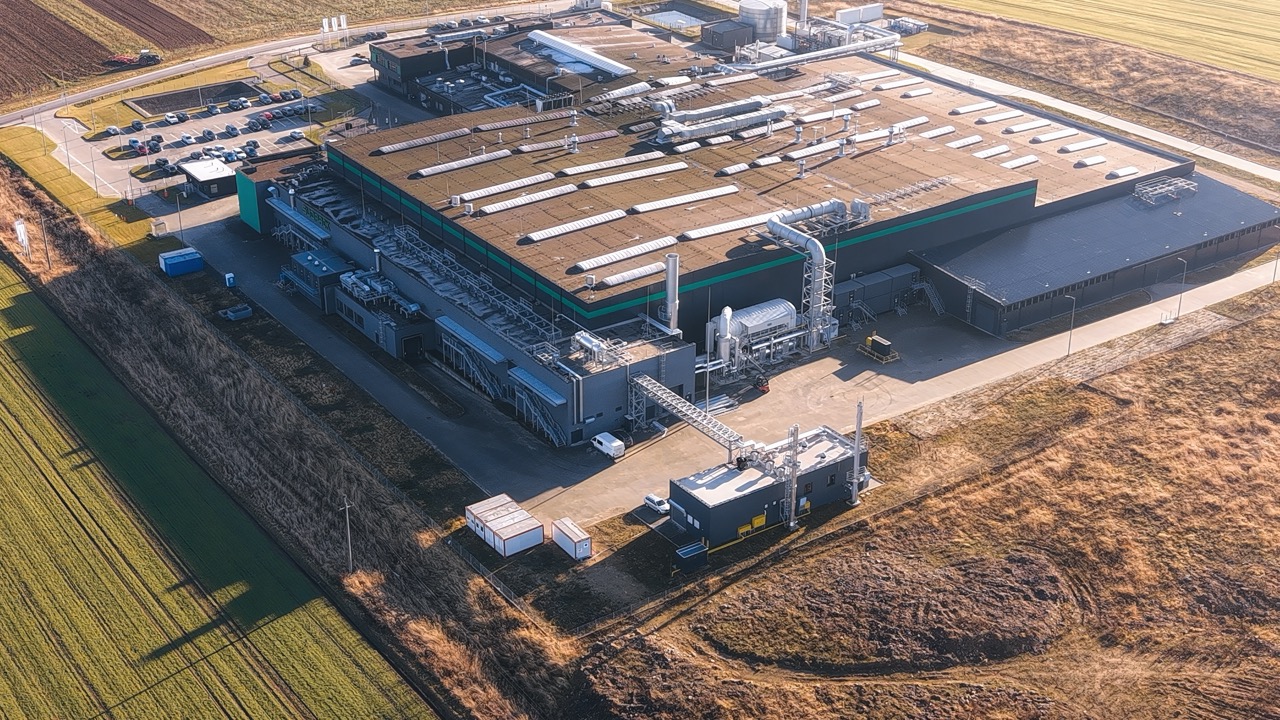
On October 16, 2026, the leader of the Chinese Communist Party, Xi Jinping, conducted an inspection in Ulanqab, Inner Mongolia. He first visited the Huangqi Lake Nature Reserve and then proceeded to the Cha’er High-tech Development Zone to learn about the development of the “East Calculation and West Algorithm” project and the green computing industry. He exchanged views with the project leaders, technical staff, and employees of the high-tech zone, emphasizing the importance of computing efficiency, green development, and security, and promoting “computing-electricity coordination”.
This inspection is noteworthy not only for why the CCP is constructing large-scale data centers in Inner Mongolia but also for the practical question it raises: how much of the additional investment in prioritizing artificial intelligence computing power as an industry comes from real demand, and how much may be influenced by local investment competition and a pursuit of expanding construction scale? Under the strong push from the highest levels of the CCP, there is a significant momentum towards advancing computing power, yet there also exists a huge risk of supply-demand imbalance.
As of the end of 2025, according to the Beijing Municipal Government website, there have been 84 signed data center projects with a total contracted investment of 500 billion Chinese yuan, with a contracted standard rack scale of over 4 million racks. Among them, 500,000 standard racks have been completed, with a total investment of 39.975 billion yuan, and 330,000 standard racks are in operation. [Source: Industrial data from Ulanqab published on the Beijing Municipal Government website. The contracted amount is the promised scale of the project, not equivalent to the funds already invested or revenue generated]
These data reveal two different realities:
Firstly, Ulanqab is no longer just a planned industrial park. It has already built and put into operation a considerable number of racks, attracting major cloud and computing companies to establish a presence there.
Secondly, there is a significant disparity between the contracted scale and the actual construction scale. By the end of 2025, with over 4 million standard racks contracted, only 500,000 have been built, approximately 12.5% of the contracted scale, and 330,000 racks are in operation, translating to around 8.25% of the contracted scale.
While projects are scheduled for phased construction, such a massive gap between contracts and implementation indicates that the signed numbers for investment promotion cannot be considered achievable industrial outcomes.
The situation in Ulanqab is not an isolated incident. In July 2025, Reuters reported that the Chinese government was evaluating the efficiency of data center construction and utilization and studying the establishment of a national computing power trading and scheduling network to improve the utilization of existing computing facilities.
Industry estimates cited in the report indicate that some data centers have utilization rates as low as 20% to 30%. Meanwhile, there has been an increase in the number of projects related to data centers being canceled. These figures represent industry estimates cited in the report and should not be taken as the official average for all data centers nationwide.
Data centers are characterized by high investment amounts, long construction periods, and high energy consumption. When the demand for artificial intelligence rapidly grows, local governments and companies tend to believe that by building facilities in advance, they can gain an advantage in the next round of technological development.
However, the business model of data centers is not simply “build and earn money”.
The data reveal two different realities as mentioned above: Ulanqab has already built and put into operation a considerable number of racks, attracting major cloud and computing companies to establish a presence there. Moreover, there is a significant disparity between the contracted scale and the actual construction scale, with standard racks representing about 12.5% of the contracted scale and those in operation about 8.25% of the contracted scale.
Major technology and internet platform companies that have entered Ulanqab include Huawei, one of the early technology companies to have established projects with related facilities already in operation; Kuaishou Intelligent Cloud Ulanqab Data Center, officially launched in 2023; in addition to Alibaba, and even Apple has also settled in.
Furthermore, public reports from the region also mention enterprises or projects like Yueke, Yashin, Yunlian, Broadcom Data, Wanbo Data, Xinshangrendong, Vision Data, and more.
An article on the Inner Mongolia computing industry published by Xinhua News Agency on October 12, 2026, described Ulanqab as a rapidly growing artificial intelligence computing power cluster, introducing the situation of Huawei, Alibaba, ByteDance, Kuaishou, China Finance Data, and Century Interconnect, among other companies, setting up in the area.
These data indicate that Ulanqab has become an important region for China’s computing industry competition. Xi Jinping’s inspection of the related industries aligns with the CCP’s emphasis on infrastructure for artificial intelligence, energy coordination, and the development of the digital economy.
However, the investment model led by the CCP, especially under Xi Jinping’s leadership focusing on the construction of “new quality productivity”, no longer aims primarily at investment returns but rather at political and national strategic goals.
Xi Jinping’s top-level design and strong promotion; local governments’ achievements projects, all rush to take part.
However, this model mobilizes a large amount of resources to quickly establish infrastructure; yet due to a lack of transparent cost accounting, effective demand assessment, and reliable accountability mechanisms, it may exacerbate capital misallocation, redundant construction, and regional debt risks, easily leading to another round of rapid industry development.