
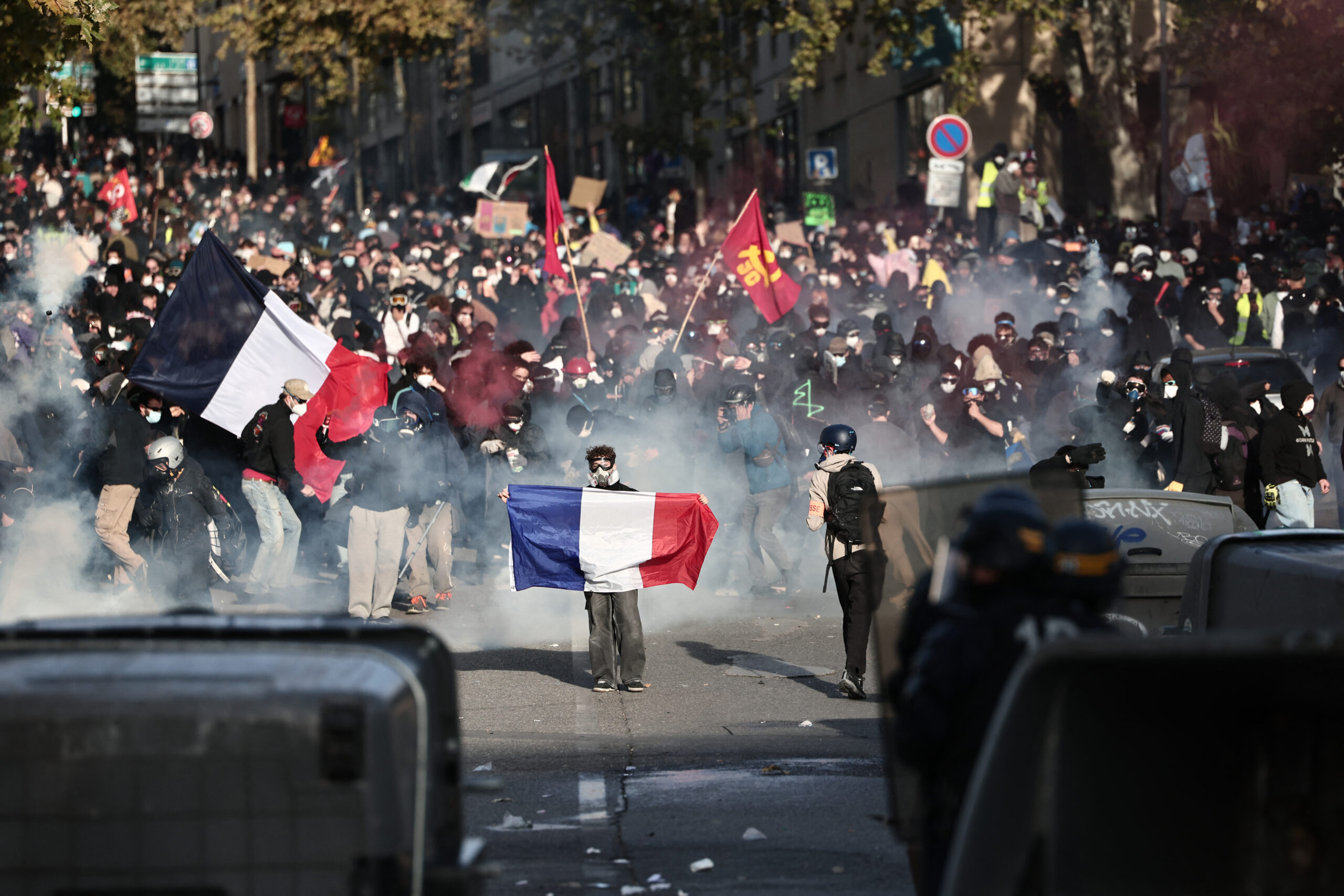
A recent internal assessment obtained by Reuters reveals alarming findings regarding the use of disinformation tactics by a Russian secret network, particularly in connection with the civil unrest that rocked France in October. This network has reportedly been impersonating Western media to disseminate false videos that blame the unrest on immigration issues, aiming to portray the French government as losing control. The implications of such actions are significant, as the European Union fears they may exacerbate social divisions and alter public perception.
The evaluation, crafted by experts from the European Union’s diplomatic corps, covers the period from October 7 to October 21. It indicates that, as of now, there is no direct evidence suggesting that Russia or any other entities actively incited or intensified the protests in France. Instead, the Russian operatives capitalized on the pre-existing turmoil, spreading messages that were favorable to their agenda.
Initially, the demonstrations in France stemmed from rising living costs and declining quality of public services, but they soon escalated into violent incidents in certain areas.
Dubbed “Operation Overload” by the EU assessment, this secret network is accused of masquerading as Western news organizations to target audiences in France, sharing videos that contain misleading claims. Some of these videos assert that immigrants have assaulted protestors or hint at imminent terrorist attacks.
According to the EU documents, there is a clear effort by Russian operatives to depict French leadership as weak and increasingly authoritarian. These events offer opportunities to undermine governments, incite fear, and foster division, particularly in the lead-up to elections.
The report highlights that “Operation Overload” has been active since September 2023, consistently targeting Western public figures, institutions, and media with the intention of damaging their credibility and undermining support for Ukraine.
The UK think tank, Institute for Strategic Dialogue (ISD), noted that this network produces videos that appear to be news reports, uses artificial intelligence to replicate the voices of experts, and creates fake newspaper headlines while altering images.
To date, the Russian Foreign Ministry has not responded to Reuters’ requests for comment, although the Russian side has previously denied accusations from France regarding propaganda and disinformation efforts.
It is worth noting that Reuters has been unable to independently verify the claims made in the EU report.
French President Emmanuel Macron stated on October 21 that while he has not seen clear evidence of foreign forces intervening behind the scenes in the protests, he acknowledged that there are indications of “foreign manipulation of information.”
Before this, a non-profit research organization, Alliance4Europe, released a separate investigation on October 21. This study analyzed over 540,000 posts in nine languages and found that a Russian-linked “Doppelganger” network published coordinated messages in 22 waves leading up to the large protests on October 17, garnering approximately 7.4 million views.
The posts sought to link issues such as fuel prices, healthcare, education, and other social issues to aid for Ukraine. One message in French claimed, “Every euro sent to Kyiv is a euro stolen from our shared prosperity.”
The report further identified a Russian-affiliated network named Pravda, which published 1,018 articles related to the riots across 28 websites in nine languages from October 11 to October 18. Some of this content was duplicated across multiple sites within minutes.
Analysis suggests that the repeated posting of identical content across various sites may mislead AI search tools into believing that certain assertions have been verified by different sources, thereby creating a false sense of corroboration. Researchers believe this tactic allows the Russian-affiliated networks to influence AI-generated responses.
The study also found a striking divergence in discussions across different languages. Among the social media posts collected, 18.7% of English-language posts blamed the unrest on immigration or Islam, compared to just 3.0% of French-language posts. In contrast, comments analyzed in French focused more on domestic concerns such as living costs, funding for education, and police violence.
On October 22, the British fact-checking organization Full Fact noted that an image circulated online claimed that an elderly couple had their clothes stripped off and were robbed during the unrest in France, but it turned out to be an AI-generated image.
The French prosecutor’s office informed the newspaper Libération that, as of October 19, they had not received any reports of such incidents.
Additionally, another image surfaced showing a woman trying to stop looters in a Paris supermarket while holding a sign that read “Welcome Refugees Here.” Full Fact determined that someone’s face was superimposed onto an old photograph from a 2016 protest in London. However, Full Fact did not confirm whether this image manipulation was produced or disseminated by the Russian information networks.
Moreover, a viral video purportedly showing police using shields and batons during the protests was claimed to depict recent student protests in France. Yet, Full Fact established that this video had been on the internet since at least March 2023.
The overwhelming reach and impact of these disinformation tactics highlight the ongoing challenges in navigating the landscape of modern information warfare, particularly amid times of social unrest.