
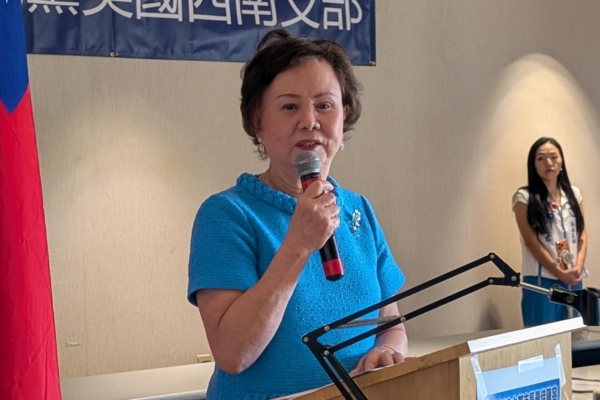
In recent years, the Taiwanese diaspora in the United States has remained deeply engaged with the political landscape of Taiwan, despite living abroad for many years. A number of Taiwanese expatriates make the effort to return to Taiwan during elections, fully aware that their participation in the democratic process is essential. Among them, Grace Hu, a former mayor of Cerritos, California, has expressed that the strong connection many overseas Taiwanese feel toward their homeland stems from the education and formative experiences they received back in Taiwan. Her hope is for a brighter future for both the Republic of China and its residents.
Grace Hu emphasizes that the accomplishments many Taiwanese Americans have achieved—whether in terms of establishing families, building careers, or thriving in various professional fields—are fundamentally rooted in the comprehensive education they received in Taiwan. According to Hu, this educational foundation has played a pivotal role in shaping their current successes. Hence, regardless of how long they have lived abroad, she believes that these individuals should remember their roots, foster an understanding of Taiwan’s prospects, and care deeply about the welfare of the Taiwanese people.
Addressing viewpoints that suggest immigrants should refrain from engaging in Taiwanese politics once they relocate to the United States, Hu counters that no matter where one resides, it is essential not to forget one’s heritage. Taiwan is more than just a place of origin; it is where many individuals grew up and developed their identities. Thus, she insists that it is perfectly natural for expatriates to take an interest in Taiwan and advocate for its betterment. She aspires for an improving quality of life for the citizens of Taiwan and envisions a prosperous future for the Republic of China.
When it comes to the potential information gap between overseas Taiwanese and those on the island, Grace Hu believes that contemporary information accessibility has significantly reduced this divide. With the expansive flow of communication today, individuals have multiple avenues to stay informed about international situations. This, she asserts, grants the people of Taiwan the ability to make informed decisions and judgments regarding their own political realities.
Regarding the relationship between Taiwan, the United States, and China, as well as the exchanges between the Kuomintang and the mainland, Hu argues that it is crucial for Taiwan to maintain channels of communication and interaction with China. She highlights the importance of the intertwined nature of cross-strait economic relations, where imports and exports play a vital role in each other’s economic growth. Emphasizing the common desire to avoid conflicts and instead foster a stable environment for residents to thrive, she advocates for mutual respect and continued dialogue across the strait. By nurturing constructive interactions, both sides can promote economic development and improve the living standards of their people.