
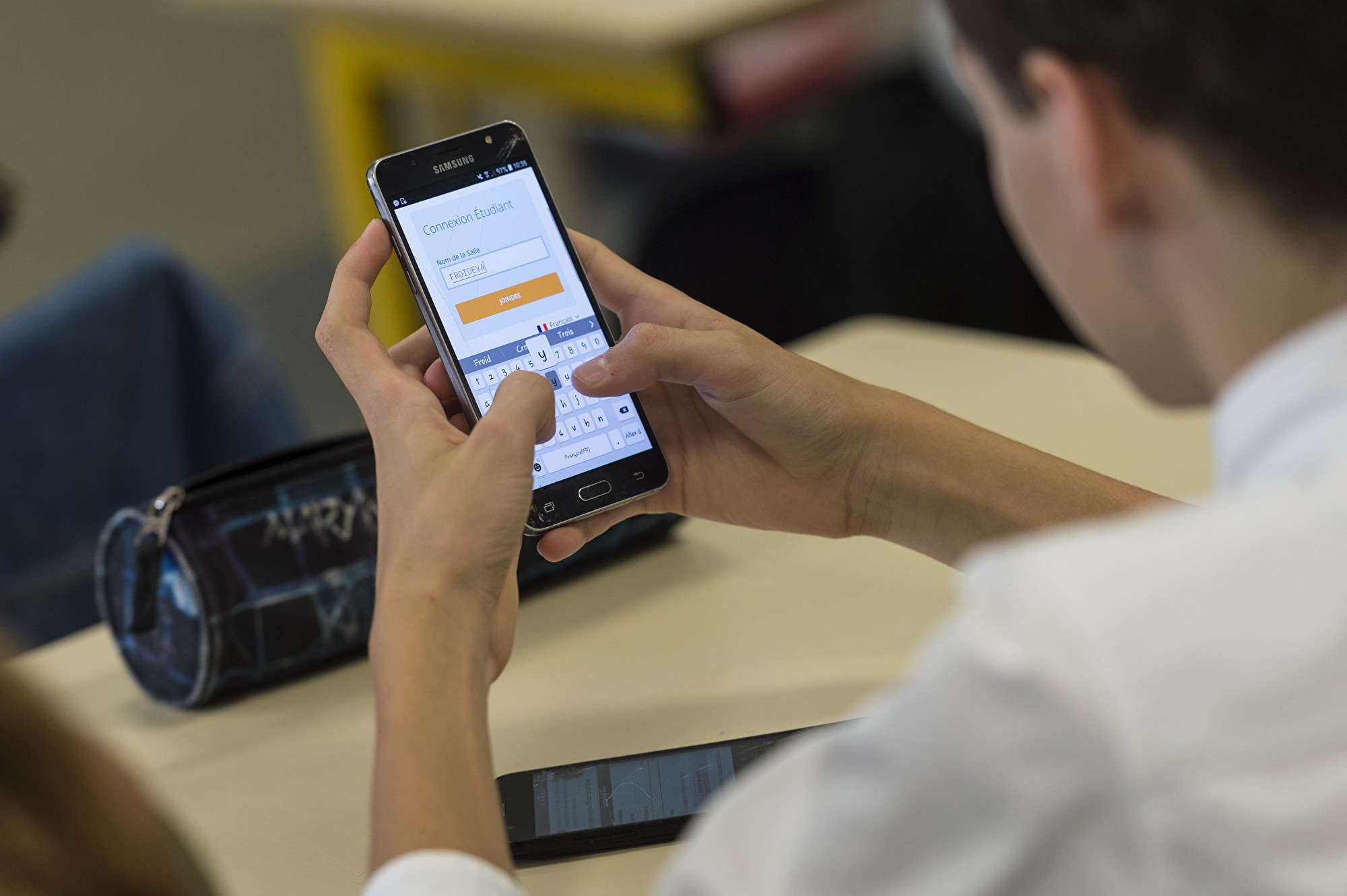
Many people rely too much on their phones, using them for long periods every day, and it seems like they have become addicted, taking their phones everywhere they go. While some people are aware of the harmful effects on their physical and mental health and want to reduce their usage time, they find it hard to do so. A recent study has found that reducing phone usage based on self-set goals is more effective than being told or forced to do so.
In a study published recently in the “Social Science & Medicine” journal by researchers from India and Spain, it was discovered that when phone users set their own time limits for usage, they were more likely to adhere to these restrictions.
The researchers wrote in their report, “Allowing individuals to autonomously set their goals may enhance engagement and promote healthier digital behavior.”
In this study, 149 participants were recruited and divided into three groups for a 35-day experiment. Among them, 55 participants could choose to reduce their daily phone usage by 10%, 20%, or 30%; 62 participants were required to set a reduction target of 14%; and the remaining 32 participants were not given any specific goal (though researchers still monitored their usage time).
For participants with set goals, the researchers provided the same incentive measures, meaning they received a moderate cash reward for each day they successfully reached their target. The participants’ phone usage data was automatically recorded by their phones. After the 35-day experimental phase, data recording continued for another 28 days (without any further rewards).
The results showed that the group that set their own goals performed the best, with their average daily phone usage decreasing by 49 minutes, far exceeding the group with assigned goals (average reduction of 23 minutes). The self-set goal group also had an 11% higher frequency of reaching their daily targets. In contrast, the control group (unassigned goals) saw an increase of 11 minutes in their average daily usage time.
The researchers stated that under both self-set and assigned goal conditions, the decrease in phone usage time continued into the subsequent 28-day period of data recording.
During this period, participants in the self-set goal group reduced their average daily usage time by about 16 minutes compared to before the experiment, while those in the assigned goal group reduced their average daily usage time by around 11 minutes. In comparison, the control group increased by 2 minutes compared to before the experiment.
Survey results on the participants indicated a correlation between achieving goals and increased sense of happiness. The researchers said, “While caution should be exercised when interpreting findings related to mental health, the observed trends and magnitudes suggest that reducing overall smartphone usage may be linked to an improvement in psychological well-being for some individuals.”
Although the sample size of this study was relatively small and the monitoring time was shorter, further research on a larger scale and with more diverse groups is needed to confirm these findings. However, the study suggests an intriguing possibility – that people may be able to better manage their phone usage through a simple, cost-free method.
The researchers stated, “Many people feel that their phone usage exceeds their intentions but find it difficult to reduce. This study indicates that allowing individuals to set their own goals may help cultivate healthier digital lifestyle habits.”
American psychologist Ilisa Kaufman had previously shared some methods to reduce phone usage, such as cultivating hobbies that involve using your hands, like sewing, cooking, singing karaoke, weightlifting, drawing, and writing, in order to break the habit of using the phone.
Kaufman suggested trying meditation. Meditation can help people calm down, relax the autonomic nervous system, making it calmer and less likely to operate compulsively.
Are you reliant on your phone too much? Experts offer 7 tips for improvement.